US Presidents Come And Go, But Energy Efficiency Is Forever
Energy efficiency is the main focus of a new Energy Department effort to help improve competitiveness in key US industrial sectors.


Energy efficiency is the main focus of a new Energy Department effort to help improve competitiveness in key US industrial sectors.

UC Berkeley researchers tweaked a key enzyme involved in microbial methane production to understand the unique fingerprints of different environments on Earth that generate the greenhouse gas. By Robert Sanders Roughly two-thirds of all emissions of atmospheric methane — a highly potent greenhouse gas that is warming planet Earth — come … [continued]

Interconnection costs for distributed energy resources (DERs) like community solar are rising in many jurisdictions across the United States. Utility planning and implementation of electricity system upgrades in a piecemeal or serial fashion can cause inefficiencies that contribute to increased costs for interconnection customers and utility ratepayers. Lawrence Berkeley National … [continued]
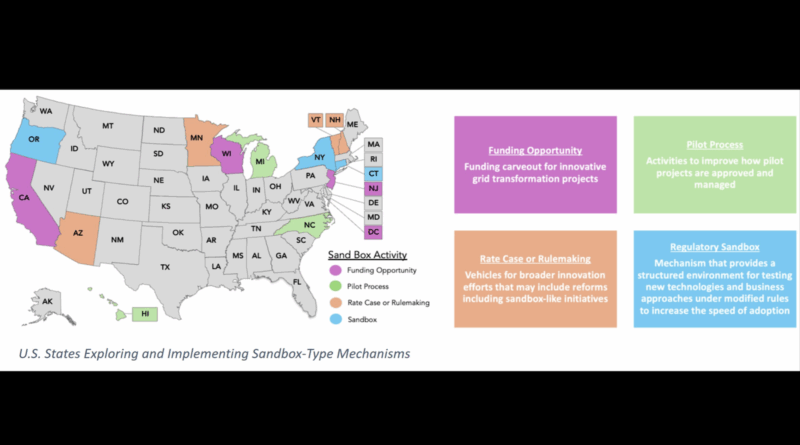
Electricity grids are facing significant pressure from load growth, aging infrastructure, increasingly dynamic operational needs, and severe weather events. Advanced grid technologies can help meet these challenges, but traditional regulatory frameworks may limit utility pathways to innovation. Regulatory sandboxes offer a potential solution by establishing a structured environment for piloting … [continued]
Join Lawrence Berkeley National Laboratory, the National Association of Regulatory Utility Commissioners, and the National Association of State Energy Officials on August 8th, from 1–3 p.m. CT, for the third in a series of virtual, interactive regional webinars on grid resilience planning. State representatives from Minnesota, South Dakota, and Wisconsin, … [continued]

The U.S. Department of Energy Bioenergy Technologies Office (BETO) announced $1.35 million in Phase 2 funding for three projects to accelerate wood heater innovation and develop the next generation of efficient and clean wood heaters. Today, the U.S. Department of Energy Bioenergy Technologies Office (BETO) announced $1.35 million in Phase 2 funding … [continued]

For the first time, the Inflation Reduction Act of 2022 included place-based federal tax incentives for projects located in “Energy Communities,” which might alter the economic equation of where projects should be located. Storage projects may be eligible for a 10-point increase in the Investment Tax Credit (e.g., from 30% … [continued]

We are pleased to announce a new study that examines the value of adding batteries to wind and solar plants located in areas that face transmission congestion. We examine two types of areas facing transmission congestion. These areas represent portions of Regional Transmission Organizations (RTOs) or Independent System Operators (ISO) territory selected … [continued]
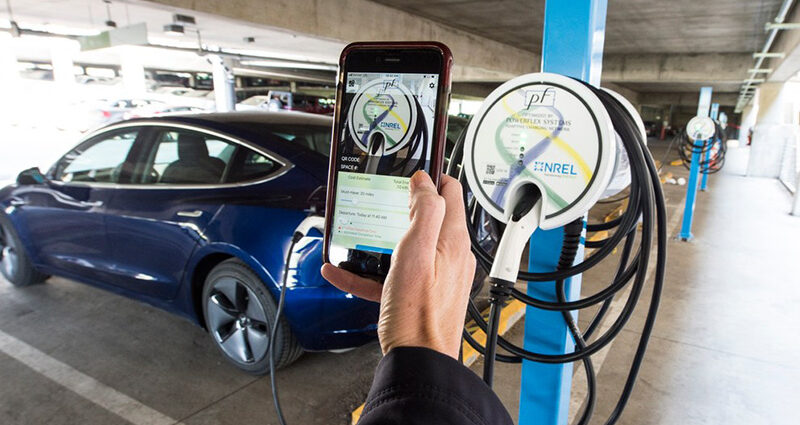
Smart charge management—intelligently managing the flow of electricity that charges electric vehicles (EVs)—can have incredible benefits for drivers, utility companies, governments, and fleets. Yet smart charge management strategies have not been widely deployed nationwide. In response, two national laboratories, the National Renewable Energy Laboratory (NREL) and Lawrence Berkeley National Laboratory … [continued]

Manganese is earth-abundant and cheap. A new process could help make it a contender to replace nickel and cobalt in batteries. Rechargeable lithium-ion batteries are growing in adoption, used in devices like smartphones and laptops, electric vehicles, and energy storage systems. But supplies of nickel and cobalt commonly used in … [continued]
