Hydrogen

Leipzig’s Hydrogen Garbage Trucks Fail The Tuesday Test

Garbage collection is not a technology demonstration. Municipalities need trucks that leave the depot every working morning, finish predictable routes, operate compactors through hundreds of stops and come back ready to do it again. That is why refuse collection has become such a useful test of competing zero-emission drivetrains. Battery-electric … [continued]

Netherlands Cuts 2040 Hydrogen Forecast By Almost 60%

Three years is a long time in hydrogen strategy. The Netherlands’ 2023 National Energy System Plan projected roughly 460 petajoules of gaseous hydrogen demand in 2040. Its 2026 National Energy System Plan update cuts that central estimate to about 200 PJ, a reduction of roughly 57%. This is especially interesting … [continued]

AI Is Climate Tech’s Newest Hype Layer — The Commercial Problems Are Older

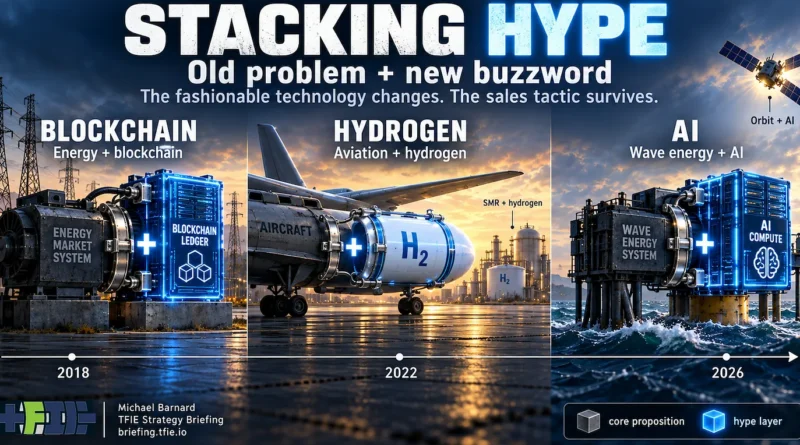
Panthalassa raised $140 million this year to build autonomous ocean platforms that would generate electricity from waves and use it directly for AI inference computing at sea. The proposition removes one genuine problem for wave energy: instead of transmitting electricity back to shore through subsea cables and grid connections, put … [continued]

UK Trying to Advance Hydrogen Aviation. Likelihood by 2050 is still under 1%

The UK Civil Aviation Authority announced its latest Hydrogen Challenge in the same week as I published my updated assessment of hydrogen passenger aviation. The regulator is examining hydrogen-aircraft turnarounds at London City Airport, cryogenic hydrogen storage and airside supply, while its broader hydrogen aviation roadmap targets scaled operations for … [continued]

Aberdeen Paid £556k Per Hydrogen Bus. Five Years Later, First Bus Is Paying £30k

Aberdeen’s hydrogen double-deckers have finally produced a useful market price, and it is more revealing than another theoretical argument about fuel-cell efficiency, hydrogen costs or refuelling infrastructure. First Bus is set to buy 23 Wrightbus StreetDeck Hydroliners for £30,000 each. Aberdeen City Council originally spent about £13.9 million on the … [continued]

Hydrogen Learning Curves Are Counting The Wrong Doublings

Hydrogen cost forecasts often borrow one of the clean-energy transition’s most useful empirical tools: the experience curve. If a technology has historically fallen by a given percentage in cost every time cumulative deployment doubles, analysts can estimate how many doublings lie ahead and compound the learning rate into a future … [continued]

Hydrogen Kept Failing The Test — And Getting Another Test

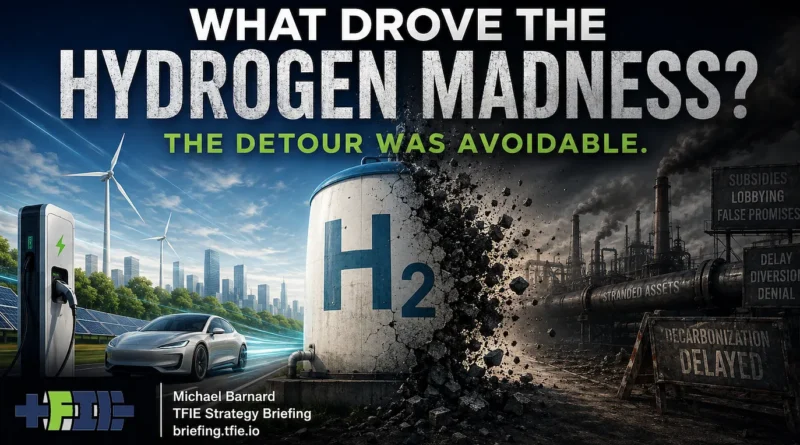
In 2023, a senior executive responsible for decarbonizing a major transportation company asked me, with some exasperation, what drove the “madness on hydrogen.” Hydrogen proposals kept arriving for applications where the energy balance and economics looked dreadful. That conversation became What Drives This Madness On Hydrogen?, an attempt to explain … [continued]

CUTRIC Has Lost The Right To Be Treated As A Neutral Transit Authority

CUTRIC has a credibility problem that extends well beyond its long enthusiasm for hydrogen buses. The underlying issue is whether an organization whose mission includes commercializing technologies should receive a presumption of neutrality when it advises transit agencies on investments worth hundreds of millions of dollars. After reviewing CUTRIC’s strategy, … [continued]

Hydrogen Gets Far More Attention Than Its Deployment Justifies

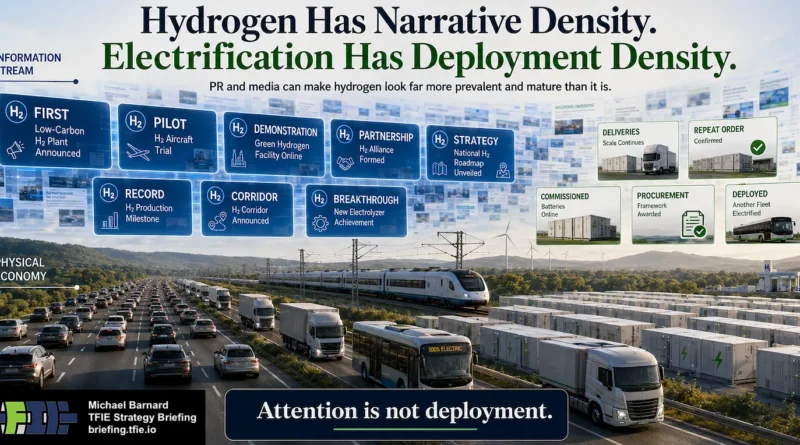
Hydrogen occupies an unusually large share of the energy-transition information stream for the amount of physical deployment behind it. Fuel-cell trucks, buses, trains, ships, storage projects, demonstrations and records recur through corporate releases, government announcements, trade publications and mainstream reporting, creating the impression that hydrogen remains a substantial parallel pathway … [continued]