construction

Mass Timber As Lego: Flyvbjerg’s Modularity Meets Low-Carbon Construction

Mass timber is being promoted as a way to cut carbon in construction, speed up schedules, and reduce costs. But there is another lens through which to view it that comes from project management research. Professor Bent Flyvbjerg has spent decades studying why large projects fail and what can be … [continued]

From Towers To Turbines: The Most Fascinating Mass Timber Projects Worldwide

Mass timber has moved far beyond the novelty stage. Cross laminated timber and glulam started to gain attention a decade ago as materials that could replace concrete and steel in mid-rise buildings. Since then the technology has advanced, codes have adapted, and architects and engineers have pushed the limits of … [continued]

Adhesives, Dowels & Veneers: The Industrial Choices Shaping Mass Timber

Mass timber has quickly become one of the most talked about building materials in the climate conversation, and for good reason. It locks away carbon from forests, displaces steel and concrete in construction, and lends itself to faster, modular assembly. But as with all industrial products, the devil is in … [continued]

Cement Is One Of Few Industries Where Carbon Capture May Be Competitive In Niches

As concrete month draws nearer to a close, it’s time to look at an option not previously explored, continuing to use limestone but bolting on carbon capture and paying for waste disposal in permanent sequestration sites. After fifteen years of assessing carbon capture technologies, pilots and proposals, this is one … [continued]

Decarbonizing Cement & Concrete Is Noble, But Why Will Developers Pay For It?

During what has become concrete month, I’ve explored the full range of actual and purported solutions to the climate problem that is the cement, steel, and concrete used in construction. The industry’s emissions are high, with every ton of reinforced concrete having a carbon debt of 0.3-0.4 tons of carbon … [continued]

Steel Reinforcement Is The Invisible Miracle Of Concrete Construction, But Comes With A Carbon Price

Reinforced concrete was invented in the mid-19th century, a game-changer in the construction world. French gardener Joseph Monier is often credited with its creation. While experimenting with materials to build stronger garden pots and tubs, he had the idea to combine concrete with iron mesh in 1849. Monier patented his … [continued]

Just When I Thought I Was Done With Cement Replacements, A Look At Geopolymers

One of the many people who have suggested I look at something in the space of cement and concrete decarbonization suggested red mud. All I knew was that it had something to do with aluminum, and hence I thought it would be another metal slag supplement to cement. You know … [continued]

How Much Does Sand, Grit, & Gravel Add To Concrete Carbon Emissions?

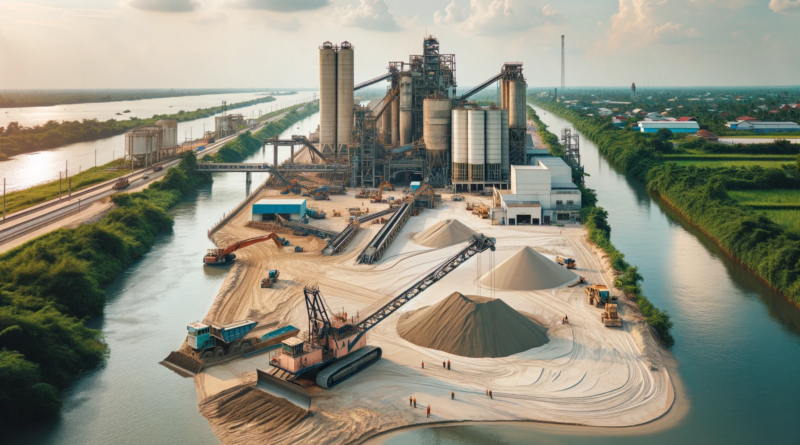
During concrete day… errr … week … errr … verging on two weeks this time, I’ve explored a lot of carbon emissions solutions for the full value chain of the gray glue that ensures our buildings don’t collapse, our bridges stay up, and our underground working chambers don’t pancake. We … [continued]

Epoxy Concrete Won’t Solve Cement Emissions Problem

As I’ve been looking at solutions that people are proposing for eliminating cement’s high carbon dioxide emissions, a set of criteria are clearly emerging to assess whether they are going to be material. These include the source material availability, cost, and distribution. They include integration into worksites. They include the … [continued]