Buildings

Mass Timber Nations: Case Studies & Canada’s Export Opportunities

The global construction industry is at an inflection point. Mass timber has moved from an architectural curiosity to a material that countries are embracing as part of the climate and housing solution. It offers the ability to lock carbon into buildings while displacing concrete and steel, two of the most … [continued]

Adhesives, Dowels & Veneers: The Industrial Choices Shaping Mass Timber

Mass timber has quickly become one of the most talked about building materials in the climate conversation, and for good reason. It locks away carbon from forests, displaces steel and concrete in construction, and lends itself to faster, modular assembly. But as with all industrial products, the devil is in … [continued]

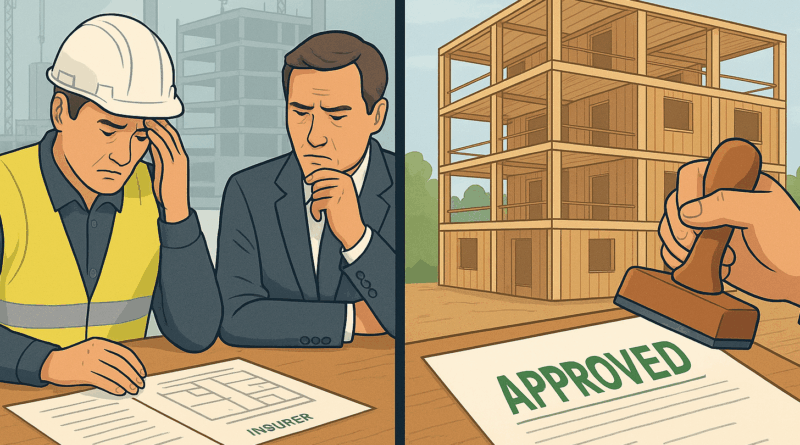
Mass Timber At Parity: Fixing Insurance & Code Bottlenecks

Technical feasibility is no longer the primary barrier for mass timber construction. Engineers and builders have proven that tall, strong, and safe structures can be delivered with cross-laminated timber and related products. The real bottlenecks now lie in insurance premiums and building code adoption. Insurers price risk, and without long … [continued]

Why An All-Electric Forestry Supply Chain Matters for CLT’s Carbon Balance

The carbon story of cross laminated timber (CLT) is not only about how much carbon is stored in panels and buildings but also about how much is emitted in the process of getting logs from forests to construction sites. Environmental product declarations show that CLT is already net negative cradle … [continued]

From Harvest To Housing: CLT Locks Away More Carbon Than It Emits

Carbon accounting is one of the most important but least understood aspects of the discussion about cross laminated timber. The claim that cross-laminated timber (CLT) is carbon negative depends on how one defines system boundaries and how accounting rules are applied. Trees absorb carbon as they grow, storing it in … [continued]

US Open Green Initiatives: A Fan Perspective

The seemingly effortless execution of the green initiatives was perhaps the most impressive part. Environmental impact was being reduced while the experience was made better and more convenient. It didn’t try to attract massive attention and didn’t come off as greenwashing. It just made sense when you thought about it, but you didn’t have to think about it.

How CLT Displacement Makes Steel & Cement Decarbonization Realistic

Cross laminated timber is often presented as a housing solution, a way to build faster and more affordably while reducing the carbon locked into buildings. That is true, but it is also part of a larger story about the heavy materials industries. Every time a cubic meter of cross laminated … [continued]

From Sawmill To Module: How Canada Can Scale A Low-Carbon Timber Value Chain

Canada’s opportunity in mass timber is not just about building more mills or adding capacity here and there. It is about creating an integrated value chain that runs from forests to finished housing modules. That means linking sawmills, energy systems, adhesives, logistics, and modular factories into a coherent industrial strategy. … [continued]

How Carney’s Housing Initiative Can Industrialize Canada’s Mass Timber Sector

Canada’s housing crisis is no longer a problem measured in headlines or political talking points. It is a structural failure that has been building for decades, leaving affordability out of reach for millions of Canadians. At the same time, the country has committed to steep climate targets, and the construction … [continued]

Canada’s Timber Moment: CLT As The Fastest Lever for Housing, Jobs, & Climate

Canada is in the middle of two crises that are converging in uncomfortable ways. On one side, housing supply has failed to keep up with demand for decades. Affordability is slipping out of reach for many households, and the workforce that builds homes is aging and stretched thin. On the … [continued]