Buildings

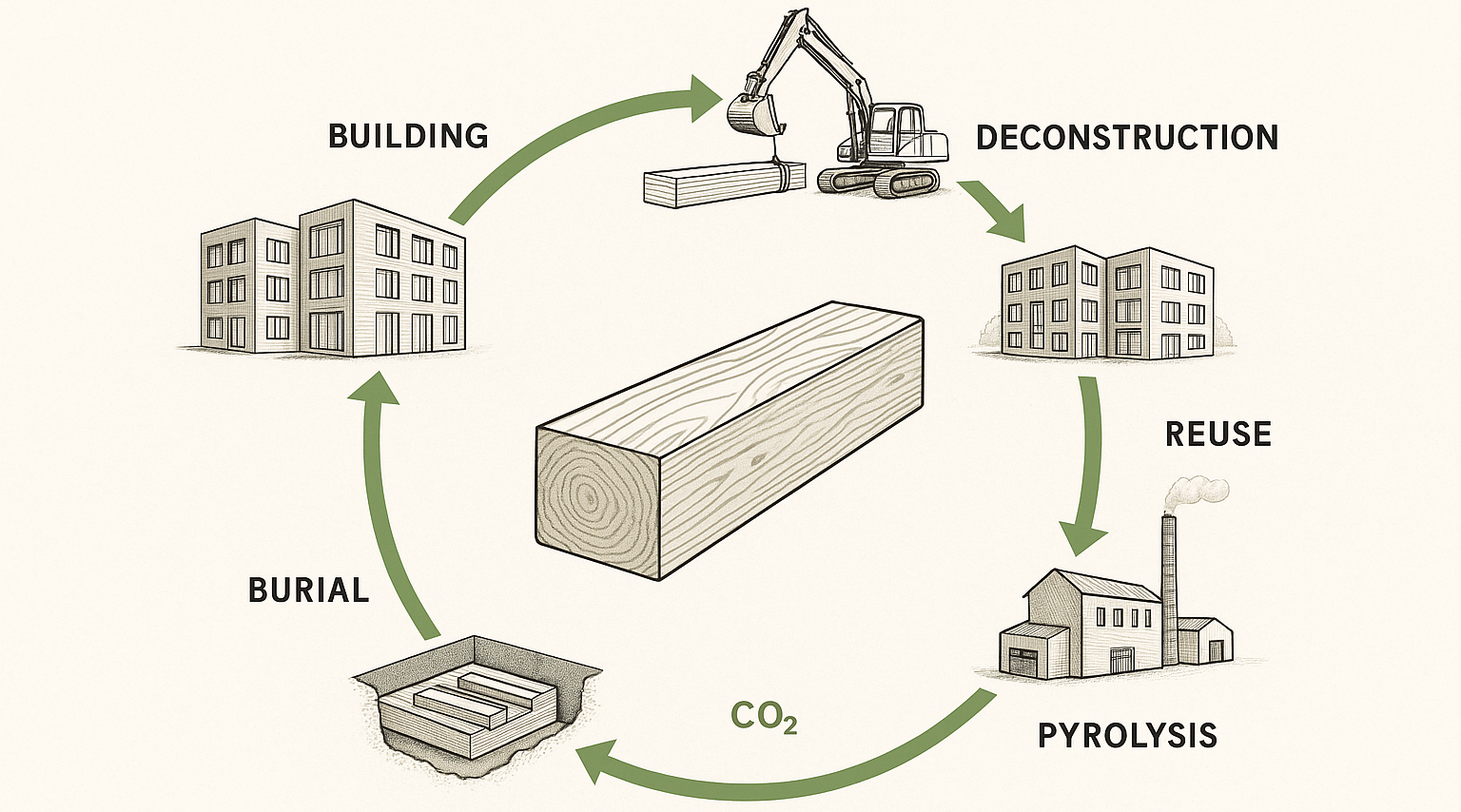
ChatGPT generated panoramic infographic of the circular lifecycle of a timber beam, showing building, deconstruction, reuse, pyrolysis, and burial in a continuous loop

From Reuse To Burial: Managing Mass Timber Beyond The Building Stage

Mass timber has become a leading candidate for reducing the carbon footprint of construction. Its appeal lies in the way it displaces high emission materials like concrete and steel, and in the fact that it carries biogenic carbon stored from the atmosphere into buildings. That carbon advantage is only secure … [continued]

ChatGPT generated panoramic illustration of Lytton’s rebuild, showing burned ruins on the left transitioning into new timber-framed buildings storing carbon

Why Canada Must Align Sequestered Carbon Accounting With Global Markets

When the small British Columbia, Canada, town of Lytton burned to the ground in 2021, it became a stark reminder of climate change and the risks facing communities built with conventional methods. The town experienced such an extreme of heat a day earlier that it broke records by 5° Celsius … [continued]

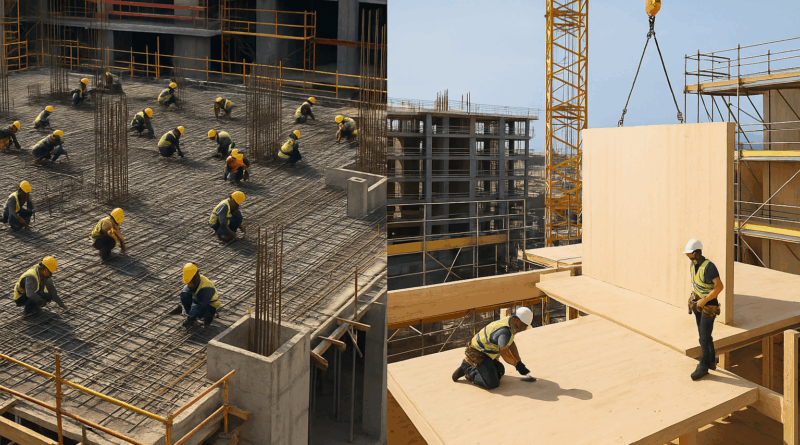
ChatGPT generated panoramic image comparing reinforced concrete construction with a large rebar crew on the left and mass timber assembly with a small CLT crew on the right

Mass Timber’s Edge: Smaller Crews, Quicker Builds, New Floors Above

Mass timber has already proven its climate case. What is becoming more clear as projects accumulate is its advantage in time and labor. Speed of construction and smaller, more specialized crews create economic benefits that go beyond carbon accounting. They reduce costs, compress schedules, and open up new markets such … [continued]

ChatGPT generated panoramic image of a modern training workshop where apprentices learn CNC operations and timber framing under instructor guidance in a bright facility

Building The Workforce & Finance Tools For Mass Timber Growth

Mass timber has passed the stage where the conversation is about whether it works. The engineering is proven, the fire testing is robust, and the carbon benefits are well understood. The remaining barriers are not about physics or chemistry but about economics, institutions, and people. For Canada to make mass … [continued]

ChatGPT generated panoramic port scene of CLT and GLT containers being loaded onto a cargo ship with dockside cranes and a city skyline in the distance

Mass Timber Nations: Case Studies & Canada’s Export Opportunities

The global construction industry is at an inflection point. Mass timber has moved from an architectural curiosity to a material that countries are embracing as part of the climate and housing solution. It offers the ability to lock carbon into buildings while displacing concrete and steel, two of the most … [continued]

ChatGPT generated panoramic schematic cutaway of a log, with one side milled into sawn boards for CLT and the other peeled into continuous veneer rolls

Adhesives, Dowels & Veneers: The Industrial Choices Shaping Mass Timber

Mass timber has quickly become one of the most talked about building materials in the climate conversation, and for good reason. It locks away carbon from forests, displaces steel and concrete in construction, and lends itself to faster, modular assembly. But as with all industrial products, the devil is in … [continued]

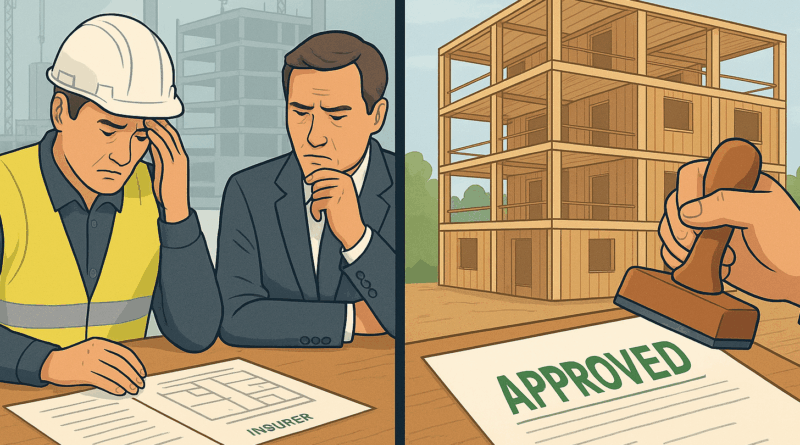
ChatGPT generated panoramic illustration showing the contrast between insurance and code bottlenecks on the left and smooth approval of a mass timber project on the right

Mass Timber At Parity: Fixing Insurance & Code Bottlenecks

Technical feasibility is no longer the primary barrier for mass timber construction. Engineers and builders have proven that tall, strong, and safe structures can be delivered with cross-laminated timber and related products. The real bottlenecks now lie in insurance premiums and building code adoption. Insurers price risk, and without long … [continued]

ChatGPT generated panoramic illustration of a sustainable forest-to-factory flow, showing electric harvesters, battery log trucks, biomass kilns, CLT panels, and modular housing assembly

Why An All-Electric Forestry Supply Chain Matters for CLT’s Carbon Balance

The carbon story of cross laminated timber (CLT) is not only about how much carbon is stored in panels and buildings but also about how much is emitted in the process of getting logs from forests to construction sites. Environmental product declarations show that CLT is already net negative cradle … [continued]

ChatGPT generated panoramic conceptual graphic showing carbon absorbed into trees, stored in timber panels, and locked in long-lived buildings with minimal emissions

From Harvest To Housing: CLT Locks Away More Carbon Than It Emits

Carbon accounting is one of the most important but least understood aspects of the discussion about cross laminated timber. The claim that cross-laminated timber (CLT) is carbon negative depends on how one defines system boundaries and how accounting rules are applied. Trees absorb carbon as they grow, storing it in … [continued]

Photo Credit: Larry Evans

US Open Green Initiatives: A Fan Perspective

The seemingly effortless execution of the green initiatives was perhaps the most impressive part. Environmental impact was being reduced while the experience was made better and more convenient. It didn’t try to attract massive attention and didn’t come off as greenwashing. It just made sense when you thought about it, but you didn’t have to think about it.