
Red State Revolution Brewing As US Solar Industry Ramps Up
Support CleanTechnica's work through a Substack subscription, on Patreon, or on Stripe. Help us produce all of the high-quality, original content we publish week after week despite the challenges of content-scraping AI, antisocial media, inflation, and other hurdles.
It’s Climate Week in New York City, and that means — oh wait, hold please. An even bigger story is bubbling up through the Intertubes. With the 2026 midterm elections just weeks away, red state voters are telling pollsters they are fed up with the business-as-usual messaging of the Republican Party. Instead, they want someone to solve their bread-and-butter problems, particularly in regards to their fuel and utility bills. That puts the US solar industry squarely in the spotlight, particularly now that the forever war in Iran continues to spiral into, well, forever.
The US Solar Industry Persists
Even before US President Trump re-took office last year, state and local-level restrictions on solar development were growing. Trump’s re-election resulted in a fresh round of obstacles at the federal level, including the elimination of tax credits through the 2025 “OBBA” tax bill. Overall, the clean energy sector lost an estimated 470,000 jobs as large-scale projects were abandoned, including battery and EV factories among others.
Still, with the heavy breathing of data center stakeholders on everyone’s neck, the solar industry has continued to prove that it can deliver the kilowatts more quickly and economically than any other domestic energy resource. That helps explain why the manufacturing side of the industry continues to attract investors, even as obstacles persist on the developer and retail side.
The political push from data centers and other large-load users could also explain why Trump knuckled under last month and imposed import limits on an essential solar industry material, polysilicon. While some solar stakeholders protested the new restrictions, others celebrated a new window of opportunity for domestic manufacturers.
Follow The Money…To The US Solar Industry
How else to explain why investors put up $835 million to ensure that the leading manufacturer Suniva can build out its monocrystalline solar cell operations in the US? Suniva announced completion of the new raise on September 8, emphasizing that the financial support comes from “top-tier” partners, including long-term backer Lion Point Capital. Funds managed by Goldman Sachs Alternatives and I Squared Capital also played a role, alongside JBA Asset Management, which provided a a second lien credit facility. Electron Capital Partners, Orion Infrastructure Capital, and Rubric Capital Management, among others, rounded out the equity investors.
“The new capital will fund construction of Suniva’s second U.S. solar cell manufacturing facility and accelerate the Company’s rapid expansion to a total of 5.5 GW of American-made solar cell capacity,” Suniva explains.
“Suniva’s new 4.5 GW high-efficiency monocrystalline silicon solar cell manufacturing facility, which is currently under development in Laurens County, South Carolina, will more than quadruple its capacity, with completion expected in late 2027 and full ramp expected in 2028,” the company elaborates, adding that almost 600 new manufacturing jobs are part of the plan.
Suniva also notes that the expansion is taking place in a de-risked evironment, citing the maturity of the domestic supply chain and long term offtake agreements with solar industry leaders.
Red State Voters Sour On Red State Messaging
For the record, South Carolina voted for Trump by a healthy margin of almost 18% in 2024. Trump is not on the ballot this year, but he has put himself front and center in the mid-term elections, and he is helping…well, not Republican candidates. In South Carolina, for example, internal polls show that the Democratic candidates for Governor and US Senator are within single digits of their Republican counterparts.
The startup ES Foundry is another firm banking on South Carolina to grow its business. Earlier today, on September 21, the company announced a $1.5 million, three-year agreement with the Initiative for New Manufacturing, an program of the Massachusetts Institute of Technology.
ES expects the new partnership to support its long term plans. The company opened a 2-gigawatt solar cell factory in Greenwood, South Carolina in July, bringing its total output to 3 gigawatts and supporting more than 400 jobs, but it is not resting on its laurels. “With that capacity now in place, ES Foundry is looking beyond manufacturing scale alone to the technologies, workforce and operating practices that will determine whether U.S. solar manufacturing can compete over the long term,” ES explains.
ES expects the MIT connection to pay off in terms of AI integration as well as automation, cybersecurity, digital twins, and other hallmarks of advanced manufacturing systems.
Swing States In Play
South Carolina is not the only consistently red state to do a good job of attracting solar manufacturers. Texas is another good example. In addition, swing states are also pumping up the nation’s solar profile. In New Mexico, for example, on September 9 the US-based global solar tracking manufacturer ARRAY Technologies cut the ribbon on its new $50 million facility in Albuquerque. The new LEED-certified factory replaces ARRAY’s former facility on the same site, tripling its size while supporting 300 jobs.
Trackers are a sort of behind-the-scenes hardware element of the solar industry. They don’t attract much media notice compared to solar panels and solar arrays. However, they can make a critical difference in system efficiency, enabling solar panels to maintain an optimal angle as the sun moves throughout the day.
In addition to upsizing and adding more jobs, the new factory enables ARRAY to rely less on outside suppliers and deploy more in-house components, leading to benefits to customers including speedier delivery times, lower costs, supply chain quality, and flexibility. “This investment reflects our confidence in the future of ARRAY, our commitment to our customers and our continued belief in American solar manufacturing,” explained the company’s CEO, Kevin Hostetler, in a press statement.
“Several components manufactured at the facility qualify for the Section 45X Advanced Manufacturing Production Tax Credit, which supports continued investment in U.S. manufacturing and helps domestically produced components remain cost competitive with imports,” ARRAY also notes, drawing attention to a key tax break that survived the chopper. The new factory also benefited from $2.5 million in state economic development funds, and an assist from municipal and county governments.
The New Mexico electorate chose Trump by a thin 6% margin in 2024. With the state’s current governor term-limited out of office, the Democrats are holding an edge. A poll supported by the Republican candidate Gregg Hull shows Democrat Deb Haaland just 1% ahead, but two independent polls put her at +6 and +17.
Bottom line: Trump’s policies are designed to hurt blue states the most, but red and swing states also have skin in the clean power game. Readers, tap into the discussion thread and let us know how things are shaping up in your state.
PSA: If you have questions about voting or registering to vote, you can find information and links to your local elections office at a reputable online portal like Vote.gov, among others. Do not be fooled by “votesafe.org,” which has been described as a data collection portal funded by Elon Musk’s America PAC.
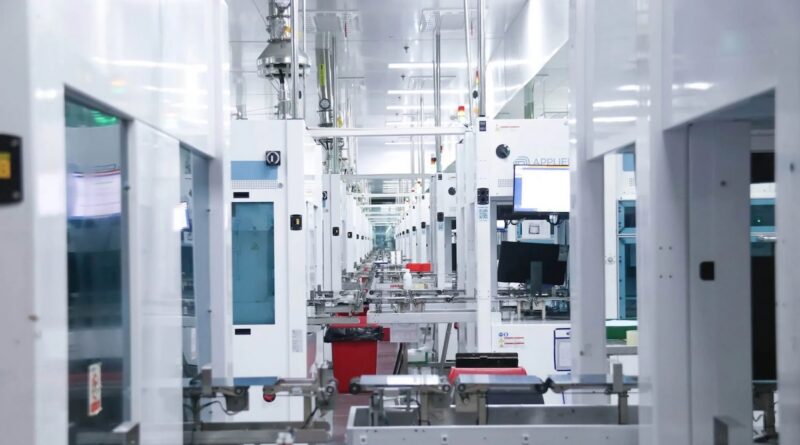
Photo: Despite last year’s sharp U-turn in federal energy policy, the US solar industry is still attracting investors on the manufacturing side as demand for electricity soars (cropped, courtesy of ES Foundry).
Sign up for CleanTechnica's Weekly Substack for Zach and Scott's in-depth analyses and high level summaries, sign up for our daily newsletter, and follow us on Google News!
Have a tip for CleanTechnica? Want to advertise? Want to suggest a guest for our CleanTech Talk podcast? Contact us here.
Sign up for our daily newsletter for 10–15 new cleantech stories a day. Or sign up for our weekly one on top stories of the week if daily is too frequent.


CleanTechnica uses affiliate links. See our policy here.
CleanTechnica's Comment Policy


