
What Lithium EV Battery Shortage? New Recycler Picks Up Where Ascend Elements Left Off
Support CleanTechnica's work through a Substack subscription, on Patreon, or on Stripe. Help us produce all of the high-quality, original content we publish week after week despite the challenges of content-scraping AI, antisocial media, inflation, and other hurdles.
In yet another sign of life for EV sales in the US, a startup has emerged from stealth mode to rev up a new battery recycling facility in Georgia, helping to alleviate concerns over a domestic lithium supply bottleneck. To make matters even more interesting, the company — R3 Lithium — is occupying a facility formerly occupied by Ascend Elements, which filed for bankruptcy just a few months ago.
What Lithium Shortage?
The rise of electric vehicles has raised concerns that a shortage of lithium will create an unforgiving bottleneck, crimping the momentum of the electrification movement. That concern has failed to materialize here in the US, where EV sales tanked after US President Donald Trump’s “OBBA” tax bill eliminated a key federal tax credit for EVs.
Globally, though, auto industry analysts have anticipated that recycling used EV batteries will help strengthen the lithium supply chain, all the more so once EVs begin capturing the lion’s share of global auto sales and their spent batteries roll into the recycling market at scale.
That optimism has been somewhat dampened by competing interests, namely, stationary BESS (battery energy storage systems) for residential, commercial, and industrial-scale use, as well as drones and other electric war machines.
Still, re-circulating battery materials within the US will help relieve pressure on overseas supply chains and domestic mining operations.
Whatever Happened To Ascend Elements?
The OBBA and the Trump administration did more damage beyond EV sales. Many electrification-centered ventures saw their federal grants canceled, including Ascend Elements.
“Ascend Elements has filed for Chapter 11 bankruptcy amid a construction dispute at its flagship Kentucky plant, federal grant cancellations, and a lithium price collapse,” summarized the bankruptcy analytics firm Bondoro last April.
In a LinkedIn post on April 9, the company’s President and CEO, Linh Austin, indicated that other factors were at work, including “longstanding financial issues and outstanding liabilities” that predated his tenure.
Austin described the voluntary Chapter 11 proceedings as part of a process enabling the company to re-emerge in one form or another. “Demand for high‑quality battery materials such as recycled lithium carbonate and pCAM is enormous and growing, and we have already demonstrated commercial‑scale production at our Covington, Georgia facility,” Austin wrote.
“The opportunity we have to create a circular supply chain for these minerals in the US and Europe is ours alone, and our ability to actually do it is unmatched,” he added. “In 2025, our Georgia facility became the first commercial‑scale U.S. plant to produce 99‑plus‑percent pure lithium carbonate from end‑of‑life batteries and scrap.”
“Chapter 11 gives us a proven, court‑supervised framework to restructure our liabilities while continuing normal operations under our existing management team,” Austin added.
Here Comes R3 Lithium: Follow The Money
Austin dropped some other hints about continuing operations at the Georgia facility. “Our mission remains exactly the same: to build a domestic, circular supply of critical battery materials using our patented Hydro‑to‑Cathode® process,” he wrote.
“On a day‑to‑day basis, our teams remain on the job, and our customer commitments continue. Our landmark take‑or‑pay offtake agreement with Trafigura remains in place, and we remain fully committed to delivering against it as we progress through this process,” Austin emphasized, referring to the leading global commodities supplier Trafigura.
And, that’s where R3 Lithium comes in. On September 10, the company will announce that the startup of its operations at the Covington, Georgia facility, which it acquired on July 26.
“A previous owner built the site with approximately $150 million investment; R3 acquired it with no liabilities, fundamentally resetting the economics of domestic lithium production,” R3 explains.
Reassuring current customers, R3 also states that has retained the same leadership team that engineered the commercial-scale production volume in 2025, including CEO Linh Austin. In addition, Ascend co-founder Eric Gratz is now serving as R3 CTO. Among other credits, Gratz is also a member of the Technology Committee of the U.S. Department of Energy’s Li-Bridge public-private partnership, spearheaded by Argonne National Laboratory.
A new round of Series A funding to the tune of $15 million is helping R3 move things along, with the support of Integral GlobalTech Partners, TDK Ventures and Axial Partners among other investors. R3 also entered the field with more than $1 billion in offtake contracts already in hand, including the Trafigura deal.
The $15 million in Series A funding is earmarked for upgrading the lithium carbonate production line at the facility, which R3 describes as “the first in US History to produce 99% purity lithium carbonate from 100% recycled content at production scale.”
R3 contacted CleanTechnica by email over the holiday weekend to spread word that a formal announcement about the facility is coming on September 10. Although their website currently consists of a place holder and contact form, in the meantime they kindly shared the September 10 press release in advance.
What Lithium Shortage?
If all goes according to plan, the Covington facility will be operating at full volume sometime next year, and R3 anticipates that it will account for more than half of all the US-produced supply of lithium carbonate.
As for how they expect to do that at scale, and competitively, R3 is banking on a streamlined, 100% on-shored process that eliminates reliance on overseas refiners:
R3 Lithium will recover, refine, and return lithium carbonate to the domestic battery supply chain through a calciner-based crystallization and water-based precipitation process that extracts lithium directly from recycled black mass on a single site, without primary mining or non-domestic refining.
R3 also takes note of the potential to earn more revenue on byproducts than it spends on acquiring the input feedstock. The lithium extraction process yields a high value, concentrated metal oxide consisting of nickel, cobalt, manganese, and graphite.
“The plant provides 30,000 metric tons of shredding capacity and a 2,500-metric-ton lithium carbonate production line, with space allocated for an additional 2,500-metric-ton line,” R3 adds.
That’s just for starters. “R3 Lithium’s growth plan calls for a network of lithium carbonate and black mass shredding facilities across North America and Europe, each engineered in modular 5,000-metric-ton-per-annum units and deployed only with underpinning offtake agreements in place,” the company states.
The impact on lithium for EV batteries remains to be seen. However, the booming BESS marketplace of today indicates that spent batteries from stationary systems will eventually supplement intake from the mobility sector of tomorrow, ideally providing enough lithium to avoid future bottlenecks. Emerging alternatives in the EV battery field and long duration storage systems will also help ease lithium supply bottlenecks over the long term.
As for OBBA and the Trump administration, if you caught that thing about Li-Bridge, the program did survive the Trump chopper, along with other public and private energy storage ventures including Ascend Elements.
Military applications have something to do with the forward motion of the US energy storage industry, despite last year’s sharp U-turn in federal policy. Thoughts? Drop a note in the discussion thread.
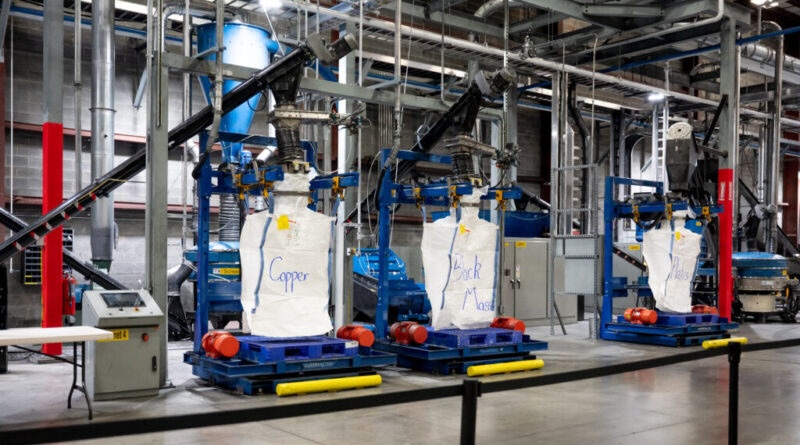
Photo: The bankruptcy of Ascend Elements was a hiccup, not a halt, to an advanced battery recycling facility in Georgia, providing EV stakeholders and other industries with a new, domestic source of lithium carbonate (former Ascend Elements factory via CleanTechnica archive).
Sign up for CleanTechnica's Weekly Substack for Zach and Scott's in-depth analyses and high level summaries, sign up for our daily newsletter, and follow us on Google News!
Have a tip for CleanTechnica? Want to advertise? Want to suggest a guest for our CleanTech Talk podcast? Contact us here.
Sign up for our daily newsletter for 10–15 new cleantech stories a day. Or sign up for our weekly one on top stories of the week if daily is too frequent.


CleanTechnica uses affiliate links. See our policy here.
CleanTechnica's Comment Policy


