One State, 12 Counties, A Huge Pile Of Renewable Energy Projects
Support CleanTechnica's work through a Substack subscription or on Stripe.
Despite the urgent efforts of US President Donald Trump to stop the renewable energy transition in its tracks, state-based policies that support wind, solar, and storage continue apace. New transmission lines also play an important role, the latest example being Colorado’s forthcoming Power Pathway.
The Power Of The Intrastate Transmission Line
Wind and solar stakeholders in the US faced a substantial hurdle long before Trump decided to wage war on renewables. The country’s midsection is rich in wind and solar resources while relatively thin in population, creating ripe conditions for new interstate transmission lines that bring renewable energy to more populous parts of the country — except, not.
Interstate transmission lines can suffer extraordinary delays as developers navigate rules, regulations, and property rights over multiple jurisdictions. The climb is less steep for intrastate projects, as capably illustrated by Texas. In 2008, lawmakers in the state approved a new transmission line bringing renewable energy from the underpopulated west to points east, all without crossing into another state. By 2013, the project was online and shaping the future of Texas as a top wind and solar producer.
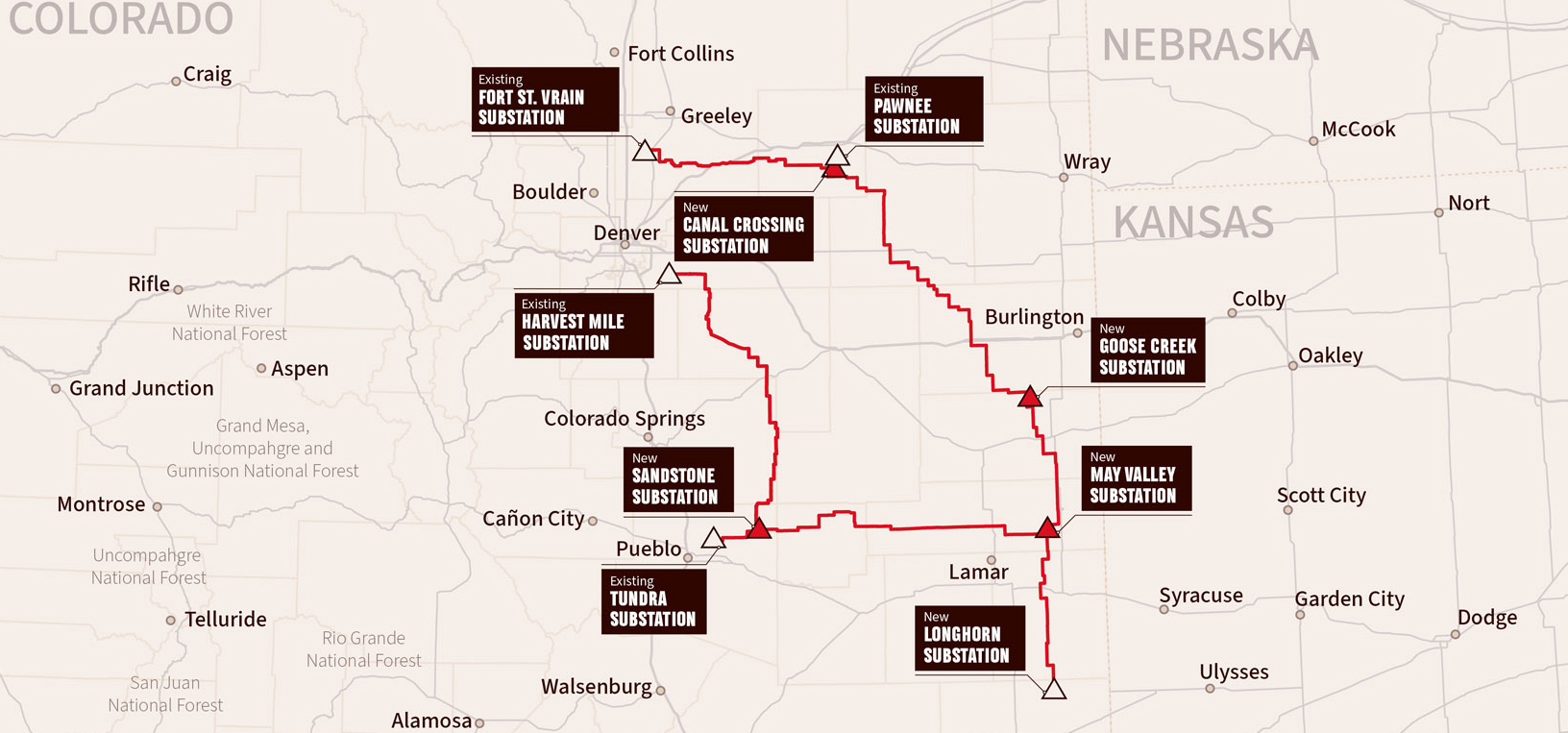
Colorado already has a good head start. The state has a healthy solar industry, and last year it ranked #7 in a state-by-state ranking of wind generating capacity. Still, there is room for more, and Colorado’s new 560-mile, 5.5-gigawatt Power Pathway transmission line is the key.
The Power Pathway aims to harvest wind and solar energy in optimal regions of Colorado and shuttle it to energy-thirsty parts elsewhere around the state. The developer, Xcel Energy, also notes that the 12-county, circular configuration of the project supports resiliency goals as well as renewables.
Xcel Energy launched the approval process for Power Pathway in March of 2022 and received the green light for five of the project’s six segments from the Colorado Public Utilities Corporation in June of that same year. As noted by Colorado Sun reporter Mark Jaffe, Xcel fast-tracked the project in order to take advantage of up to $850 million in tax credits that were set to expire at the end of 2025.
If that sounds somewhat speculative, maybe so. However, in June of 2022, Jaffe also reported that renewable energy developers were already stampeding into the counties covered by the new project, validating Xcel’s decision to move the transmission line forward before the energy-generating assets materialized.
One New Transmission Line, Much Renewable Energy
Under Colorado law, connections to Project Pathway are not exclusive to Xcel Energy, which helps to explain the surge in construction activity around the project. Jaffe updated his reporting earlier this year, taking note of the new 500-megawatt Dusty Rose I wind farm under the wing of Florida-based NextEra Energy, scheduled to be up and running in 2027. The project will be followed by the 175-megawatt Dusty Rose II wind farm.
Expanding Colorado’s existing stock of wind farms is also part of NextEra’s plan. The company built its 150-megawatt Carousel wind farm in 2015 and plans to add Carousel 3 and 4 for another 300 megawatts combined, along with energy storage.
Jaffe notes that Xcel Energy is also in the mix. Its 600-megawatt Singing Grass wind farm is on track for operation later this year. The project comes under the wing of Virginia-based Apex Clean Energy, which has two additional wind farms in the pipeline for Kit Carson County, totaling 750 megawatts.
Renewable Energy And The Transmission Bottleneck
By way of contrast, renewable energy developers in Kansas are still waiting for word on the long-delayed Grain Belt Express interstate transmission project. First proposed in 2011 by the startup Clean Line Energy, the ambitious project was designed to bring wind energy from Kansas, through Missouri, and on to Illinois and Indiana. Years later the project still wasn’t off the ground, having run into a buzzsaw of opposition from lawmakers in Missouri.
Clean Line eventually threw in the towel to focus on other projects, but that didn’t mean the end of the Grain Belt Express. In 2018, the leading Chicago-based energy developer Invenergy picked up the Grain Belt torch. The company has pursued the project through the remainder of Trump’s first term, all of former President Joe Biden’s time in office, and into Trump’s second go-around, with Missouri continuing to play the role of spoiler and stakeholders in Illinois getting cold feet as well.
Despite the roadblocks, during the Biden administration Invenergy assembled enough investor firepower to earn a $5 billion loan guarantee from the US Department of Energy, earmarked for the Missouri phase of the project. The loan guarantee won approval in January of 2025, just days before Biden finished his term.
With Trump installed in the Oval Office, the long journey of the Grain Belt Express seemed to conclude last July, when the Energy Department clawed back the loan guarantee. However, that’s not the end of the story. Invenergy promptly vowed to persist. As of January of this year, the Grain Belt Express was still alive and kicking, with a favorable ruling by the Illinois Supreme Court among the recent developments.
Community Solar For Colorado
While the Grain Belt Express and other interstate transmission projects are winding their way through the pipeline, the Power Pathway project has been stimulating more activity in Colorado’s solar industry, as well as its wind industry. In addition, solar developers are keeping an eye on new opportunities created by Senate Bill 21-261. Passed into law in 2021, SB 21-261 enables businesses, universities, and institutions to take credit for off-site solar projects.
Similar to community solar projects, off-site solar provides access to low-cost solar power where on-site opportunities are limited. The University of Denver is among those taking advantage. Earlier this year the school celebrated the start of operations on its first off-site solar farm, one of six under construction by the firm Pivot Energy for a total of 27 megawatts. The new array is also the first project to be completed since the passage of SB 21-261. The five remaining sites are expected to be completed by next year.
The balcony solar movement is also expected to ripple into Colorado soon. A bill under consideration by state legislators will enable property owners and renters alike to plug their own solar panels into their building’s wiring system, offsetting their use of grid-supplied electricity.
As for Trump and his Republican allies in Congress — oh, never mind. The wind will keep blowing and the sun will keep shining long after they leave office.
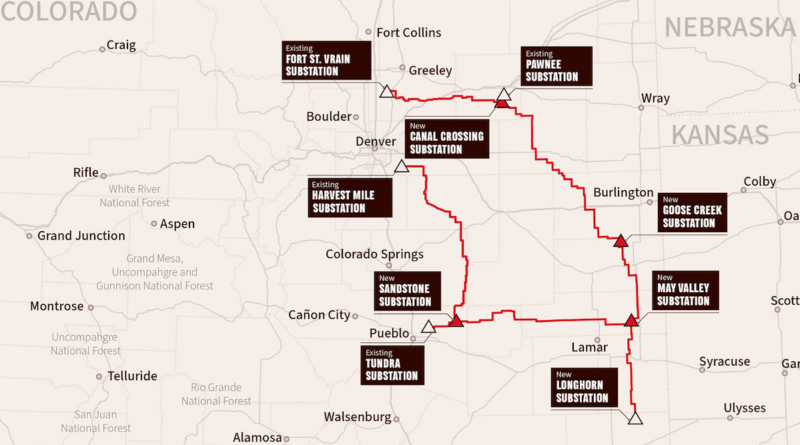
Image (screenshot): Renewable energy developers in Colorado are already swarming around the new Power Pathway transmission line, which will loop around 12 counties (courtesy of Xcel Energy).
Sign up for CleanTechnica's Weekly Substack for Zach and Scott's in-depth analyses and high level summaries, sign up for our daily newsletter, and follow us on Google News!
Have a tip for CleanTechnica? Want to advertise? Want to suggest a guest for our CleanTech Talk podcast? Contact us here.
Sign up for our daily newsletter for 15 new cleantech stories a day. Or sign up for our weekly one on top stories of the week if daily is too frequent.
CleanTechnica uses affiliate links. See our policy here.
CleanTechnica's Comment Policy