A Fresh Wave Of Perovskite Solar Cell Activity, Just In Time For The Next Oil Crisis
Support CleanTechnica's work through a Substack subscription or on Stripe.
The global oil crisis of today has much in common with similar price shocks in years past, except for one thing. Today, solar power claims a rapidly growing slice of the global energy pie, and the best is yet to come. Another round of activity is stirring in the area of perovskite solar cells, aimed at paring down costs, improving solar conversion efficiency, and deploying high volume manufacturing systems. Considering Trump’s war on Iran, domestic supply chain advantages are also in play.
More Perovskite Solar Cells, STAT
Perovskite solar cells have been a long time coming. The solar conversion potential of the finicky material perovskite first emerged back in 2009. Researchers have spent the past 17 years developing a series of more efficient iterations while also taming the material’s behavioral issues (see lots more perovskite background here).
While all that has been going on, perovskite stakeholders have also been fine-tuning the manufacturing process. Perovskite material lends itself to low-cost, high volume roll-to-roll systems. Similar to printing a newspaper, perovskite solar cells can be rendered in a solution, which can be sprayed or printed onto a flexible film.
One recent development in that area emerged on March 11, when the Dutch independent research organization TNO (the Netherlands Organisation for Applied Scientific Research) announced a new perovskite solar cell manufacturing venture called Pervion Technologies.
“Perovion is initially focusing on market segments where demand for flexible solar cells is already clear,” explains Pervion CEO Stefan van de Beek, with the need for speed in mind.
“Together with module integrators and industrial partners, we are developing applications that can reach the market relatively quickly. From these first applications, we aim to grow toward large‑scale European production,” van de Beek added in a press statement.
TNO Takes Aim At The European Supply Chain
TNO has big expectations for Perovion. The organization has been developing plans for a “Roll2Roll Perovskite Factory” network throughout Europe, in partnership with the European research organizations SolarNL and Solliance.
Along with the advantages of roll-to-roll manufacturing, TNO cites the benefits of local supply chains and interconnections with other European-centric industries. “Perovion Technologies’ solar cells are manufactured on thin, flexible foils. This allows them to be used in places where traditional solar panels are too heavy or rigid, such as lightweight roofs, façades, vehicles, or historical buildings,” TNO explains.
“Instead of importing solar panels from Asia, Europe can produce these solar cells itself, reducing dependency on foreign manufacturers and strengthening the European economy,” the organization emphasizes.
Meanwhile, Here In The USA…
Another perovskite solution has emerged in the form of tandem solar cells, which combine one or more layers of perovskite with the more familiar and more durable material silicon.
Silicon has set the standard for mass-market, high-efficiency solar cells, but silicon is relatively expensive. The perovskite sheen offers an opportunity to reduce the overall cost of solar power, by launching silicon solar cells past their theoretical efficiency limit.
High efficiency ripples into the installed cost of solar arrays by reducing hardware and transportation costs. With more efficient solar panels, developers can also trim the cost of land acquisition, site preparation, and maintenance. The efficiency factor can also cut down on shade within a solar array, providing more opportunities for agrivoltaic applications.
Here in the US, keep an eye on the California firm Tandem PV for next steps towards commercial development. Trump has dropped the ball on federal support for the domestic solar industry, but California is among the states picking it up. Last July the California Energy Commission tapped Tandem PV for a $4 million grant, earmarked for third-party testing and validation.
The CdTe Thin Film Solution
Perovskite is also beginning to emerge in the area of CdTe (cadmium telluride) thin film solar cells. The CdTe formula has largely failed to catch on elsewhere around the world, but it is fairly common among utility-scale solar arrays in the US, and that’s no accident. The US Department of Energy has been cultivating an interest in the technology since the 1990s, with the aim of on-shoring and diversifying the domestic solar supply chain.
The Ohio-based CdTe firm First Solar has nailed down the pole position in the CdTe solar cell industry, deploying research at the University of Toledo as well as a series of partnerships with the Energy Department (see more First Solar background here).
In support of First Solar’s business model, researchers from the University of Toledo and the National Laboratory of the Rockies (formerly the National Renewable Energy Laboratory) have calculated that the domestic CdTe industry can ramp up to a manufacturing capacity of 100 gigawatts (DC) per year by 2030, under favorable conditions.
Earlier this month, First Solar also announced a patent license agreement with the UK perovskite solar cell innovator Oxford Photovoltaics Limited. The agreement clarifies that First Solar will apply perovskite to its CdTe thin film technology, leaving the silicon territory to Oxford PV.
“The non-exclusive license paves the way for First Solar…to continue advancing its development of PV solar devices employing a perovskite semiconductor for potential applications in the US utility-scale, commercial and industrial and residential markets,” the company explains.
Next Steps For Solar Power In The US
First Solar is not the only domestic solar manufacturer eyeballing the 100-gigawatt mark. Stakeholders in the silicon solar field have finally nailed down an all-domestic pipeline as a key step towards ramping up production capacity.
Earlier this year, Tesla CEO Elon Musk also indicated that he plans to add 100 gigawatts’ worth of solar to the US grid in short order. Reportedly, the idea is to set up US manufacturing facilities with equipment from China.
Coincidentally or not, media observers have reported that MAGA influencers also began talking up the benefits of solar power earlier this year, including Trump himself. There are some indications that a lobbying effort by the organization American Clean Power is in play, leveraging the interests of the powerful data center lobby, of which Musk is also a part.
Piling one coincidence upon another, one of those newly minted solar enthusiasts is former Trump aide and Musk’s former helpmate at DOGE, Katie Miller, who is also known as the spouse of the current high-level Trump aide Stephen Miller. If you have any thoughts about that, drop a note in the discussion thread.
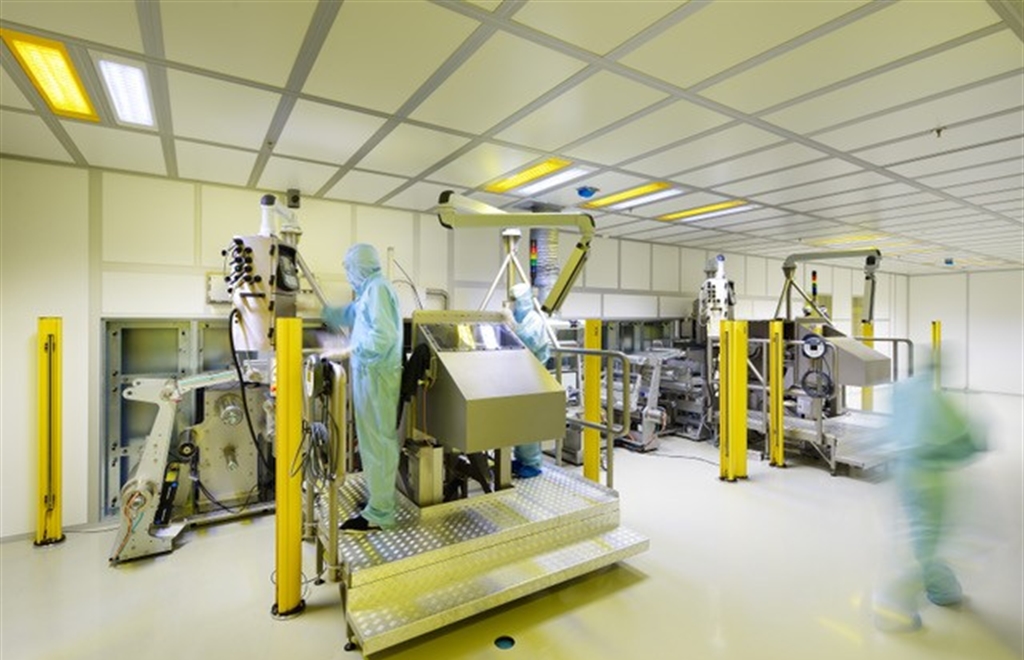
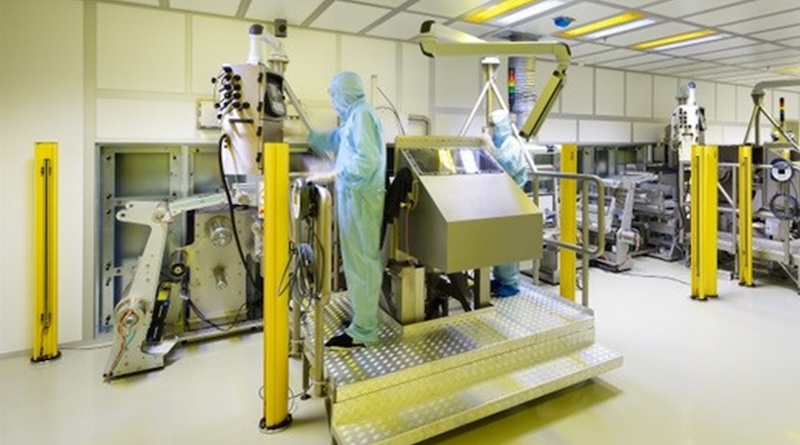
Photo: Perovskite solar cells can be manufactured locally in Europe and elsewhere, providing a buffer against global supply chain disruptions such as the one occurring right now (cropped, courtesy of TNO).
Sign up for CleanTechnica's Weekly Substack for Zach and Scott's in-depth analyses and high level summaries, sign up for our daily newsletter, and follow us on Google News!
Have a tip for CleanTechnica? Want to advertise? Want to suggest a guest for our CleanTech Talk podcast? Contact us here.
Sign up for our daily newsletter for 15 new cleantech stories a day. Or sign up for our weekly one on top stories of the week if daily is too frequent.
CleanTechnica uses affiliate links. See our policy here.
CleanTechnica's Comment Policy