
Faraday Future Pushes Into the AI Future With Three New Robots
Support CleanTechnica's work through a Substack subscription or on Stripe.
CleanTechnica is back in Las Vegas for yet another Faraday Future product launch. In 2026, Faraday Future invited us out to NADA, the North American automotive dealerships annual meeting, to show off a trio of AI-enabled robots.
Disclaimer: Faraday Future paid for the author’s travel and accommodations to attend this event.
The three robots come as part of a multi-tiered strategy with a heavy focus on software and service.
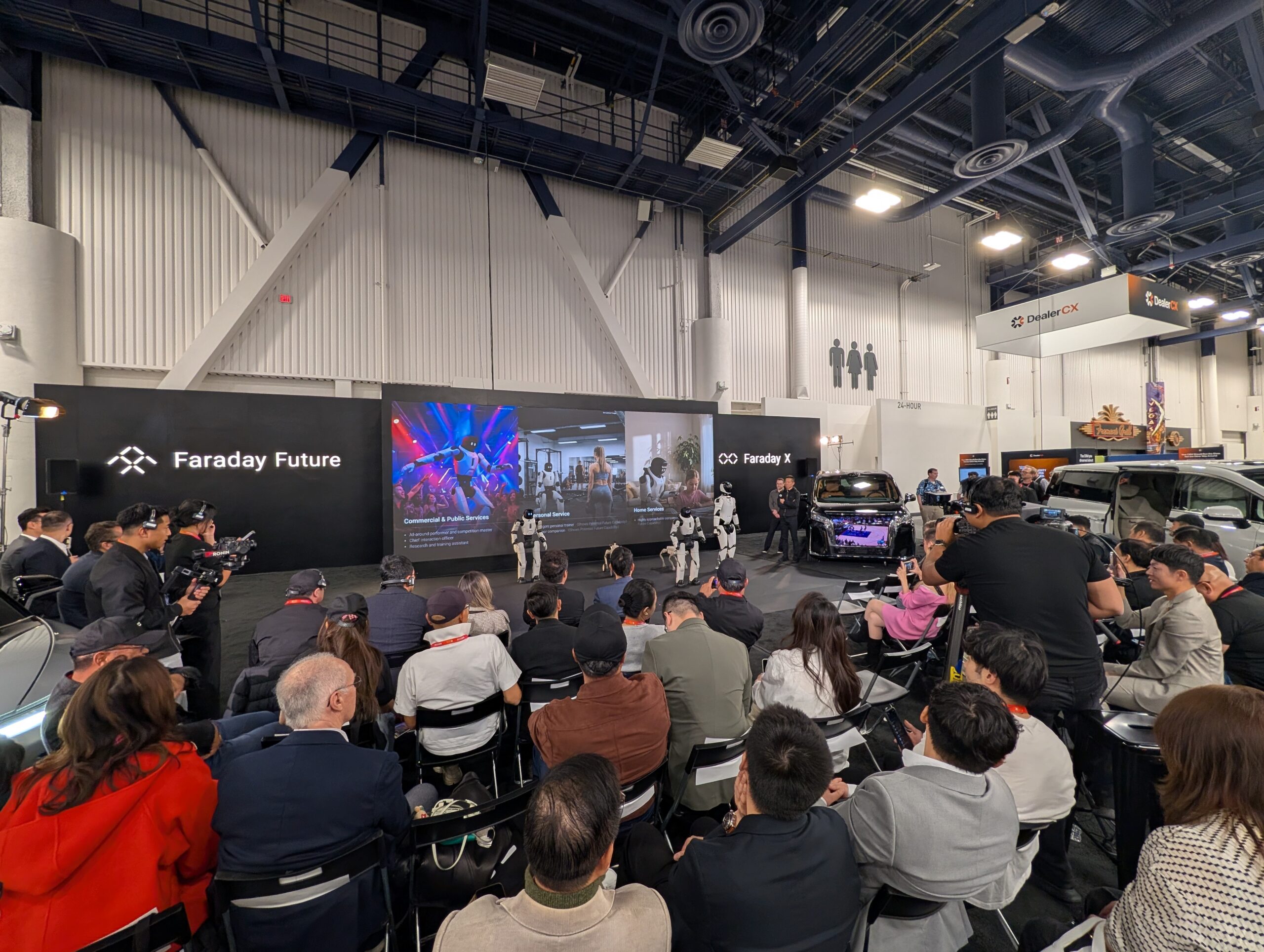
One of their key beachhead markets is working in the automotives space. We’ll unpack their full vision for “Embodied AI (EAI) humanoid and bionic robots” shortly, but first we wanted to start with a bit of the backstory on Faraday Future and their myriad of product lunches in Las Vegas.
A decade in the making
10 years ago we came to Las Vegas at the behest of Faraday Future to view what we thought was going to be their revolutionary electric vehicle that would change the world. Inside of a large circus style tent erected in the middle of what would normally just be an empty parking lot, they revealed the FFzero1.
In the years that followed, Faraday Future unveiled the FF91, which was the electric vehicle they would eventually move into production. Again, it was at an event in Las Vegas, and, again, it was very hard to believe at the time with its $180,000 price tag.
CleanTechnica CEO Zach Shahan and I talked with Faraday Future’s Nick Sampson in Long Beach where he proclaimed that while he had not driven the FF91 in person, he had driven it, “in the future.” It was supposed to be a cheeky commentary about how the company was so digitally forward with their design process that they didn’t need to build actual prototypes. Instead, it came across as just another layer of frosting on a Faraday Future cake that seemed to be mostly fluff with very little substance inside.
We’re back, baby
Fast forward to today and ten years after the FFzero1 event, we’re back in Las Vegas for yet another Faraday Future product launch.
“Today marks a pivotal and exciting point in FF’s history, one that we’ve been planning for some time now,” said YT Jia, Founder and Global Co-CEO at FF. “Working alongside humans, we believe EAI robots will help reshape productivity models and drive a new leap forward in productivity through human–machine symbiosis.”
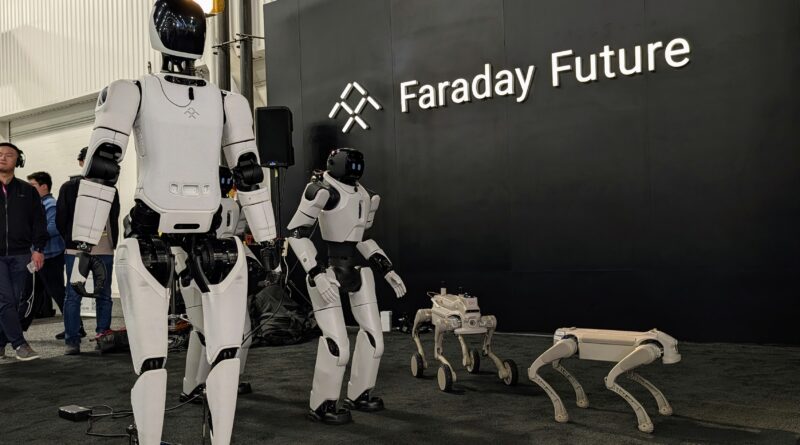
The three robots are called FF Futurist (full-size professional humanoid), FF Master (athletic “action master” humanoid), and FX Aegis (quadruped security/companion). The world of AI has taken over Silicon Valley in California, and for good reason.
Tech companies in the United States and abroad have developed advanced AI neural nets that already bring into question the utility of human knowledge workers. Shaping their respective AI tools into agents, they are able to perform tasks with very little supplemental instructions, code entire applications from single prompts, modify videos, create novel images from scratch, and so much more.
Taking AI tools that are backed by the most powerful supercomputer clusters ever assembled and packaging them up with a robot front end opens up entirely new use cases. This is the frontier world of “physical AI,” and Faraday Future is tossing its name into the ring as it contender.
FF Futurist
This humanoid robot was designed to be an all-around utility bot. It feels more geared towards knowledge work than physical, with its NVIDIA Orin processor visiting up to 200 TOPS of processing power.
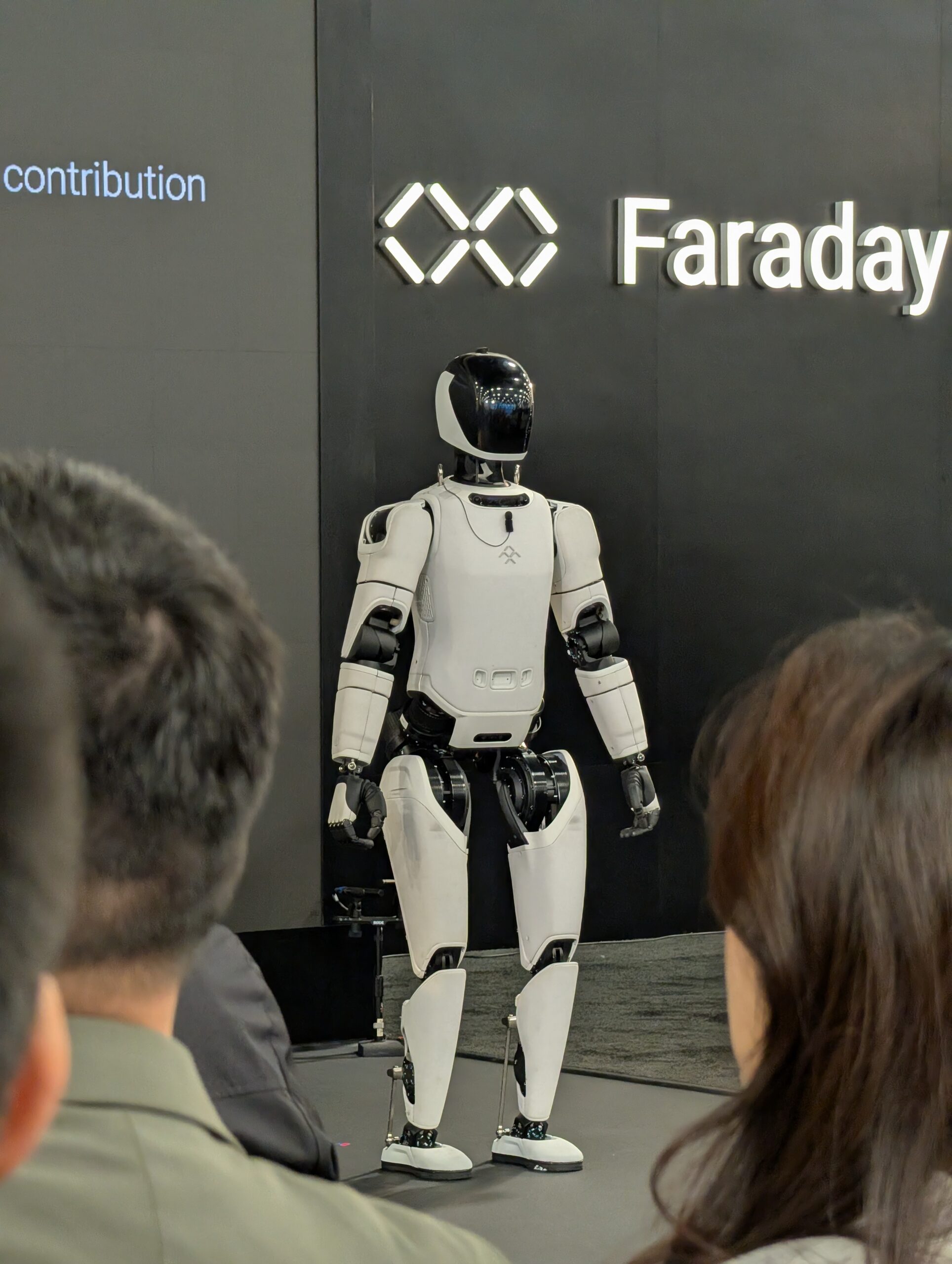
On the perception front, FF Futurist is kitted out with a range of HD cameras, LiDAR, tactile sensors, and 5G and WiFi connectivity. There’s no info about redundancy on any of these sensing, processing, or connectivity systems, so that’s a potential concern. It boasts 28 motors with a 3-hour run time from it’s hot swappable battery pack.
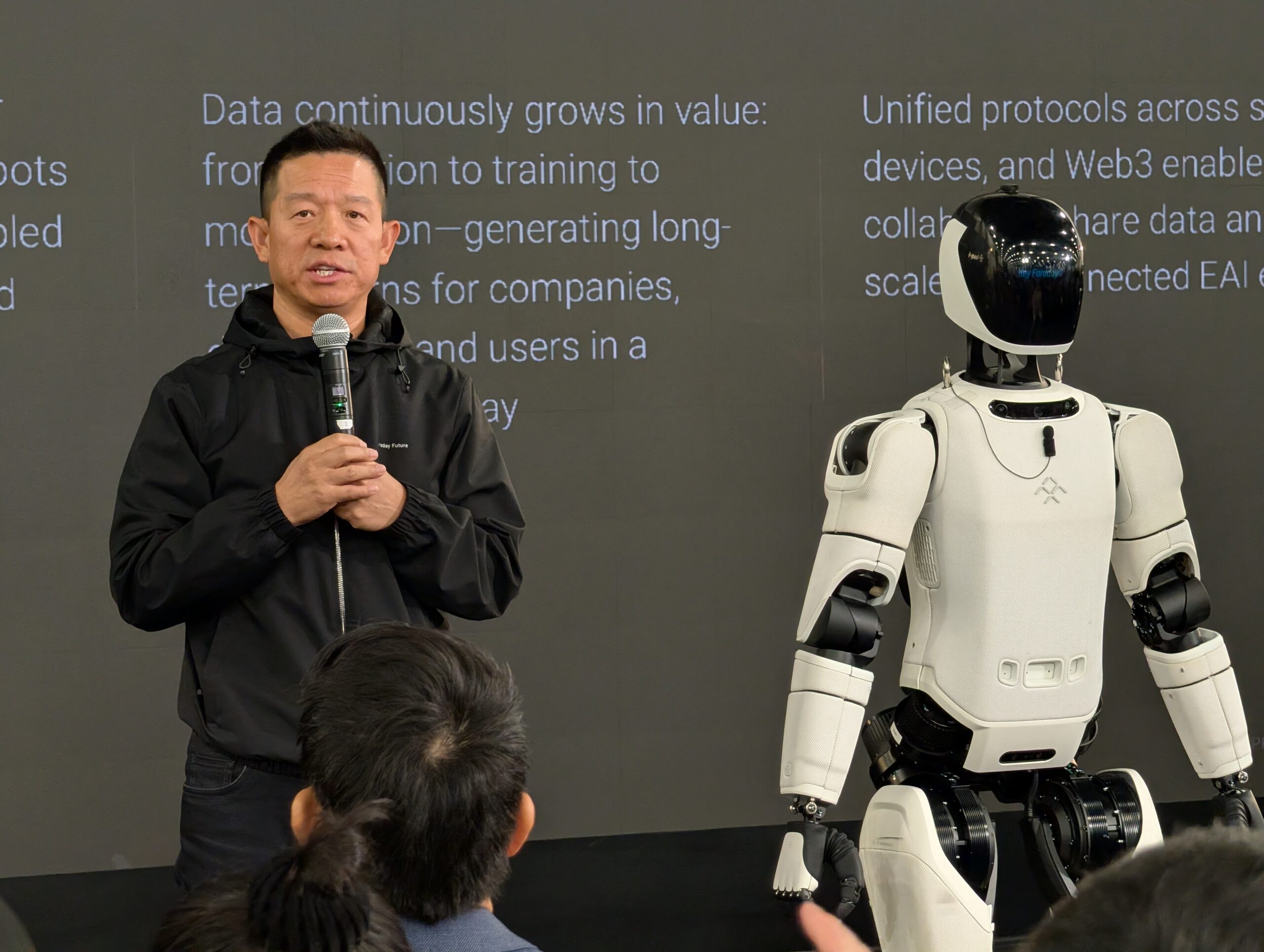
The possible use cases for the full sized humanoid robot according to FF include use as a concierge, sales advisor, event host, teaching assistant, or brand ambassador. With future software updates, they hope to support applications in the home and in factory work.
FF Master
Faraday Future is pitching FF Master as more of a social master than a robot that will do anything physical. It can talk to your kids at home, be a companion for you, or talk with your parents. It all sounds a bit dystopian, but maybe that’s just the sad reality of where we’re headed as a species.
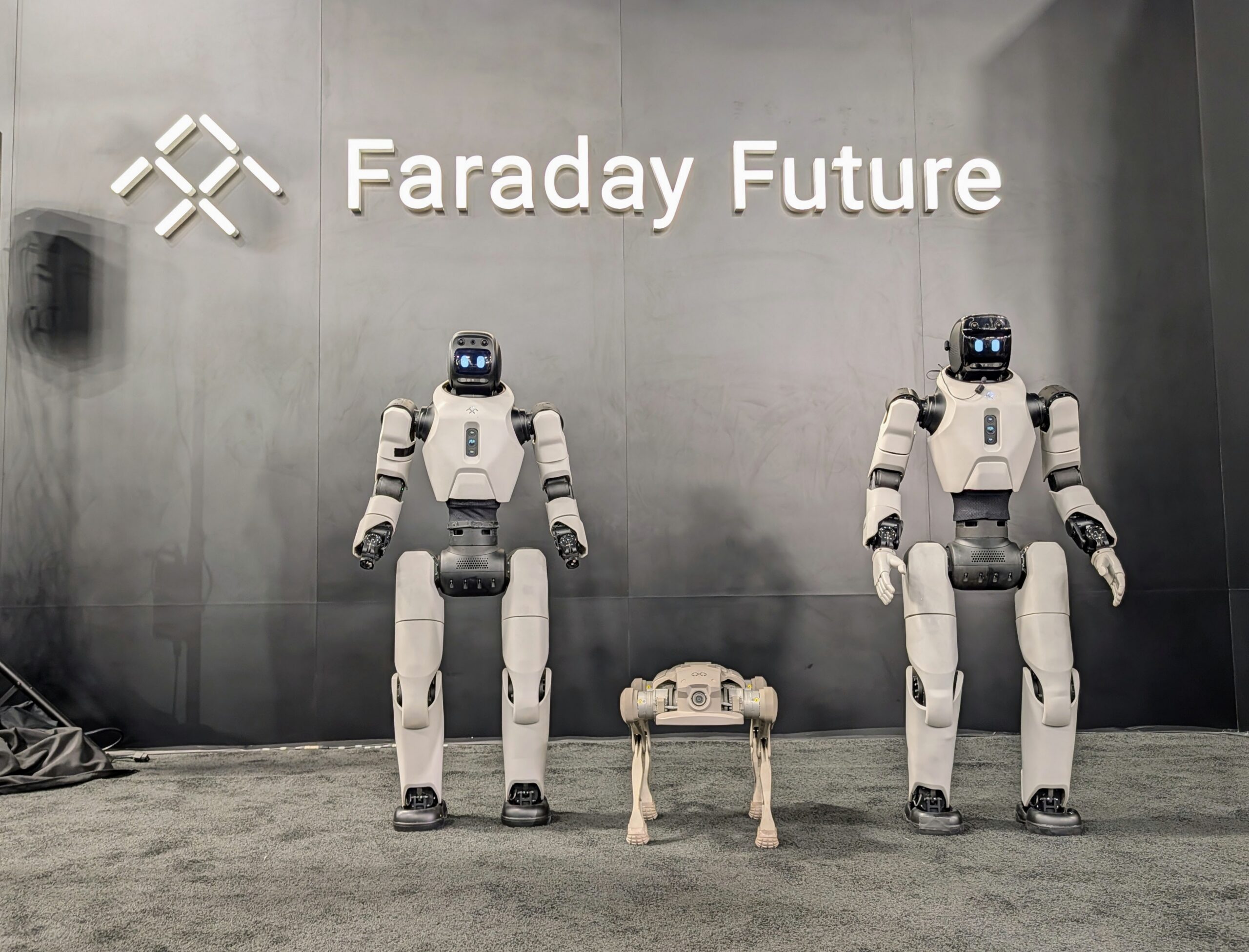
FX Aegis
Aegis is a quadruped designed for work in industrial applications. It has a range of sensors and connectivity, with capability to work even when it’s not connected. They plan to offer it with four legs, and a four-wheeled version for even more flexible applications.
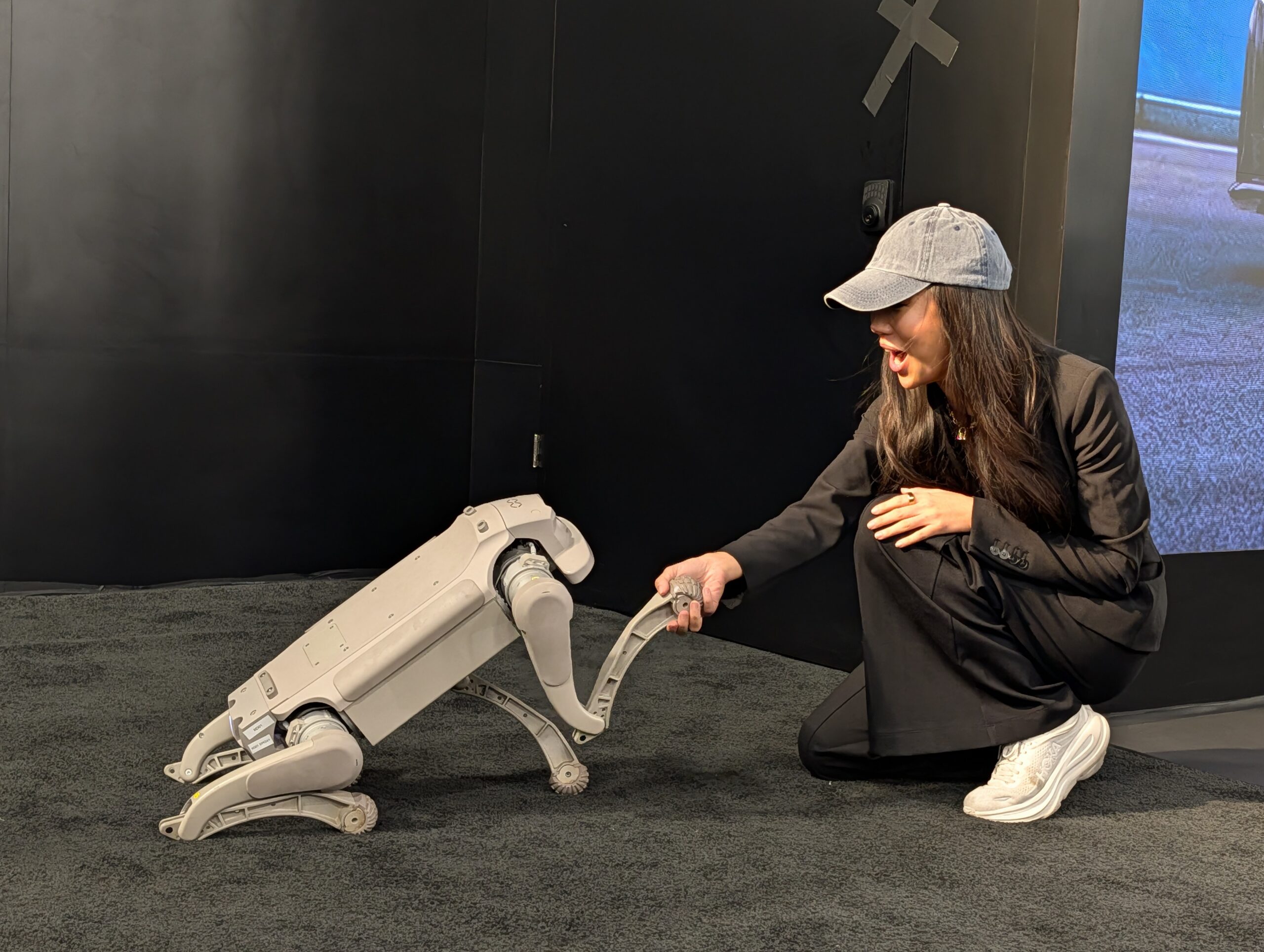
They designed it to be extensible, with the ability to add modules like Lidar, depth cameras, communication modules, robotic arms, fire extinguishers, and professional security plugins. That opens up a wide range of custom applications, if FF can scale up the software to support so many custom modules.
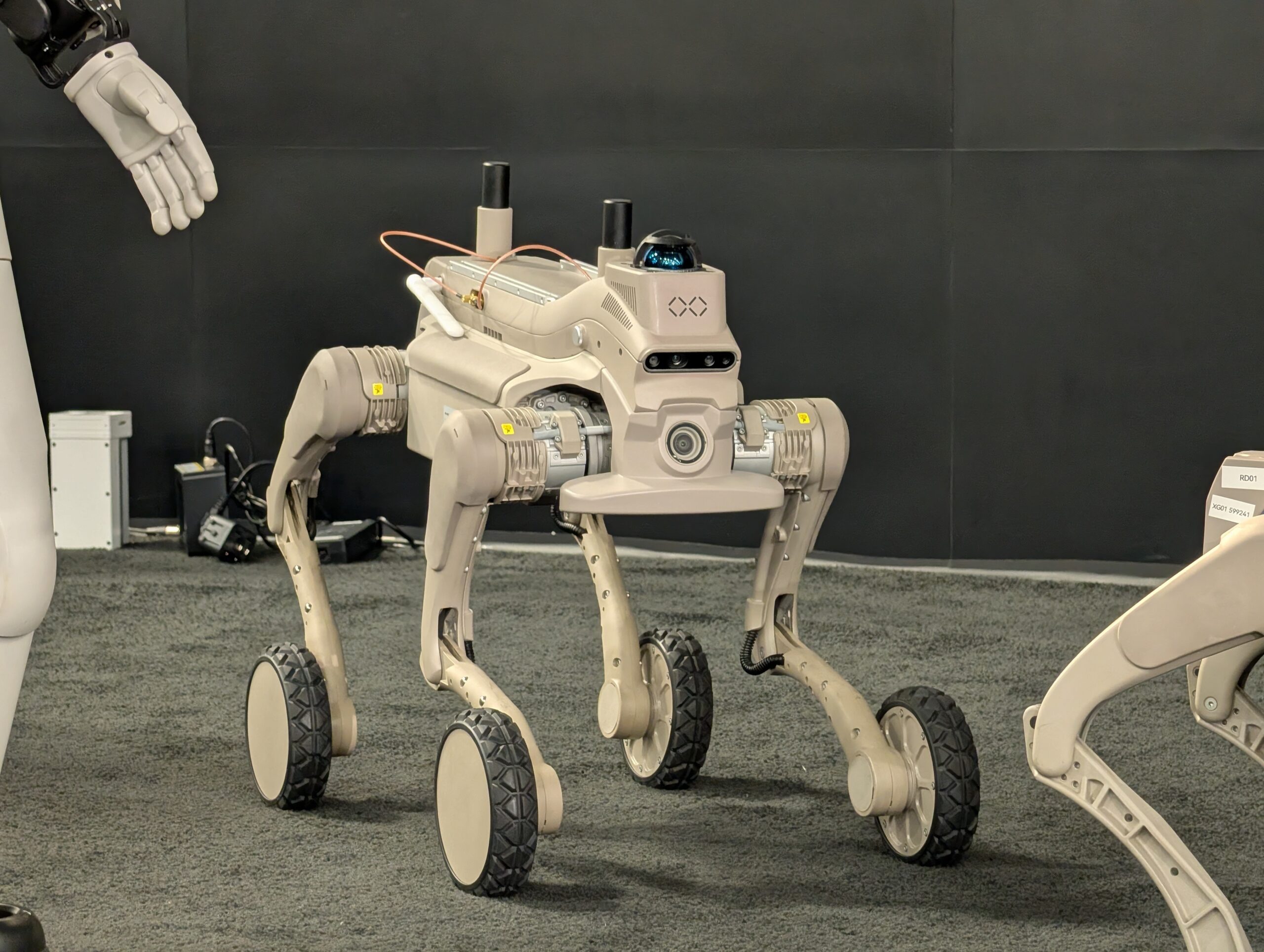
They envision it being used as a patrol unit, with follow-me capability. With its connectivity, that alone could be a significant area of adoption, but as with all of these robots, FF will first have to demonstrate their ability to deliver on the software that makes all of this possible.
On software …
The software is really where FF will have to prove itself, and that’s true across all of its robots. As we’ve seen with the different AI chatbots, software in this space evolves extremely quickly, with many companies pushing out multiple updates per day. That’s possible on the software side of things, but it gets complicated when the hardware platform can easily be updated.
Faraday Future expects FF Futurist to be able to interact in up to 50 languages with a customizable face display in support. FX Aegis had many extensible modules, but all of them will require customization on the software side.
They will need to demonstrate that their software is stable, secure, and personable before it even matters that they can add value or not. It’s surely going to be a bumpy ride, and with Faraday Future planning to ship the first units in February 2026, we should know very soon what their software baseline is.
Pricing
The upfront pricing for FF’s robot units is attractive, assuming they have a robust software suite to deliver on the low hanging applications:
- The FF Futurist series will start at $34,990.
- The FF Master series will start at $19,990.
- The FX Aegis series will start at $2,499.
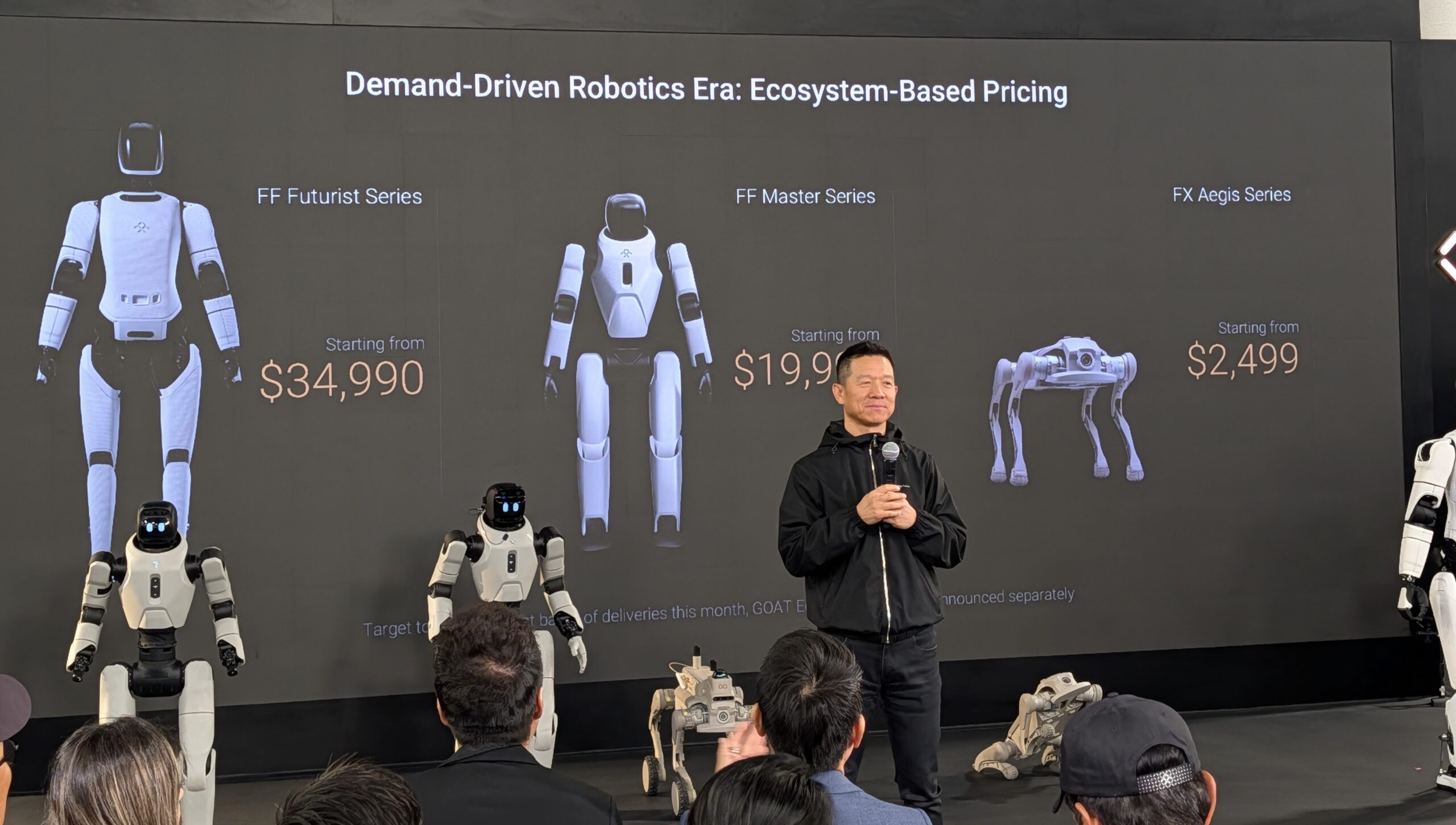
The robots will be bundled with additional software packages called ecosystem skills that unlock additional capabilities:
- The FF Futurist ecosystem skills package is $5,000.
- The FF Master ecosystem skills package is $3,000.
- The FX Aegis ecosystem skills package is $1,000.
According to FF representatives, the robots will be built in the US, so any impact from tariffs should be limited to the cost of importing raw or intermediate materials that go into the robots, like batteries, motors, etc.
Overall
Faraday Future has a long track record of launching but not ever actually delivering on scalable world-changing products. Their founder and global Co-CEO YT Jia continues to have immense vision and is not shy about boldly pushing Faraday Future into the unknown in an attempt to manifest his vision in a new company.
To date, his bold vision has landed flat in the United States, with a larger vision than he is able to bring into reality in the form of Faraday Future.
Their latest vision casting event in 2026 is simultaneously even more bold and audacious while at the same time being more approachable and grounded. It’s even more bold and audacious because no other company in the world has yet to deliver a functional AI powered humanoid robot.
Faraday Future just proposed three of them.
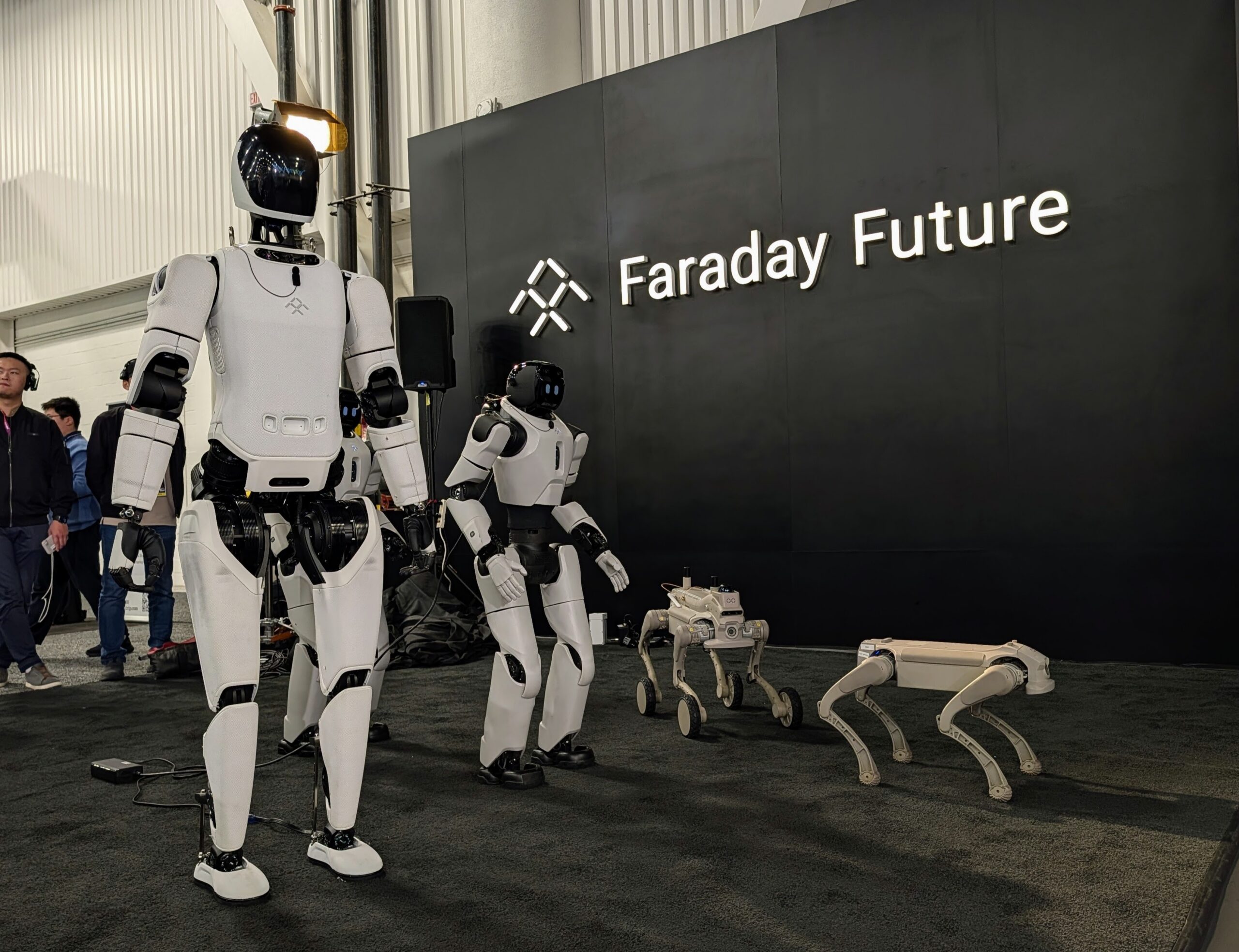
No other company in the world has yet to develop a fully functional artificial general intelligence that can be ported to a humanoid robot and put to work in traditional human applications.
At the same time, there might be more reason to believe they can succeed this time around. Robots are more affordable, making it easier for the company to secure early customer orders and build up a sizable base of orders. They are also smaller and at least conceptually easier to build and source parts for.
While no supply chain for humanoid robots exists at scale today, many of the feedstock components do already exist. Small motors, high power batteries, fast chargers, small screens and actuators. Supply chains for all of these exist, and they’re disparate verticals, but nobody has truly pulled them all together into a cohesive humanoid robot.
We’re obviously going to have to watch this space to see if Faraday Future can actually deliver the robots they our vision casting at NADA, and thankfully we won’t have to wait very long. They are opening up the order books for all three robots right now and aspire to make the first deliveries to customers by the end of this month.
That’s right, they are planning to ship the first of their robots in February 2026. That’s a stretching goal, and thankfully it means we will know very soon whether or not the robots work and we will have a much better gauge at that point what to think of Faraday Future’s reboot.
For more information about Faraday Future and their new robots as well as their vehicles, head over to ff.com.
Sign up for CleanTechnica's Weekly Substack for Zach and Scott's in-depth analyses and high level summaries, sign up for our daily newsletter, and follow us on Google News!
Have a tip for CleanTechnica? Want to advertise? Want to suggest a guest for our CleanTech Talk podcast? Contact us here.
Sign up for our daily newsletter for 15 new cleantech stories a day. Or sign up for our weekly one on top stories of the week if daily is too frequent.
CleanTechnica uses affiliate links. See our policy here.
CleanTechnica's Comment Policy

