
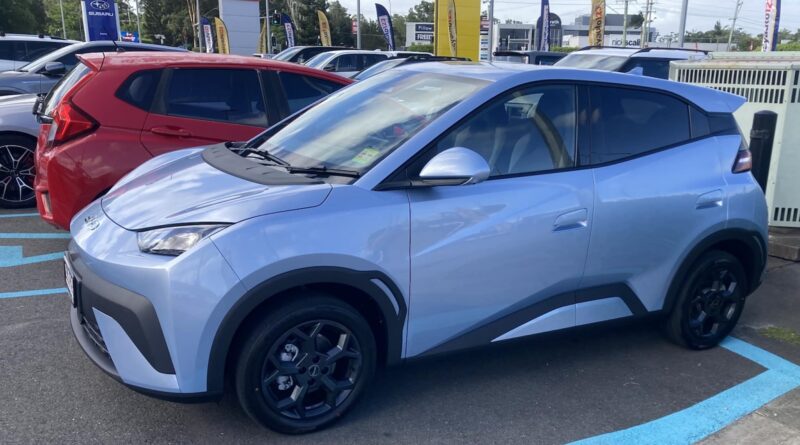
How the West Lost the Automotive Industry
Support CleanTechnica's work through a Substack subscription or on Stripe.
Or support our Kickstarter campaign!

By David Waterworth and Paul Wildman
Yes, past tense. The West has already lost the dominance of the global auto industry. Why? And will the USA become the new Cuba? Recently, my writing colleague, Dr Paul Wildman, contacted me and suggested we explore these topics. What is the West’s capability and calibre of (re)action to the Chinese EV onslaught? Where will we be in 3 years (2028)? Will the auto industry in the West be destroyed? Did it destroy itself? If so, how?
A short answer from us was, yes. It is highly likely that the giant auto industries of Japan, Germany, France, and the USA are becoming local suppliers to a niche market, despite all attempts to the contrary. In a few years time, we will look back and know. Whether we will be able admit, let alone learn from, our mistakes is another thing.
So, where does this “decline” come from?
I think it boils down to false pride (hubris) and lack of customer commitment and respect — in a term, “profit uber alles.” The West has always seen China as a third world country and never acknowledged the quality of its civilisation. It was a country of vast resources to be exploited by the West over the past few centuries. This lack of respect has led to the West’s automotive downfall.

In recent times, as China rose from obscurity and poverty, Western carmakers saw huge profits in the market. China insisted on joint ventures. For the OEMs, this meant immediate and vast profits. For the Chinese, it meant technology transfer. In the long game, the latter has proved to be much more important than profit. Now the reverse is taking place as Japanese carmakers build cars the Chinese way, on Chinese skateboards, and Chinese companies build factories in Europe and Canada. (See recent articles re Mark Carney.) China in the last ten years has gone from poorly produced crap to very sophisticated cars. What happens if they keep up this pace of innovation and improvement?
As the international competition started to increase, the West faltered
After the profits started to dwindle and new startups in China started to thrive, the West’s reaction was to pull up the drawbridge, fill the moat with tariffs, obfuscate the positive reality of EVs, spread misinformation, withdraw from firm pro-EV commitments, and sometimes engage in downright racism. “More cheap Chinese rubbish.” In short, the aim is to try to regain control of the narrative even if it means denigrating the “opposition.”
All of this is an attempt to buy time so that OEMs can catch up. But this is not happening. Japan’s pivot is too slow, and its focus is dissipative even to the point of decrying the viability and environmental credentials of EVs at the very time BYD is rocketing to selling nearly 2 million BEVs in 2025 while Toyota sells 0.1 million!!!! By the way, BYD started making BEVs around 2010 and Toyota started making cars in 1936!!!! In short, it took Toyota 90 years to make 0.1 million BEVs and 15 years for BYD to make 2 million BEVs for BYD. If EVs are the future, and we firmly believe they are, and the present also, then Toyota has committed corporate strategic suicide over the past 15 years. WHY? HOW?
Meanwhile, Germany’s car companies are plagued by software, reliability, and price issues. Worse than that, the USA, especially Ford, seems to have given up. As the US financialised everything from the mid-1980s, manufacturing has been offshored (remember globalisation) and will have to be rebuilt from scratch. China has a near monopoly of the refining of battery materials. Plus, estimates put China’s comparative advantage as significant — skill base, industrial ecology, transport, focus on real economic assistance, strong supplier networks, and strong logistics ecosystems.
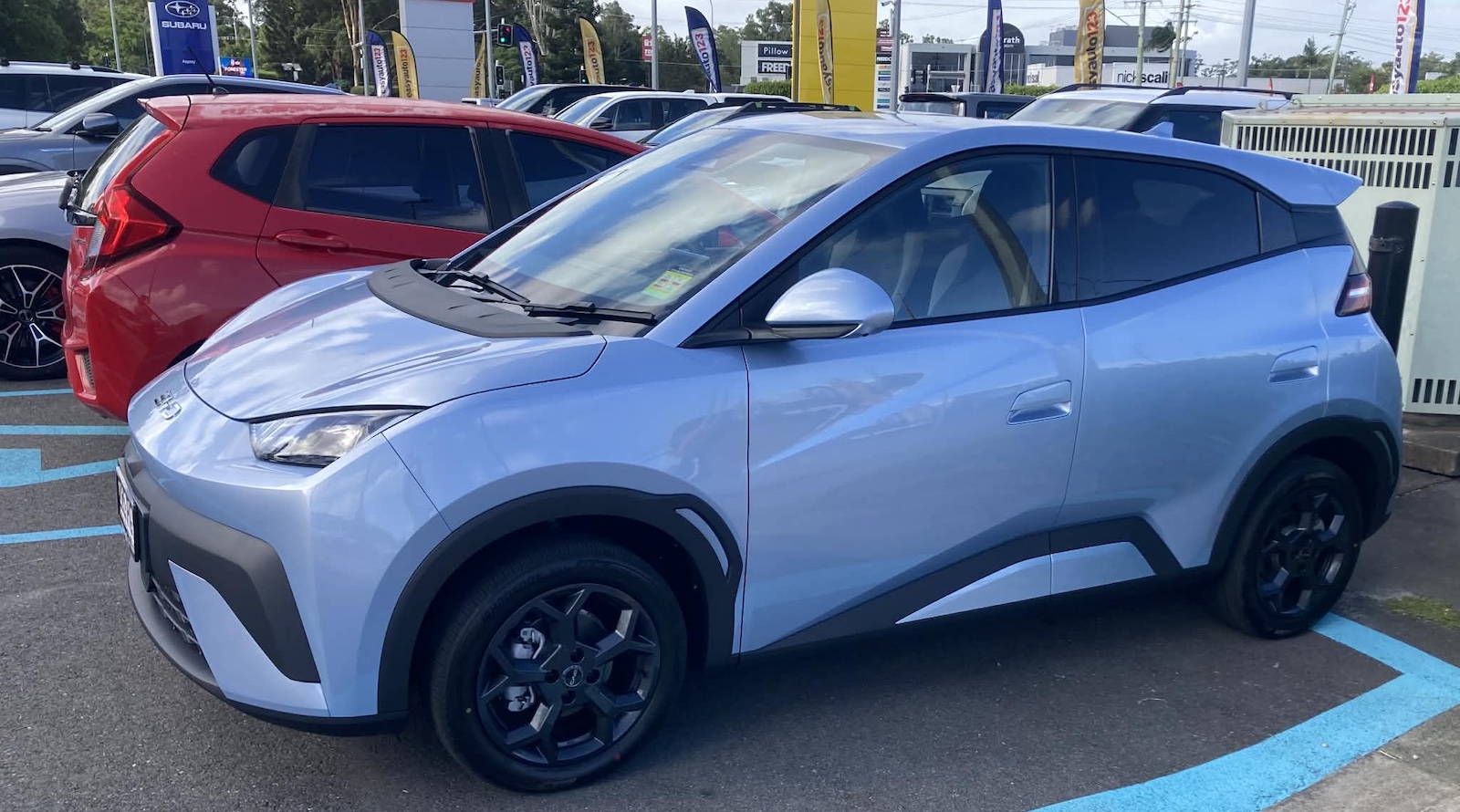
Quo Vadis EVs?
Yes, we are presupposing that the global car market will be dominated by electric vehicles. The statistics published monthly here at CleanTechnica show that this is the inevitable future we are heading towards. Except perhaps in the USA — the new Cuba? Even conservative predictions are saying that by 2030 (less than 50 months away) the car market will be mainly electric (it already is in China and the Scandinavian countries).
Can Europe compete with a “real” EV industry and trade wars on its doorstep? Can Japan let go of hydrogen and refocus on BEVs? USA — that’s a whole different kettle of crazy cats. All the while, the West is also hooked on strategic incompetence and the Japanese auto industry is committing strategic suicide.
Paul and many other commentators have pointed out the difference between Western and Eastern philosophic positions. While the current US president (and possibly the whole capitalist system) is driving its citizens INTO poverty (80%+ of the population), China has lifted the majority of its people OUT of poverty (literally!) into a wealth that they could have only dreamt off. Three visits to China in the last decade have shown me that. Confucianism has played its part.
Some in the West say that China’s rising dominance is all about state subsidies — thus justifying tariffs. These subsidies were smart and targeted, gradually removed to encourage the industry to produce better products. This is smart futures planning by a futures oriented central, and yes, authoritarian government. The companies that survived each episode of economic Darwinism were stronger and the products better.
They benefitted from the strong planning, infrastructure resourcing, and skill development roles of the government with a genuine commitment to its people, and with vertical integration within a city/province specific manufacturing ecology. This, in each instance, is the direct OPPOSITE of what is happening in the West, especially in the USA. All this has led to China Automotive Inc. working in a rapid innovation cycle matched with unrivalled manufacturing flexibility, depth, and cost-effectiveness.
The West continues the hubris by financialising
The West’s hubris has produced massive miscalculations. The current “auto shock” reminds me of the “oil shock” of the ’70s that led to massive wealth being transferred from the West to Arab states — massive miscalculations over the superiority of EV technology, and the need to build an entire eco system around it. Sadly, Australia, one of the world’s leading suppliers of rare earths and battery materials, has missed the boat here and in low or no royalties on gas sales, poor vocational education, all caused by lack of political vision. We sell the raw materials but do not move up the value stream. A profoundly myopic industry and government — to us this is the betrayal of future generations. Australia and much of the West remains in a condition we call out as “managed decline.”
Michale Dunne comments: “In 1985, the U.S. controlled 60% of rare earth production. We had the mines, the processing, and the magnet manufacturing. Then the US gave it all away. Today, China controls about 90% of rare earth metal making and magnet manufacturing and 99% of heavy rare earth supply (the dysprosium and terbium needed for high-performance magnets).” As Michael Dunne argues in his most excellent article Breaking China’s Magnet Chokehold, “the most devastating blow wasn’t Chinese industrial espionage; it was American corporate short-sightedness.” Similarly, in 1965, the US accounted for around 50% of global production whereas China accounted for 3%. Today, the comparative figures are 15% and 32%, respectively.
An example of Western automaker naivety was revealed today: General Motors financialised in the early 2000’s and by 2008 was broke. As a “fightback,” GM says it will try to take more share of the Chinese market with a new PHEV Buick. This appeared alongside announcements that the Chinese market has probably reached peak PHEV and is moving further towards BEV. We’re looking forward to the sales stats on that one.
Those who prefer video might like the Electric Viking’s take on this:
Paul comments further: “The West in general seems utterly impotent in the face of Chinese competition. High energy prices, complex labour regulations, high wages, multilayered, complicated compliance requirements and very poor skills and innovation policies then compound the underlying challenge of offering value proposition to its customers. Legacy seems to create a drag lag in innovation and Western firms are just giving up and retiring to supplying the national market e.g. Ford.”
A personal aside
In Paul’s recent experience buying an EV, he first checked out an electric BMW. The model he wanted was retailing for AU$160,000. Having been firm BMW fan-folks for two decades he and his wife, both retired, looked to buy a replacement EV for their 5 year old Tesla. BMW was their preference. Yet Chinese manufacturers offered similar or better spec cars for literally half that price. So (this year) they sold their BMW and bought two Chinese EVs!! RIP German automotive manufacturing.

Is this to be a common outcome for similar middle-class demographics in the West. Certainly, this IS the case in China and we suggest is increasingly so here.
So, what is “the” BIG question sitting hidden in the wreckage of the West’s auto industry?
This insight is provided by Paul: “This article comes to you from within the wreckage of what was once a proud and century long tradition of automotive manufacture completely disrupted in 60 months.” And he asks: “By 2030 will there in effect be any auto industry, of note, in the West, including Japan? Are they/we simply reacting to the near future by recreating the past? Is it strategic suicide through omission, commission all leading to submission to China? Nowadays in an unstable, turbulent, complex environment of rapid multi foci change, conventional strategic and departmentalised planning simply is unable to cope anymore.”
In my lifetime, I watched the demise of British Leyland. One of the largest carmakers in the world in the 1950s was extinct by 1980 due to hubris and lack of respect for the competition. This was embodied Lord Nuffield’s arrogance and search for profits versus investments in R&D. Now we are seeing the same play on a larger stage.
The West did not (want to) believe that a “backward” country like China could achieve what it has, even after seeing the rapid progress of the late 20th century. Western automakers, enthralled by the fossil fuel industry, did not believe that an electric car should/could be a success. They gave away their technology in exchange for the beads and blankets of short-term profits from financialisation. They dismissed the values of other philosophical systems. Hubris comes at a cost!
In conclusion, we wonder if there are executives in the strategic planning divisions in the bowels of Toyota, VW, or Ford asking these questions: “How come China in a matter of 160mths has destroyed the West’s auto industry, built up over the past 1600mths?” Is anyone asking this question? We are. CleanTøechnica is. But then again, we are retired nobodies, so double nobodies. Where did this come from? Is it a clash of world view (i.e. Confucianism vs Individualism)? [Here’s a little homework, take a look at this: Little, R. (2006). A Confucian-Daoist Millennium? Bacchus Marsh Australia: Connor Court. 280pgs.]
We suggest that worldview makes a difference, and in articles like this, we are trying to (a) raise this question, (b) start a constructive debate on same, and (c) identify some practical responses for us collectively and individually. Our children’s children deserve nothing less. We must ask the question, consider the situation, get some answers, and implement them ALL before 2030, or we fear the economic situation globally will flip and we in the West will become the minority shareholder so to speak.
In practical terms, what could this mean for us today? The auto industry is, we suggest, the canary in the mine for the larger macro-economic picture. Consequently, for investment, prepping, and our grandchildren’s children’s education, we suggest that the economic centre of gravity in our world tomorrow is shifting to “collaborative” countries with growing “real”, “greener” economies and not financialised ones. Sadly, this excludes most of us in the “developed” West. We invite further discussion and are looking forward to your comments.
Support CleanTechnica via Kickstarter

Sign up for CleanTechnica's Weekly Substack for Zach and Scott's in-depth analyses and high level summaries, sign up for our daily newsletter, and follow us on Google News!
Have a tip for CleanTechnica? Want to advertise? Want to suggest a guest for our CleanTech Talk podcast? Contact us here.
Sign up for our daily newsletter for 15 new cleantech stories a day. Or sign up for our weekly one on top stories of the week if daily is too frequent.
CleanTechnica uses affiliate links. See our policy here.
CleanTechnica's Comment Policy

