
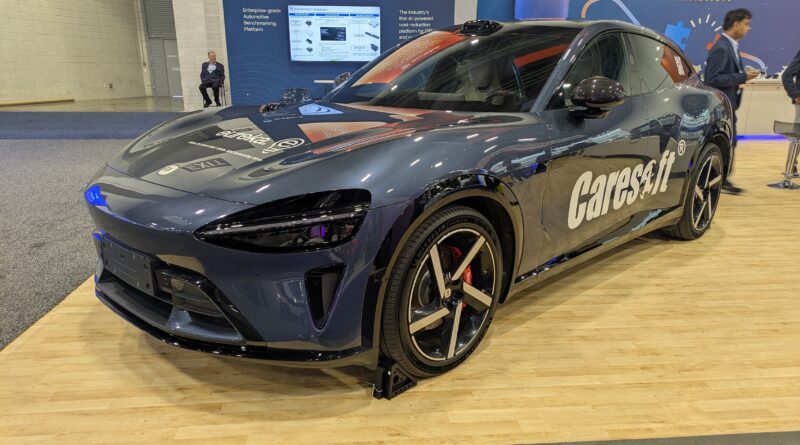
You Can’t Buy This, America (Unless You’re Tearing It Down): Xiaomi YU7 Max
Support CleanTechnica's work through a Substack subscription or on Stripe.
Or support our Kickstarter campaign!
While at CES, the largest technology show in the US, there seemed to be more Chinese cars than US cars. Automakers Geely and GWM had large booths, while Kosmera showed prototypes. Vehicles from NIO and BYD were also being used by exhibitors to show off technologies that they developed within them. Even for a US-based tech show, it was clear that EV technology was accelerating fastest. However, perhaps the most attractive vehicle at the show was the Xiaomi YU7, being exhibited by Caresoft, which conducts vehicle teardowns and benchmarking.
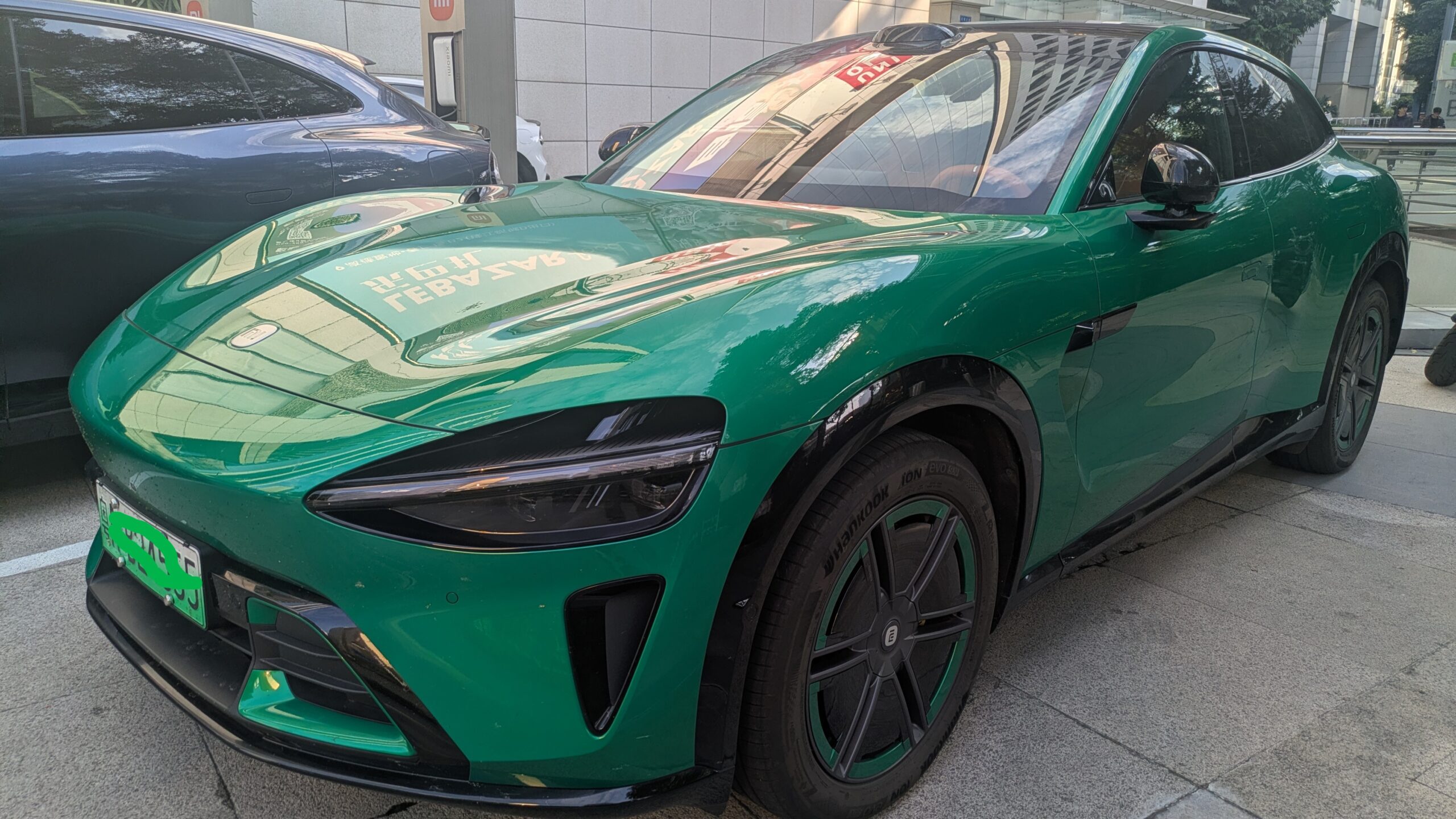
This wasn’t my first experience with Xiaomi cars. I saw several on the street, at the auto show, and in showrooms in Guangzhou. They are especially striking in daylight, which shows off the paint finish. The design tends to illicit comparisons to the Porsche Cayenne and Ferrari Purosangue. To my eyes, the design is more cohesive than the design of either of those 6-figure cars (and offers similar performance at a fraction of the price). But there is also function behind the form. Beyond the sporty style, the ducts and spoilers actually serve aerodynamic purposes, contributing to a 0.235 Cd. This indicates a level of coordination between design and engineering that has traditionally been rare for automakers — something lacking in many sporty cars, as seen in the proliferation of fake ducts on the Supra.
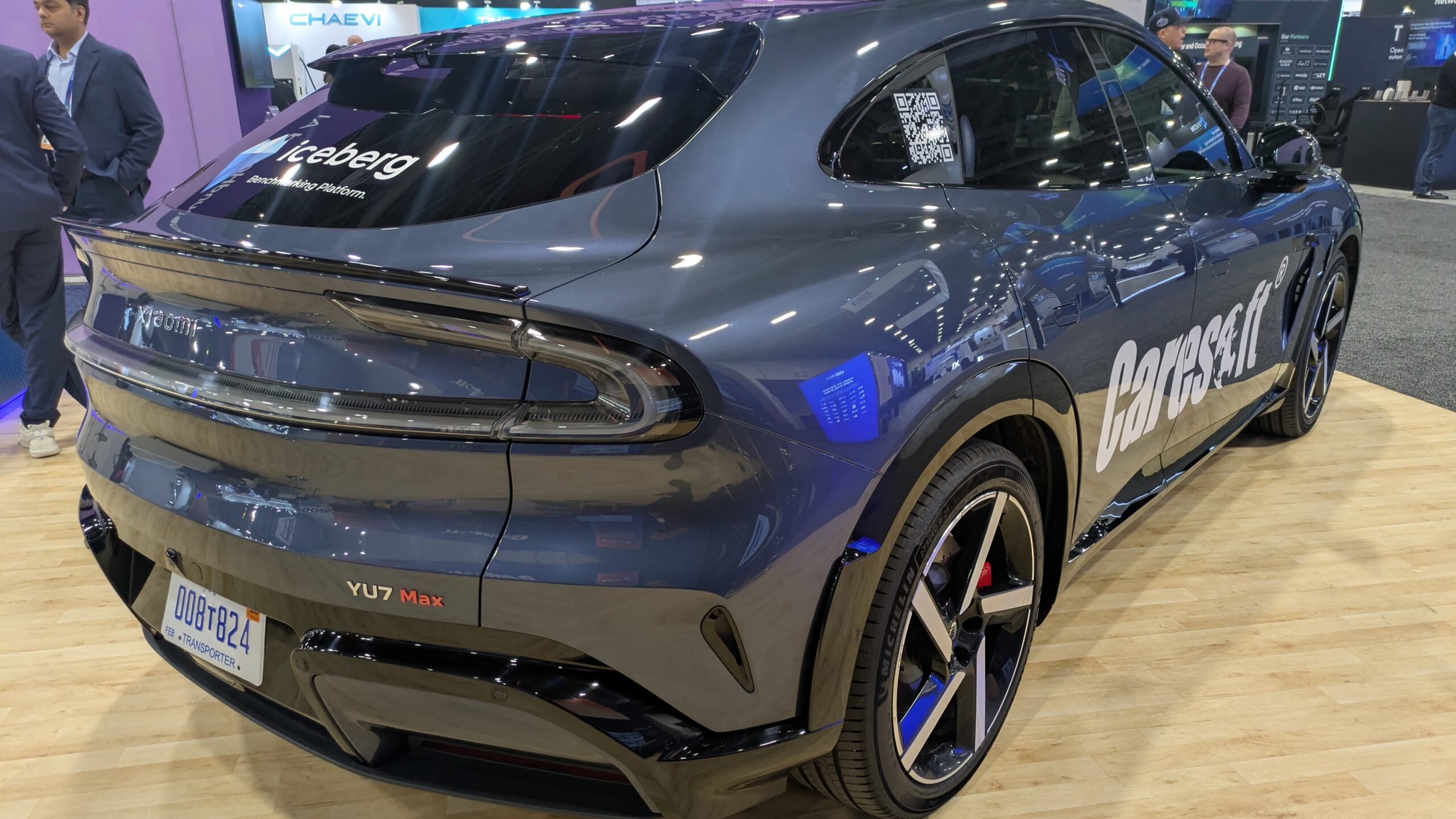
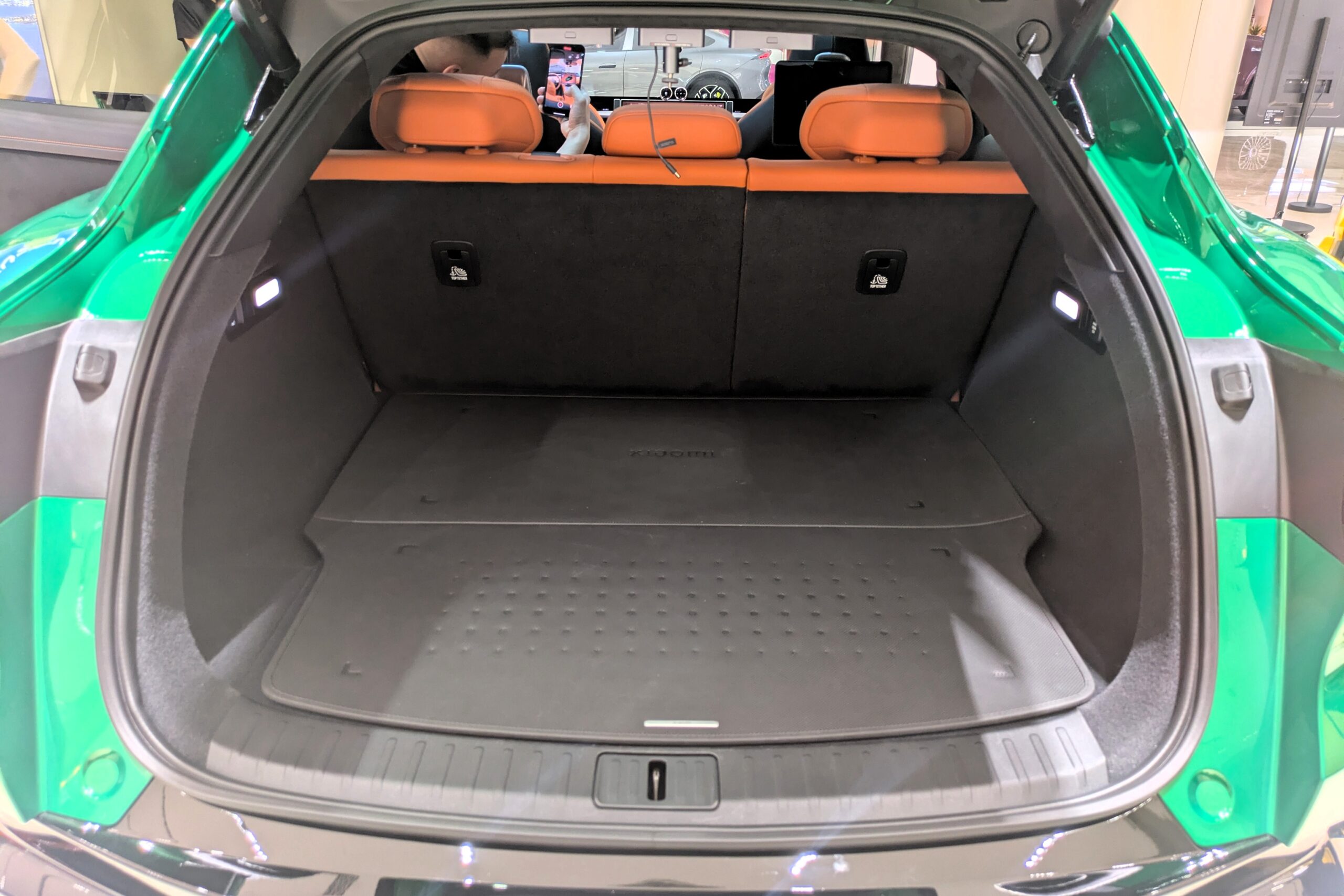
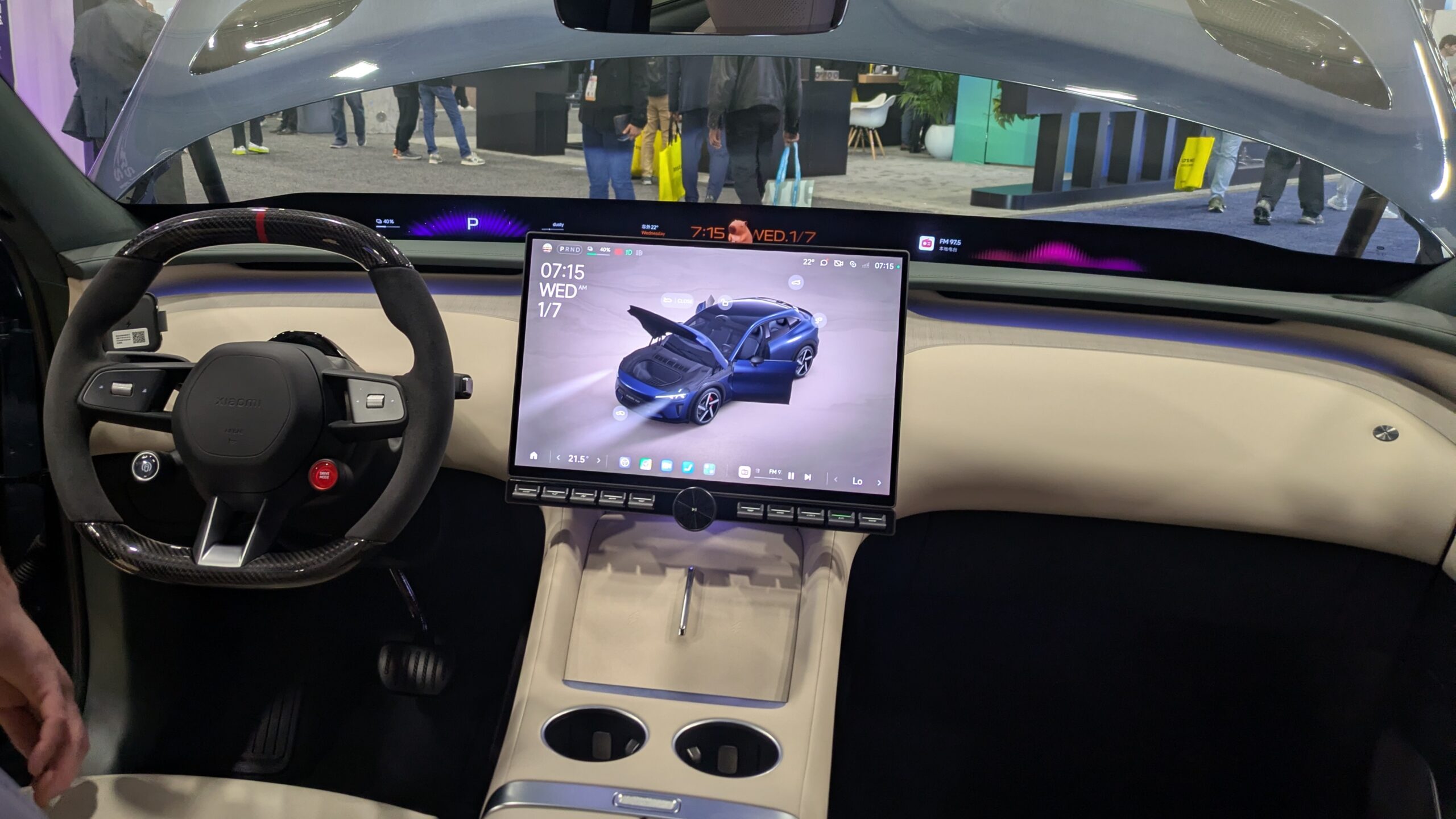
Many people were also impressed at CES. While the YU7 looks great from a distance, it becomes even more impressive up close. The panels are well aligned with narrow, even gaps. The interior materials feel high quality with tight seams. There is ample legroom, and I had a fist worth of headroom in the second row. Meanwhile, plentiful cargo room was behind the seats, with additional cargo capacity in the frunk, under the long hood. While the overall vehicle is positioned on the sporty side, both the zero-gravity reclining front seats and reclining rear seats offer heating, ventilation, and massage for added comfort. An onboard refrigerator and underseat storage add convenience. But the infotainment technology is where Xiaomi really shines.

The wide display at the base of the windshield is something that just makes sense. You don’t have to change focal length as much as with typical gauges. And the display is clearer than a typical HUD. The software interface on the center control screen is sharp and responsive, and there is also a removable screen for rear passengers. Magnetic mounting points allow owners to attach a wide range of accessories, which integrate to serve different functions on the car. If you don’t like using the touchscreen to control a function, you can add buttons.
Although I have not had the chance to drive it yet, people have told me that it is a good balance of sportiness and comfort. A class-leading 0–100 km/h time of 3.2s is delivered from a 220 kW front motor and 288 kW rear motor (690 hp combined). Meanwhile, a 101.7 kWh battery delivers 760 km (472 mi) of CLTC range and fast charges at 5.2 C. The 800V SiC power electronics also provide onboard charging.

In speaking with representatives from Caresoft, they were also impressed. Not just by the aesthetics, but also when looking below the skin. Xiaomi clearly spent money where it mattered most to customers, while simultaneously engineering out costs. The YU7, as well as the budget-friendly Seagull that they tore down previously, should be a wake-up call for the US industry. Not only can China make attractive affordable compact cars, but they can also make high-quality premium vehicles at lower cost.

You Can’t Help But Like It
Overall, this car reminds me of the new kid in high school that you wanted to dislike but ended up liking anyway. Came out of nowhere to become captain of the team and top of the class. Everything seemed to come so effortlessly that it made you skeptical and a bit jealous. Of course, there was a lot of work that you didn’t see that made it all seem effortless. But they were friendly and approachable to the point that any skepticism or envy fell by the wayside. You wanted to see major flaws, but you just had to admit that you liked them anyway. No doubt, Ford’s Jim Farley felt similarly when he drove the YU7’s sedan sibling, the SU7, and hated having to give it back.
Beyond the YU7’s own qualities, then you meet its family. Xiaomi focuses on integrating its entire family of products, what it referred to as a “Human x Car x Home” ecosystem. Most people know that the family includes phones, tablets, laptops, and wearables. But it also includes home products, like air conditioning, washers, robotic vacuums, refrigerators, induction cookers, security cameras, lighting, TVs, projectors, soundbars … and it includes lifestyle products like electric scooters, tools, personal care, fitness, office equipment, pet feeders…. All are getting increasingly smart and integrated with user-friendly design, offering the ability to save energy and shift energy usage. Beyond just controlling your car with your phone, people can increasingly control many aspects of their lives through the same ecosystem. As many of these devices are also not available in the US, it is hard to fully appreciate the possible technology interconnectivity here.
In addition, Xiaomi plays well with others. For example, the heads of BYD and Xiaomi are friends and the companies partner on projects. BYD is a technology and component supplier for Xiaomi, including batteries on some models. However, the two companies also have a long supply and manufacturing relationship with mobile devices. In addition, BYD offers integration with Xiaomi smartphones across their lineup. Although Xiaomi vehicles undoubtedly take the integration further, a Xiaomi phone user going from a BYD subcompact to a sporty YU7 to a Denza MPV will not feel disconnected.
That said, this car isn’t a perfect match for everyone. The long hood and low roofline are clearly less space efficient than a cab-forward MPV. You could make compromises for more space, but it would also compromise the vehicle’s sporty character. At almost 5 m long with a 3 m wheelbase, it is also larger than it looks. It is closer to a Model X than a Model Y in size. That might make it a little large for some European streets. In addition, even though these prices would be amazing in the US, at ~$35,000 to start (~$45,000 in Max trim), it is not the cheapest EV in China. But it is hard not to like this vehicle.
An Increasingly Popular Option, For Those Who Can Get It
Xiaomi’s EVs have charged to the top of their segments in China, despite often being supply constrained. This has undoubtedly slowed their planned rollout to export markets. However, while official exports have been limited, Xiaomi tops the charts in gray market exports to Europe. Changes to the 0-mile used car export rules will make gray market exports more difficult, but Xiaomi is anticipated to start exporting officially to Europe soon. Those cars will increasingly integrate with an expanding technology ecosystem that is also developing on the continent, even if we have little access to it here. That should make Xiaomi vehicles even more popular.
And the reason for the popularity isn’t just skin deep, as Caresoft can attest. Vehicles like this are pushing the competition forward in China. Our isolation from this competition helps to preserve the denial of many in the auto industry, but they will need to deal with reality eventually. US auto execs should be visiting China and consulting with companies like Caresoft now to be ready for what comes next. The lack of attractive, relatively affordable EVs like the YU7, as well as the vehicles seeking to compete with it, also hold consumer EV perceptions back in the US. Those perceptions, as well as the lack of compelling options, hold EV adoption back. Hopefully, US automakers will realize that they need to do better. And hopefully US consumers will soon demand better. If given the freedom to choose it, a lot of people might be surprised how much they like EVs like the YU7.

Support CleanTechnica via Kickstarter

Sign up for CleanTechnica's Weekly Substack for Zach and Scott's in-depth analyses and high level summaries, sign up for our daily newsletter, and follow us on Google News!
Have a tip for CleanTechnica? Want to advertise? Want to suggest a guest for our CleanTech Talk podcast? Contact us here.
Sign up for our daily newsletter for 15 new cleantech stories a day. Or sign up for our weekly one on top stories of the week if daily is too frequent.
CleanTechnica uses affiliate links. See our policy here.
CleanTechnica's Comment Policy

