
Oh, So That’s Why EV Charging Stations Are Still Hot Property
Support CleanTechnica's work through a Substack subscription or on Stripe.
Or support our Kickstarter campaign!

It’s a mystery wrapped in an enigma: If EV sales are crashing, why are hundreds of new public EV charging stations still popping up all over the country like mushrooms after the rain? There are more than a few answers to that question, and the coming wave of used EVs into the US market could be one of them.
So Few EVs, So Many EV Charging Stations
CleanTechnica has been tracking the forward momentum of the public EV charging business since the beginning of US President Donald Trump’s second term in office, particularly as it relates to gas stations, convenience stores, quick-serve restaurants, and other grab-and-go retail locations, as well as grocery stores and other places where drivers tend to linger longer.
The charging station momentum held firm all throughout 2025. This year promises more of the same, despite the EV sales crash that followed the premature demise of the federal EV tax credit last September.
On January 18, for example, CleanTechnica’s Jake Richardson reported that food giant Kroger has partnered with the leading charging station firm EVgo to install thousands of new stations across Kroger’s holdings in Arizona, California, Florida, Georgia, Texas, and Washington, among other hotspots for EV sales.
EVgo will be installing the charging stations at Kroger-branded locations as well as the conglomerate’s Foods Co., Fred Meyer, Fry’s Food Stores, Harris Teeter, King Soopers, and Smith’s Food and Drug sites.
That doesn’t represent all of Kroger’s locations, but it’s a good start. For the record, the Kroger website also lists Baker’s, City Market, Dillons, Food 4 Less, Gerbes, Jay C Food Store, Mariano’s, Metro Market, Pay-Less Super Markets, Pick’n Save, QFC, Ralphs and Ruler among the company’s other brick-and-mortar sites.
EV Charging And The Coming Wave Of Used EVs
Kroger anticipates that its partnership with EVgo will take about 10 years to culminate. If you listen to the EV doom and gloomers, there won’t be any electric cars on the road by then, but apparently Kroger and EVgo think otherwise.
Cox Automotive thinks otherwise, too. The firm’s Manheim wholesale auto sales branch has spent years prepping for a big wave of off-lease EVs to hit the used car market eventually, and eventually is now.
If you’re guessing that some of those leased vehicles are likely to be replaced with new EVs, that’s a pretty good guess. EV owners overwhelmingly say they’ll choose another EV when they need a new car. As for fleet owners, the Trump administration is highly unlikely to pump any more new EVs into the federal fleet, but there are plenty of other jurisdictions, businesses, and non-government organizations in need of new cars as their old ones age out.
Be that as it may, the opportunity for new EV sales is just one angle on the coming wave of off-lease EVs. The shift in routes that occurs when a vehicle changes hands could also help support momentum in the EV charging space.
As described by Grace Huang, President of Cox Automotive Inventory Solutions, on January 15, dealers are about to see the “largest wave of used EVs the industry has ever experienced.” When that happens, new and existing EV drivers will be hitting the road with different driving patterns and different needs for charging than the original owners.
Here Comes A New Wave Of Used EVs
Retailers are already jockeying to attract customer traffic. They don’t care if a new or used EV comes up the driveway, they just want to get an edge on the competition. Offering EV charging on site is a good way to do it, and according to Huang, there will be plenty of used EVs on the road in the coming months (break added for readability):
“The data signals are unmistakable. EVs accounted for roughly 5% of lease maturities in 2025, but that number is expected to more than double in 2026 (12%) and could reach around 23% by 2028.
“Every one of those off-lease vehicles feeds directly into the used and wholesale markets, and because EV leasing surged while incentives were rich, a wave of returns will ripple through wholesale channels for years.”
“What may look like cooling for new vehicle sales is actually a reset for the used market, setting the stage for the largest wave of used EVs the industry has ever experienced,” Huang emphasized.
“The real EV shift hasn’t peaked. It’s just beginning,” Huang added. “So, while the headlines may focus on cooling, the wholesale market tells a different story. The next phase of EV growth will be defined by the companies prepared to process, evaluate, price and move EVs at scale.”
Huang also noted that the shift is already well underway. She cited Manheim’s wholesale EV volume, which grew 47% year-over-year in Q4 2025.
Next Steps For EV Sales In The US
Manheim has already taken steps to take advantage of the new EV wave. With experience in the EV-friendly markets of the UK and Southern California, the company has 800 EV chargers at the ready across its locations, along with hundreds of trained technicians. “The best practices established in those markets are now being deployed across our entire Manheim footprint, including dedicating EV‑only areas at select sites,” Huang points out.
As for new EV sales, the elimination of the $7,500 federal tax fostered a run on EVs at the end of last summer, as drivers rushed to take advantage of the savings before the September 30 drop-dead date. However, the pain was not spread evenly. Cadillac, for example, breezed onwards to earn a year-on-year increase in Q4 EV sales as deep-pocketed EV enthusiasts shrugged off the loss of a tax credit.
Whether Cadillac’s Q4 record was a blip or a sign of continuing strength remains to be seen. We’ll know more in the coming months.
Another EV maker to keep an eye on is Toyota. After lagging behind the all-electric curve in the US for years, Toyota is introducing the 100% electric C-HR crossover this year, with delivery to dealers expected in March. That’s a curious move, considering that Toyota tried to market a gas-powered version of the C-HR in the US just a few years ago, only to drop the attempt like a hot potato. The loss of the federal tax credit won’t make things any easier.
Nevertheless, Toyota is pressing forward. If all goes according to plan, the automaker’s new co-branded EV charging station partnership with EVgo will help support sales. The company has also joined forces with the IONNA charging consortium as well as ChargePoint.
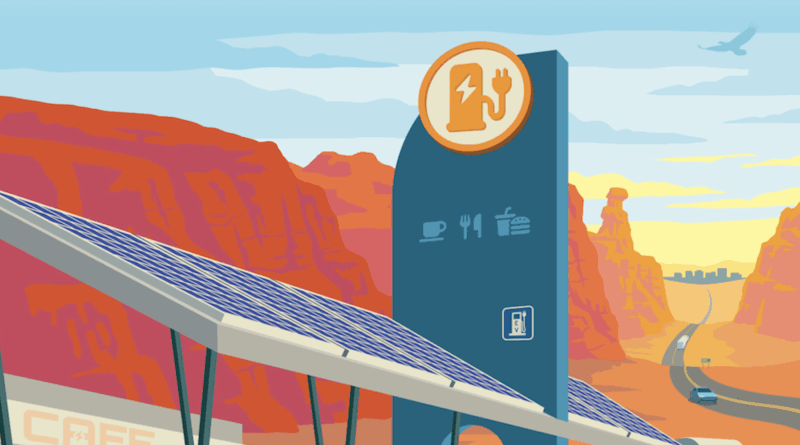
Photo: A coming tsunami of off-lease EVs is set to blow up the US used car market, helping to support momentum in the EV charging industry (cropped; courtesy of US Department of Energy).
Support CleanTechnica via Kickstarter

Sign up for CleanTechnica's Weekly Substack for Zach and Scott's in-depth analyses and high level summaries, sign up for our daily newsletter, and follow us on Google News!
Have a tip for CleanTechnica? Want to advertise? Want to suggest a guest for our CleanTech Talk podcast? Contact us here.
Sign up for our daily newsletter for 15 new cleantech stories a day. Or sign up for our weekly one on top stories of the week if daily is too frequent.
CleanTechnica uses affiliate links. See our policy here.
CleanTechnica's Comment Policy

