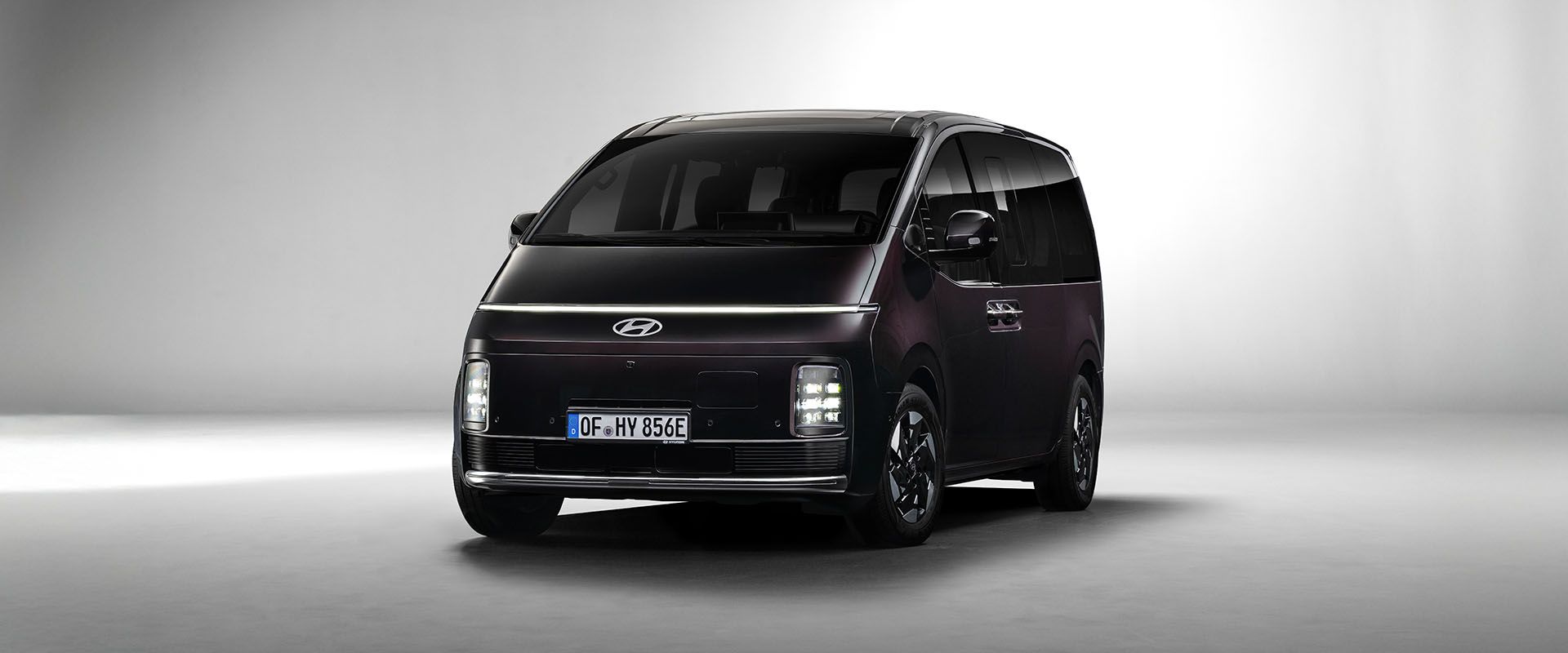
Hyundai’s New STARIA Electric Minivan Goes Where Tesla Fears To Tread
Support CleanTechnica's work through a Substack subscription or on Stripe.
When, oh when, will Tesla launch an electric minivan into the global auto market? Probably never, or at least not while the company is still struggling to keep the Cybertruck flop-mobile afloat. In the meantime, drivers looking for a true family car that doubles as a practical working vehicle can turn to Hyundai, which has borrowed parts from its popular IONIQ EVs to launch the new STARIA Electric minivan into the global market.
The New STARIA Electric Minivan
Some auto industry observers are already making comparisons between the new STARIA Electric minivan and the Volkswagen ID. Buzz minivan, but my thoughts keep turning to competition between vans and pickup trucks in the multi-purpose space. While some jobs demand an open truck bed, a more secure interior space and ample head room are more practical for other types of on-the-go work.
The competition also ripples into recreational uses. Pickup truck beds can be outfitted with all sorts of shelters and other camping gear, and the same goes for minivans.
With the STARIA Electric, Hyundai is expanding the MPV (multi-purpose vehicle) universe into the transit business. “Designed to meet the needs of families, shuttle operators and active lifestyles alike, STARIA Electric brings zero-tailpipe-emission mobility into a segment where interior space, comfort and practical usability are key decision factors,” Hyundai states.
Cybertruck Vs. STARIA Electric Minivan: It’s All About The Headroom
In terms of multi-use applications, the shuttle bus angle is the main point of difference between minivans and pickup trucks, and that includes the Cybertruck. Although the Cybertruck is not street-legal in Europe, Tesla did launch sales in Hyundai’s home turf of Korea last summer. Hyundai seems determined to head them off at the pass, by focusing attention on headroom, passenger comfort, and a light, airy interior that contrasts sharply with the tank-adjacent environment of the Cybertruck.
“A generously proportioned cabin with a strong sense of openness and freedom of movement is at the core of STARIA Electric’s appeal. Its flat floor, wide interior dimensions and intelligently arranged seating create a lounge like atmosphere that allows passengers to relax and move with ease,” Hyundai enthused in a press release dated January 9.
“The interior adapts seamlessly to changing needs from daily commuting and family trips to professional passenger transport and leisure activities,” Hyundai emphasized, adding that the vehicle’s “adjustable layouts and a high roofline create generous headroom and freedom of movement.”
That headroom theme repeats itself several times throughout the January 9 press release. Here’s another example: “Generous headroom and legroom across all seating rows, combined with a flat floor layout and intelligently integrated storage solutions, allow the interior to adapt effortlessly to changing needs.”
Here’s another, referring to the 7-seat “LUXURY” model: “The spacious cabin allows generous legroom and headroom across all seating rows, while adjustable seating layouts enable the interior to adapt seamlessly to changing travel and storage requirements and a luggage capacity of up to 435 litres behind third row.”
And, another: “The long wheelbase and tall body structure provide generous headroom and legroom across all rows.”
Hyundai Electric Minivan Vs. ID. Buzz
Hyundai also has Volkswagen’s ID. Buzz electric minivan in its rear-view mirror. The Buzz has yet to catch on here in the US but it is racking up a respectable sales record in Europe, where Volkswagen’s overall EV sales are strong.
While Tesla set the dashboard bar for EVs at the touchscreen-only level, Volkswagen recently re-introduced some knobs and buttons after encountering vociferous driver pushback. So, it’s no surprise to see the STARIA Electric minivan outfitted with knobs and buttons in addition to touchscreen controls.
Hyundai is also leaning on the appeal of its popular IONIQ models. Among other specs (here’s that link again), Hyundai notes that the STARIA powertrain sports the same “800-volt high-voltage system” used in the IONIQ 5, IONIQ 6, and IONIQ 9, providing top-level fast charging. “The 800-volt electrical system allows high power flow with minimal heat generation, enabling repeated fast charging and reliable performance on extended journeys,” Hyundai elaborates.
Meanwhile, Over Here In The US
Before you get too excited, the STARIA Electric minivan is not coming to the US, at least not yet. Hyundai launched the new minivan at the Brussels Motor Show on January 9, with a plan to sell into the Korean and European markets later this year.
I’ve reached out to Hyundai to see if they’ll drop a hint about their plans for the US. That’s a long shot, considering that the premature death of the $7,500 EV federal tax credit last September has sent domestic automakers running back to hybrids and ICE vehicles. Still, some signs of zero-emission life in the US market have been glimmering. Toyota is launching its new electric C-HR crossover in the US this year, and Ford has introduced a California-focused iteration of its Mustang Mach-E. If California Governor Gavin Newsom gets approval for his $200 million EV rebate proposal, the California market could provide Hyundai and other EV makers with a fresh outlook on US sales.
As for Tesla and the Cybertruck, just last week, CleanTechnica editor Zachary Shahan invited our readers to imagine how Tesla fans would respond if their favorite automaker had 15 EVs in its lineup. “Imagine how excited and gung ho they’d be and how much they’d be hyping the company and saying it’s dominating!” Shahan wrote.
Dream on, Klingons. The Cybertruck has become widely known as the Edsel of the 21st century, and while Tesla CEO Elon Musk has teased the idea of fielding an electric passenger van, for the here and now, all eyes are on the new “Cybercab,” a purportedly autonomous vehicle that is supposed to … well, clog city streets with yet more limited-seating cars, for one thing. Just what every city needs, more cars to push pedestrians and cyclists aside.
Zero emissions or not, individual cars also suck up more supply chain resources per passenger than alternative forms of transportation like bicycles, e-bikes, buses, trains, and, of course, human feet, all of which deserve more space in the urban transportation landscape. If you have any thoughts about that, drop a note in the comment thread.
Photo: Hyundai is pitching the sleek new STARIA Electric minivan as a zero emission MPV (multi-purpose vehicle) with a focus on headroom, headroom, and more headroom (courtesy of Hyundai).
Sign up for CleanTechnica's Weekly Substack for Zach and Scott's in-depth analyses and high level summaries, sign up for our daily newsletter, and follow us on Google News!
Have a tip for CleanTechnica? Want to advertise? Want to suggest a guest for our CleanTech Talk podcast? Contact us here.
Sign up for our daily newsletter for 15 new cleantech stories a day. Or sign up for our weekly one on top stories of the week if daily is too frequent.
CleanTechnica uses affiliate links. See our policy here.
CleanTechnica's Comment Policy