
Chinese Solar Panels Are Transforming Africa
Support CleanTechnica's work through a Substack subscription or on Stripe.
Or support our Kickstarter campaign!

Every year on January 1, news outlets struggle to find stories that offer hope that the new year will be better than the year that just ended. There are countless stories about wondrous new consumer goods — new electric cars that cost less, go further, and charge faster always make for interesting reading and CleanTechnica will have its share of those this week.
But underneath all the hype and hope, there are a few stories about transformational changes that are important to entire nations or even entire continents. One of them involves Africa, where more than 600 million people have no access to reliable electricity. That puts them about a century behind the inhabitants of most other continents where electricity has become the foundation of industrial societies.
Chinese Solar Powers Africa
That absence of access to reliable electrical power has created opportunities for those who dare to take advantage of them — something the Chinese do very well. South Africa is one country that is benefiting from a surge in solar panel imports from China. According to the New York Times, we are not talking about one solar panel that provides enough energy to power a small LED light at night or charge a cell phone.
Instead, solar and battery systems from China are powering entire businesses, from automobile assembly plants to wineries, gold mines, and shopping malls in Africa’s biggest economy. All of this has happened at startling speed. Solar has risen from almost nothing in 2019 to roughly 10% of South Africa’s electricity-generating capacity, the Times reports.
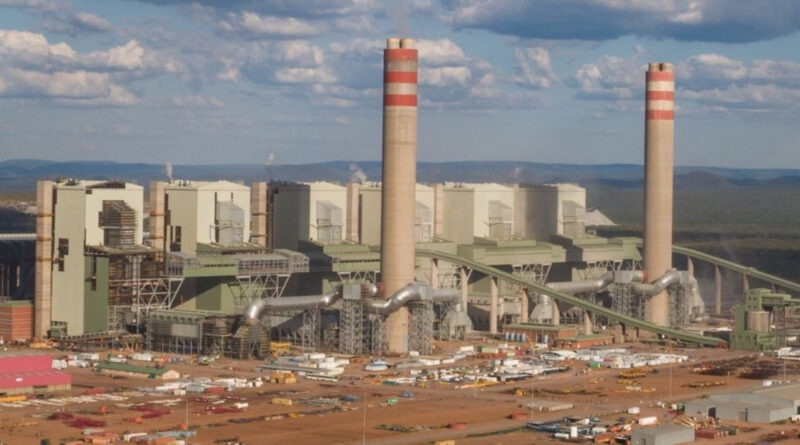
For decades, South Africa has relied on coal-fired thermal generating stations for its electricity. Those electrons get distributed through an ageing and increasingly unreliable electrical grid that struggles to meet the demand for power reliably. The primary strategy that Eskom, the country’s primary utility company, uses to manage the grid is to subject portions of the grid to rotating blackouts that can last for 3 hours or more.
Those blackouts have political consequences. Those without power feel aggrieved and blame the government. Some suspect the blackouts target poorer neighborhoods more that they do wealthy communities. Those poorer neighborhoods typically have less political power than their richer neighbors.
CleanTechnica readers, who are all well above average, will immediately recognize that demand response is one possible solution. It moderates the amount of electricity needed for things like electric water heaters and electric car charging when demand is high. But that requires a fairly sophisticated grid, something South Africa does not have. It also lacks the money to make the extensive upgrades needed to improve its grid infrastructure.
China recognizes that in order to maximize the market for its solar panels and storage batteries, it needs to facilitate the financing that is essential to those upgrades. We reported on a similar situation in Uzbekistan recently, where China is not only supplying the components for a clean energy transition, but is also helping to finance the transition.
China Has Much To Gain
The New York Times says China has much to gain, “especially new markets and new geopolitical influence. Its companies are doing more than just exporting.” State-owned Power China is also building utility-scale solar farms in South Africa and in other developing economies. Chinese companies are also bidding on contracts to upgrade the electrical grid in South Africa. Those upgrades will add 14,000 kilometers (8,700 miles) of transmission lines the country desperately needs to deliver its increasing supply of solar power to all parts of the nation.
The modernization of the grid is expected to cost $25 billion. “Obviously we don’t have money for that,” South Africa’s deputy minister for electricity and energy, Samantha Graham-Maré, told the New York Times. By inserting themselves into the equation, Chinese companies expect to create ongoing revenue streams. Instead of just selling equipment, they will generate cash flow by operating the grid control systems as well. Chinese firms are already involved in similar build and operate contracts in other countries, including Brazil and the Philippines.
A Mixed Blessing
The addition of vast amounts of solar power is welcome news, but it is a mixed blessing as well. Developing clean energy resources purchased from China does little to create job opportunities for local residents. “The economic trade-offs are significant,” said Marvellous Ngundu, a researcher with the Institute of Security Studies in Pretoria. “Jobs are created elsewhere. South Africa consumes advanced green technologies without capturing the industrial benefits.”
This is a problem that affects many industries. If a country imposes regulatory requirements or tariffs to encourage local production, that increases the cost of finished goods, which means less expensive alternatives from China or other countries are excluded. Whether it is electric vehicles or solar panels, policies that burden the least expensive source of supply necessarily raise the cost of those products — which results in fewer electric cars and solar panels
There are also security implications when a foreign company is in charge of operating they electrical grid. “Our grid is very, very safe,” Graham-Maré said, although that response seems more like wishful thinking rather than reality.
Putting Pressure On Eskom
The rapid transition to solar is also putting financial pressure on Eskom. Its generating stations are old and require expensive maintenance programs to keep them in operation. Many private customers who have installed solar at their businesses or homes are finding their utility bills are less than half what they were before. As more people lower their bills with solar, Eskom loses even more money. That in turn forces it to raise prices, which encourages more people to install solar systems of their own.
To adapt, Eskom has removed burdensome licensing requirements on private installations and is allowing people to sell their privately created electricity to the grid. In addition, it has tweaked its rates so that customers pay a fixed charge in addition to the cost of any power they consume. Essentially, people pay simply to be connected to the grid, a feature that is common in many other nations but is new to South Africa.
Eskom is planning to install new utility-scale solar arrays at the sites of coal-fired generating stations that have been retired. By 2040, it intends to shift its predominantly coal-based system to cleaner sources. “That’s where the world is moving,” said Nontokozo Hadebe, Eskom’s sustainability chief.
Two Kinds Of Power
As the influence of China on the African continent grows, its political standing has risen as well. By contrast, the US has broken many of the links with the continent forged by prior administrations. The US has imposed a 30% tariff on South African goods and excluded the government from participating in G-20 meetings. It has also reversed a Biden sponsored plan to help South Africa accelerate the closure of its oldest, dirtiest coal plants.
“As relations with the United States have become increasingly strained, Beijing has positioned itself as a reliable and sympathetic partner,” Marvellous Ngundu told the New York Times. What the benefit is to the United States of forcing another country to continue burning coal when renewables are by far the cheapest form of energy available — and coal is among the most expensive — is hard to fathom.
For the US government, ideology is now a higher priority that common sense. The upshot of such disastrous policies is that countries like South Africa will turn toward China and away from the US. How that serves America’s long term best interests is a mystery.
Support CleanTechnica via Kickstarter

Sign up for CleanTechnica's Weekly Substack for Zach and Scott's in-depth analyses and high level summaries, sign up for our daily newsletter, and follow us on Google News!
Have a tip for CleanTechnica? Want to advertise? Want to suggest a guest for our CleanTech Talk podcast? Contact us here.
Sign up for our daily newsletter for 15 new cleantech stories a day. Or sign up for our weekly one on top stories of the week if daily is too frequent.
CleanTechnica uses affiliate links. See our policy here.
CleanTechnica's Comment Policy

