
November Update: Steady As She Goes For Australian Plugin Vehicle Sales
Support CleanTechnica's work through a Substack subscription or on Stripe.
Or support our Kickstarter campaign!

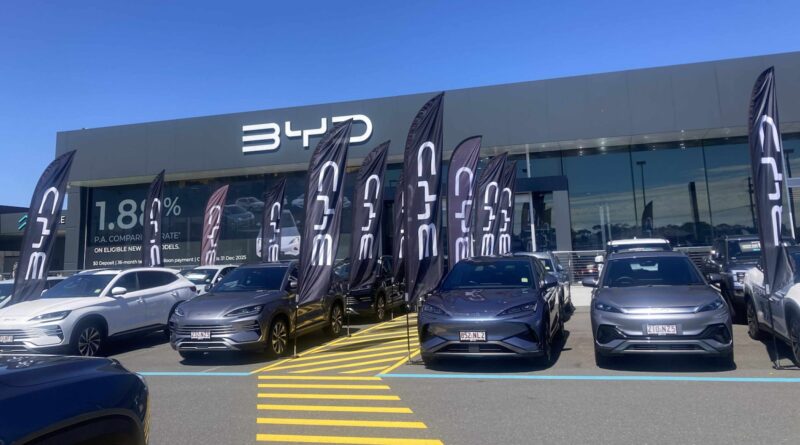
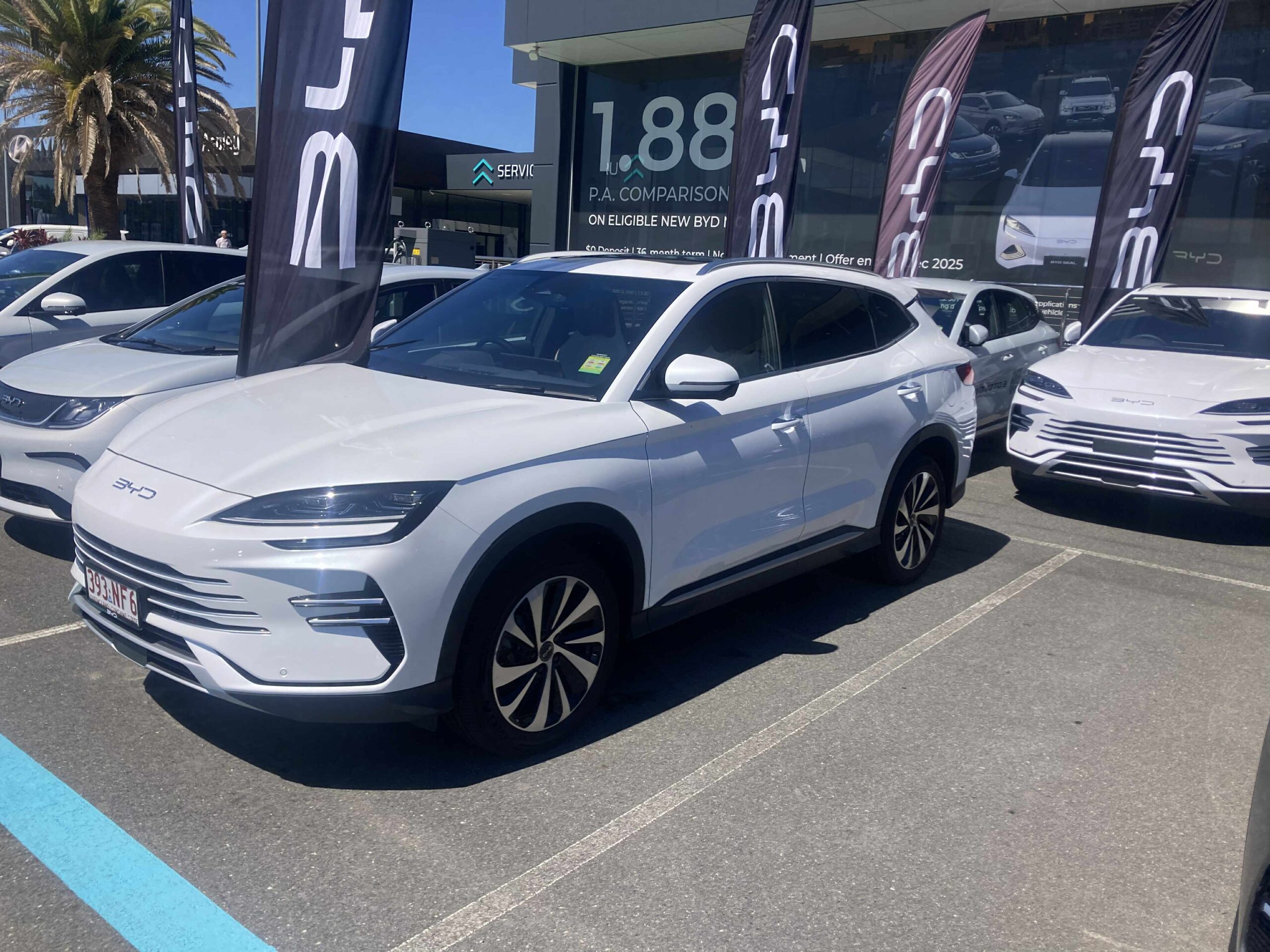
As the year draws to a close, my email inbox and my Facebook page are full of offers from car salespeople. Cash back from BYD, free charging from another, even discounts for the Cadillac LYRIQ! New cars are still being launched — for example, the Leap Motor B10, the BYD Atto 1, and the all-electric Musso ute from KGM (previously known as SsangYong). More about that one later. The market is hot, but this is not reflected in the sales numbers, just yet.
Out of the 97,037 new vehicles sold in November, 4768 were Plug-In Hybrids and 9081 were full Battery Electric. PHEVs 4.3%; BEVs 9.4% for a combined penetration of plug-in vehicles approaching 14%. According to EVDB, HEV sales increased to a 16.4% share, while petrol and diesel declined.
“PHEVs were a standout performer,” the Federal Chamber of Automotive Industries celebrates. “Across passenger, SUV and light commercial segments, PHEV sales reached 4,768 for the month, up 83.3 percent on November 2024. Year to date, PHEV sales have surged 130.6 per cent to 47,565 units as more models enter the market and consumer awareness increases. The latest VFACTS data shows shifting buyer preferences, including rapid growth in plug-in hybrid electric vehicles (PHEVs).” This is despite the removal of federal tax incentives for PHEVs. The Federal Camber of Automotive Industries (FCAI) chooses to highlight PHEV growth and appears to be reluctant to champion BEVs.
Though, even they have to admit that “petrol vehicles continued their downward trajectory, with overall petrol sales falling 18.1 per cent in November and 9.5 per cent year to date.” This demonstrates a sustained shift in buyer priorities. It is worth noting that the FCAI is dominated by fossil fuel carmakers. Tesla and Polestar have removed themselves from the group.
“Petrol’s decline is part of a long-term global market transition. We are seeing strong interest in hybrid and plug-in hybrid vehicles, and this trend will only accelerate as more models arrive,” Federal Chamber of Automotive Industries chief executive Tony Weber said. In Australia, BEVs represent 8.2% of the market year to date. Year on year, BEVs have grown from 6.5% in 2024 to 9.1% in November. Year to date, 92,885 BEVs have been sold into the Australian market, compared with 91,293 in the whole of 2024. It will be interesting to see what December brings.
Let’s not forget that with every plugin vehicle sale, there is a concomitant reduction in sales of internal combustion engine vehicles, as pointed out in the comments section of this CleanTechnica article. These figures apply to global numbers, not just Australia.

“ICE sales were flat in October from last year when EVs were 26% of the global market. They are now at 28%.” I paraphrased the comments from reader “trackdaze” there. By October, 13.46 million EVs had sold globally in 2024, and 53.8 million ICE vehicles. In 2025, by October, 16.46 million EVs had sold globally, and 46.8 ICE vehicles. The sound you can hear is that of ICE sales melting. 7 million sales have melted away year on year.
Now, on to the numbers for the top twelve back in Australia (cue drum roll) …
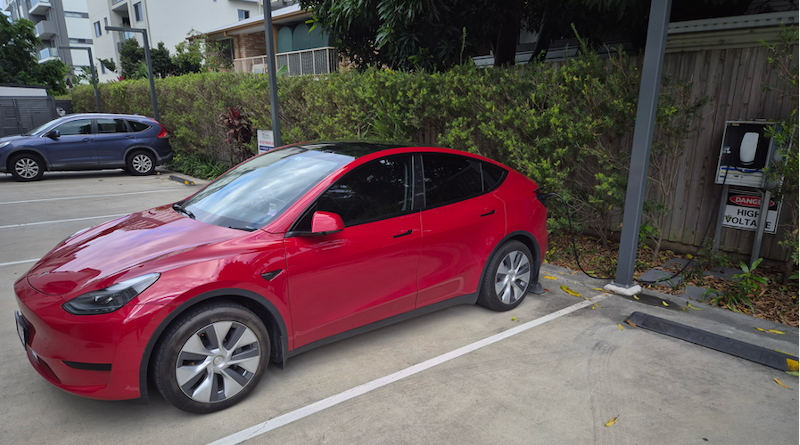
- Tesla Model Y — 2,269 units sold in November 2025, 20,241 sold year to date
- BYD Sea Lion 7 — 1,040 sold in November, 10,864 YTD
- Zeekr 7X — 682 in November, 913 YTD
- Tesla Model 3 — 433 in November, 6,030 YTD
- Geely EX5 — 412 in November, 3,770 YTD
- BYD Atto 2 — 365 in November, 365 YTD
- Kia EV5 — 300 in November, 4,541 YTD
- BYD Atto 3 — 261 in November, 3,591 YTD
- Kia EV3 — 235 in November, 2,416 YTD
- MG S5 — 222 ni November, 1,688 YTD
- Xpeng G6 — 175 in November, 1,925 YTD (these are approximated numbers).
- BYD Seal — 157 in November, 3,371 YTD
Just like global sales, BYD is dominating because of numbers spread across many models. The Atto 2 has made a spectacular debut into the top ten in its first month! There is some speculation that the multiplicity of models will lead to cannibalisation of near-same brand competitors (eg, is the Sealion 7 detracting from Atto 3 sales?) but overall numbers are up for BYD. The Tesla Model Y, meanwhile, made it to number 5 in the top 10 selling vehicles of all powertrains.

The BYD Shark 6 appears to be the highest selling PHEV, with 1217 units delivered in November. The most recent data (October) indicates that the Shark was followed by the Sealion 6, Mitsubishi Outlander, Great Wall Motors Haval H6, Mitsubishi Eclipse Cross, BMW X3, GWM Canon Alpha, Mazda CX 60, Mazda CX 80, and lastly, the Ford Ranger PHEV.
To whet the appetite of our readers, I will include information from my recent conversation with the sales rep from Village Motors about the soon-to-arrive Musso. When we are able, Majella and I will visit the car, bringing more information and photos. For those who can’t wait — check out the website. Sadly, it doesn’t come in red.
“We are expecting the cars to arrive in stock very soon.” Here is a summary of the pricing and key specifications:
- RWD Model: Starting from $AU 60,000
- Range: 420 km, combined
- Maximum Power: 152 kW
- Maximum Torque: 349 Nm
- Payload: 905 kg
- Towing Capacity: 1,800 kg
- 2WD Black Badge Option: $AU 62,000 — includes the above specifications plus 17-inch black alloy wheels + Leather and suede seats+ Stainless steel door scuff plates + Black door mirrors, tailgate lettering and hood garnish, and C-Pillar garnish
- Integrated head rest rear hangers
- Black steering wheel bezel
- Suede upper door and centre trims
- AWD Model: Starting from $AU 64,000
- The expected range for the AWD is 380 km combined
- Maximum Power: 266 kW
- Maximum Torque: 630 Nm
- Payload: 805 kg
- Towing Capacity: 1,800 kg
“We are already taking deposits from interested customers.
“The KGM Musso EV has a 80.6kWh lithium iron phosphate (LFP) battery that is sourced from BYD. This battery capacity is standard across both the 2WD and AWD models.”
And that’s not all! The Guangzhou Automobile Group’s Aion V has just launched, and GAC is offering a range of charging and discount sweeteners already. I have booked a test drive and will let you know how it goes. GAC is one of the largest automakers in China, with cars for Australia being built in Thailand.
Rumours abound about possible 2026 launches. One example is Honda launching Super-One, “a playful inner-city EV.” Another is Hyundai importing its Elexio. JAC (Anhui Jianghuai Automobile Group Corp) is bringing an electric ute to the party — the T9 was revealed at the Melbourne Motor Show. You can read more about it here.
What if the Mazda 6e also joins in the fun? The future is indeed bright and electric on Australia’s roads.

Support CleanTechnica via Kickstarter

Sign up for CleanTechnica's Weekly Substack for Zach and Scott's in-depth analyses and high level summaries, sign up for our daily newsletter, and follow us on Google News!
Have a tip for CleanTechnica? Want to advertise? Want to suggest a guest for our CleanTech Talk podcast? Contact us here.
Sign up for our daily newsletter for 15 new cleantech stories a day. Or sign up for our weekly one on top stories of the week if daily is too frequent.
CleanTechnica uses affiliate links. See our policy here.
CleanTechnica's Comment Policy

