

Plant Vogtle Unit 4 Begins Commercial Operation, No More New Nuclear Under Construction
Support CleanTechnica's work through a Substack subscription or on Stripe.
Georgia Power announced this week that the 1,114-megawatt (MW) Unit 4 nuclear power reactor at Plant Vogtle near Waynesboro, Georgia, entered into commercial operation after connecting to the power grid in March 2024. The commercial start of Unit 4 completes the 11-year expansion project at Plant Vogtle. No nuclear reactors are under construction now in the United States.
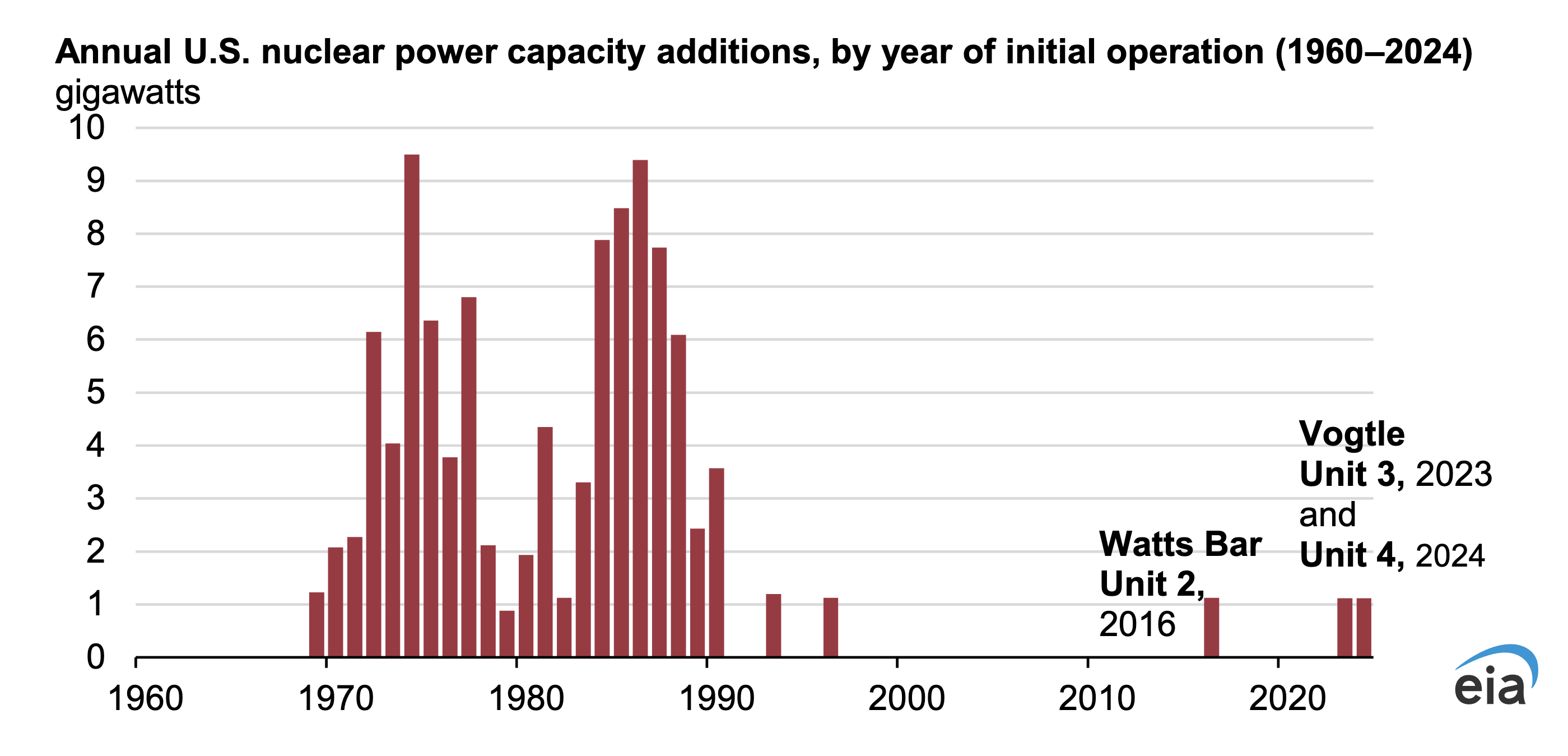
Vogtle Unit 3 began commercial operation in July 2023. The plant’s first two reactors, with a combined 2,430 MW of nameplate capacity, began operations in 1987 and 1989. The two new reactors bring Plant Vogtle’s total generating capacity to nearly 5 gigawatts (GW), surpassing the 4,210-MW Palo Verde plant in Arizona and making Vogtle’s four units the largest nuclear power plant in the United States.
Construction at the two new reactor sites began in 2009. Originally expected to cost $14 billion and begin commercial operation in 2016 (Vogtle 3) and in 2017 (Vogtle 4), the project ran into significant construction delays and cost overruns. Georgia Power now estimates the total cost of the project to be more than $30 billion.
The commercial operating date is when builders hand over a reactor to the plant owner or operator, declaring the reactor to be officially in commercial operation.
With a total installed capacity of about 97 GW, the largest commercial nuclear generating fleet of any country is located in the United States. The fleet of operating nuclear power reactors accounted for nearly 19% of domestic electricity production in 2023, making nuclear the second-largest source of U.S. electricity generation after natural gas, which accounted for 43% of electricity generation in the United States last year.
Electricity generation from nuclear reactors doesn’t produce CO2 emissions and can provide baseload power that would otherwise largely come from coal- and natural gas-fired plants. Although a number of nuclear reactors have retired in recent years, interest in nuclear power as an energy resource to help reduce the carbon footprint of the U.S. electric power sector has increased recently.
Both Vogtle Units 3 and 4 use a newer reactor design, the Westinghouse AP1000. This reactor has a smaller footprint and simpler design than previous generation reactor technologies. It also features passive safety systems that are intended to shut down the reactor without any operator action or external power source.
Vogtle Units 3 and 4 are the first and only U.S. deployments of the AP1000 Generation III+ reactor. Two other Westinghouse AP1000 reactors were planned for a nuclear power plant in South Carolina, but utilities there halted construction in 2017.
More information about U.S. nuclear capacity and generation is available on our U.S. Nuclear Generation and Generating Capacity web page.
Principal contributor: Slade Johnson. News item from U.S. EIA.
Sign up for CleanTechnica's Weekly Substack for Zach and Scott's in-depth analyses and high level summaries, sign up for our daily newsletter, and follow us on Google News!
Have a tip for CleanTechnica? Want to advertise? Want to suggest a guest for our CleanTech Talk podcast? Contact us here.
Sign up for our daily newsletter for 15 new cleantech stories a day. Or sign up for our weekly one on top stories of the week if daily is too frequent.
CleanTechnica uses affiliate links. See our policy here.
CleanTechnica's Comment Policy

