NREL

Data centers, like those at NLR, could reduce their cooling energy use through reservoir thermal energy storage. Photo by Dennis Schroeder, NLR.

NLR Analysis Identifies Reservoir Thermal Energy Storage as a Solution for Data Center Cooling Needs

RTES System Cuts Energy Consumption and Costs Over a Simulated 20-Year Period By Hannah Halusker, NLR The rise of artificial intelligence, cloud platforms, and data processing is driving a steady increase in global data center electricity consumption. While running computer servers accounts for the largest share of data center energy … [continued]

New Report Illuminates Geothermal Cooling Potential in Hawaii

University of Hawaii at Manoa and Lawrence Berkeley National Laboratory Teamed up To Analyze Feasibility of Geothermal Cooling Technologies By Justin Daugherty, NLR In areas with geologically recent volcanic activity and ample underground water flow, like the Hawaiian Islands, geothermal energy technologies present options to augment the electric grid. To … [continued]

She Wanted To Write Fantasy. Now, She Is Rewriting Recycling.

Meet Taylor Uekert, the Gymnast-Turned-Nanoengineer Who Harnesses Molecular Machines To Remake Plastics, Chemicals, and More By Caitlin McDermott-Murphy, NLR Three days after 9-year-old Taylor Uekert moved to the foothills outside San Diego, her parents woke her and her brother in the middle of the night. “Get up and get to the car,” … [continued]

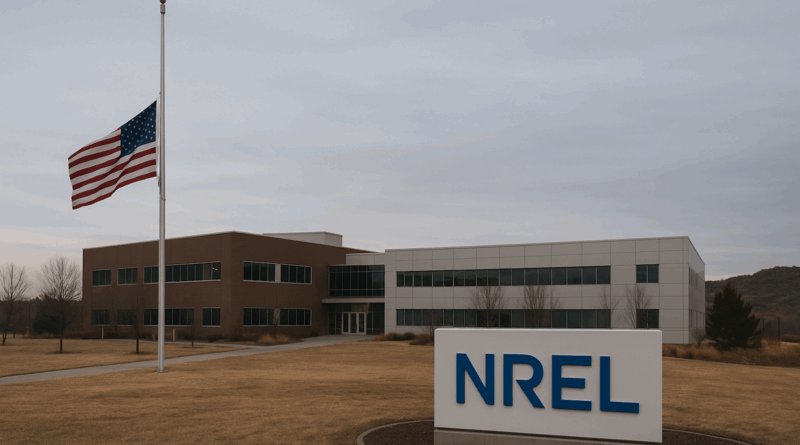
ChatGPT generated: A solemn panoramic scene of the American flag at half-mast before the NREL building, marking the symbolic end of an era in U.S. renewable-energy leadership

An Elegy for NREL and the Passing of America’s Renewable Compass

The erasure of the word “Renewable” from the National Renewable Energy Laboratory marks the end—or hopefully just an interruption—of a long and consequential chapter in energy history. Renaming it as the National Laboratory of the Rockies doesn’t change the buildings in Golden or the servers in ESIF or the unfinished … [continued]

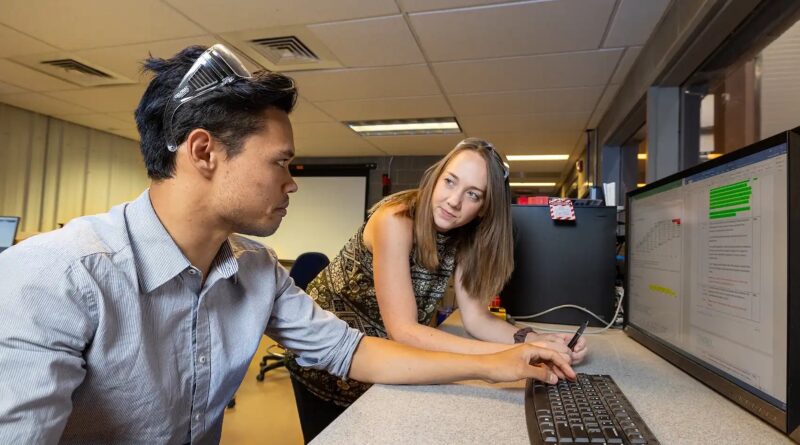
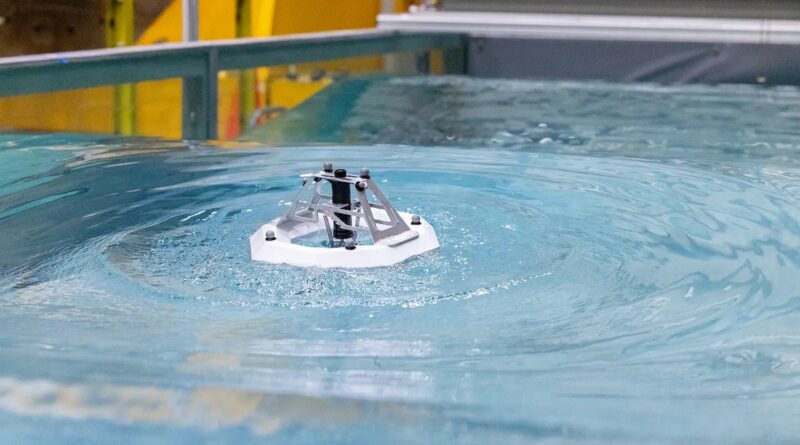
Developers typically use several computer models to assess new technology designs. Now, NREL researchers are building an all-in-one tool that makes it faster and easier to evaluate their designs in one platform. Photo by Gregory Cooper, NREL.

Can Your Wave Energy Technology Survive the Ocean?

How a Forthcoming Modeling Tool Could Help Developers Rapidly Assess the Potential of Any Floating Device Can your technology triumph in the ocean? Ask SEA-Stack. True to its name, this one-of-a-kind, free, open-source tool combines (or stacks) multiple wave energy modeling capabilities into one user-friendly package. With SEA-Stack, wave energy … [continued]

3 Startups Join New IN2 Cohort Advancing Reliability in Built Environment

This Year’s Startups Are Focused on Energy Efficiency and Reliability in Buildings Efficient buildings are the focus of this year’s Wells Fargo Innovation Incubator (IN2) cohort. The $55 million energy technology program—funded by Wells Fargo & Company and coadministered by NREL—welcomed three startups to its next cohort in the Emerging Tech … [continued]

Safer Batteries, Reliable Power: Guiding Research for Next-Generation Energy Storage

Tucked into your pocket, packed into warehouses, and embedded into critical infrastructure — lithium-ion batteries are quietly powering much of modern America. Demand for these indispensable energy storage solutions continues to skyrocket, prompting energy experts to explore next-generation (next-gen) designs for higher-performing technologies, including alkali metal anodes, solid electrolytes, and … [continued]