
Solar Power + Battery System From Bosch Now On The Market
Support CleanTechnica's work through a Substack subscription, on Patreon, or on Stripe. Help us produce all of the high-quality, original content we publish week after week despite the challenges of content-scraping AI, antisocial media, inflation, and other hurdles.
This article was first published on Green Building Elements (image changed).
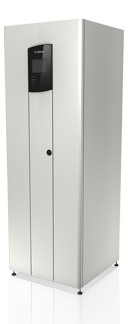
Bosch has decided to step up to the plate and construct an integrated solar power supply system called the BPT-S 5 Hybrid. Almost everything is integrated into it. The company integrated an inverter, Saft lithium-ion batteries, and an energy management system (charge controller) into a single unit which is certified and safety tested for domestic installations.

Credit: Bosch
Speaking of installations: This design enables you to circumvent some of the installation tasks, such wiring of the batteries, charge controller, and inverter. A unit like this can simply be plugged into the house or grid as a gasoline-powered generator would be.
“Bosch Power Tec is a pioneer in the field of development of PV storage solutions. The BPT-S 5 Hybrid is a fully integrated system, and in terms of quality, safety and efficiency the industry benchmark. Therefore, Saft with its high quality standards and extensive experience has been the logical choice in this partnership”, says Dr. Andreas Stratmann, General Manager of Bosch Power Tec GmbH.
“Saft Li-ion technology proved its capability to meet the performance, reliability and safety needs of domestic users in the Sol-ion project that introduced Li-ion batteries into PV systems on the largest scale ever tested in Europe,” says François Bouchon, Director of Energy Storage at Saft. “Now, with this very important product for Bosch, we are building on the Sol-ion foundation as Saft Li-ion batteries are truly making the transition into the commercial arena.”
A solar panel system which uses batteries operates by using the solar panel to charge the batteries through a charge controller. The charge controller stops charging the batteries and only provides them with a small current to prevent self-discharge from damaging the batteries (often called bricking). The batteries then provide a smooth, uninterrupted supply of power to the inverter, which then powers the household appliances directly.
Sign up for CleanTechnica's Weekly Substack for Zach and Scott's in-depth analyses and high level summaries, sign up for our daily newsletter, and follow us on Google News!
Have a tip for CleanTechnica? Want to advertise? Want to suggest a guest for our CleanTech Talk podcast? Contact us here.
Sign up for our daily newsletter for 10–15 new cleantech stories a day. Or sign up for our weekly one on top stories of the week if daily is too frequent.


CleanTechnica uses affiliate links. See our policy here.
CleanTechnica's Comment Policy

