Why Are 7 Automakers Building A New Charging Network?
In a recent press release, seven automakers announced that they’re teaming up to build a new charging network. Details are still sparse, but in this article, I’ll share some key points from the announcement, speculate on why they’re doing this, and then discuss some of the challenges this new network is going to face.
Key Points Of The Announcement
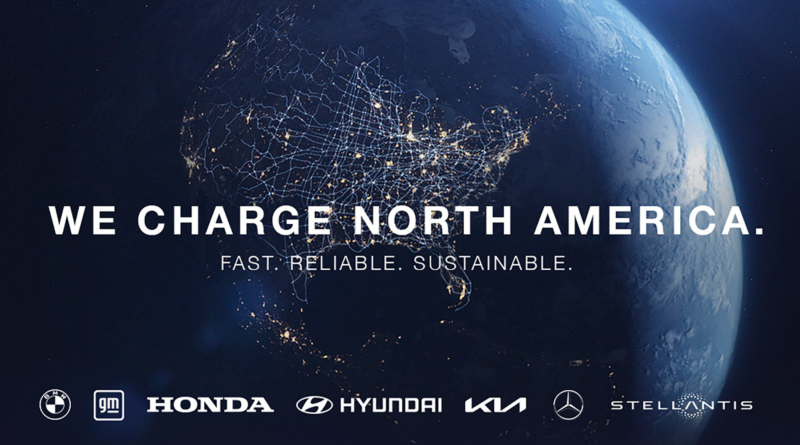
The first big question is who’s involved. The seven automakers are BMW Group, General Motors, Honda, Hyundai, Kia, Mercedes-Benz Group, and Stellantis NV. It’s also worth noting who’s absent from this arrangement: Ford, Volkswagen Group, Tesla, and Nissan. More on the importance of that in the next section.
What these players are doing is installing 30,000 fast charging stations in the United States in the next few years. To do this, they’re starting a new jointly-owned company, and this company does not yet have a name. These stations will both be in urban areas and along interstate highways, much like the Electrify America and Tesla Supercharger networks.
The aim of this network is to serve all EVs, regardless of manufacturer, so they’re going to be dual-port stations with both CCS1 and NACS (the connector formerly known as the Tesla connector). It’s worth noting that they don’t intend to include any CHAdeMO connectors on their network, so that’s another blow to a dying standard.
Another key thing in the announcement is that they want to do better than today’s CCS charging providers seem to be doing. As we all know, they’re having reliability problems. Getting stranded is rare, as there’s usually at least one charger that will work, but problems like having to plug and replug, needing to call customer support, slow charging speeds, and having some of the stations down (which results in a long line to charge) are all pretty common, especially for Electrify America stations.
GM aims to deliver an “elevated customer experience” that’s more reliable, has decent integration with apps and vehicles, and has better customer service. They also want to locate the stations at places with better amenities, shades over the stations, and renewable energy supply.
Sadly, we won’t see any of these stations (assuming they deliver on all of these promises) until mid-2024.
One other notable thing: the companies worked together to make a video. Is it an informative video? Not really. It’s got lots of smiling people, visual effects of something that looks like electricity moving along the streets, and vague narration about providing a better charging experience. Feel free to poke fun at this overwrought and overly-abstract video in the comments, but keep scrolling for some analysis of this announcement.