
Here Comes More Lithium For EV Batteries, Made In The USA
Support CleanTechnica's work through a Substack subscription or on Stripe.
Now that the cost of fuel is skyrocketing, the Republican-led plan to wreck the market for EVs in the US is falling apart. Adding insult to injury, an economical, domestic source of lithium for EV batteries is also beginning to emerge, loosening the grip of China on the global market. In one new development, the US startup EnergyX has just announced a key milestone on its way to producing battery-grade lithium at commercial scale.
Lithium, Lithium Everywhere
The US doesn’t have a shortage of lithium per se. The stuff is practically everywhere. The problem is extracting it and refining it into a chemical that can be used in EV batteries as well as stationary energy storage, among many other devices.
“Currently, lithium refining is a choke point in the US due to China controlling roughly 70–75% of global lithium chemical conversion capacity and deliberately suppressing margins, making it uneconomic for most non-Chinese converters to operate or reach investment decisions,” EnergyX explains.
“As a result, even when lithium resources are available in the U.S. and allied countries, the lack of profitable, scaled domestic refining leaves the US structurally dependent on China for battery-grade lithium chemicals,” the company elaborates.
The EnergyX Solution
The US Department of Energy has been focusing on a Made-in-the-USA solution in the form of DLE (Direct Lithium Extraction), which deploys geothermal brine as a starting point. In July of 2023, the agency awarded funds to a group of 10 innovators in the DLE field, including EnergyX. The company’s share was a $5 million award for a project titled “Simplified High Purity Direct Lithium Hydroxide Production from Salton Sea Brines.”
EnergyX also received private sector funding from a group of Korean investors in October of 2023, including Elohim Partners and IMM Investment Global, which connected the startup with battery maker POSCO. “POSCO will provide financial and strategic benefits to EnergyX to help the company accelerate its transition towards full commercialization,” EnergyX reported.
By November of that year, EnergyX was firing on all cylinders with the launch of its LiTAS™ DLE Platform, pitching it as an integrated system that leverages renewable energy from the geothermal end of the operation to beat other DLE systems on cost.
The system combines “Adsorption (AX), Solvent Extraction (SX), and Selective Membranes (MX) using both Electrodialysis (EDR), and Selective Bipolar Electrodialysis (sBPED) to create the most robust DLE system for lithium production,” EnergyX enthuses.
More Lithium For More EV Batteries
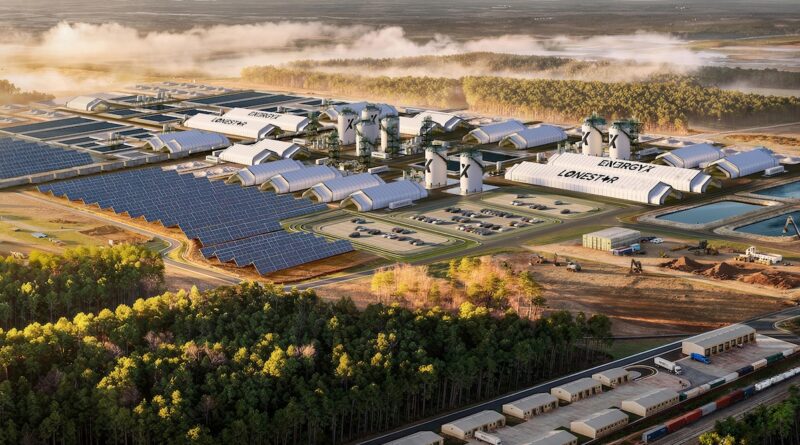
In the latest news from EnergyX, on March 26, the company announced the commissioning of its Project Lonestar demonstration plant in Hooks, Texas. The plant is on track to produce about 250 metric tons of battery-grade lithium carbonate equivalent annually, deploying the company’s “GET-Lit” DLE and lithium refining systems with industrial-scale equipment.
The demonstration plant will serve as a scaleable platform for optimizing performance with an eye on keeping costs down, while providing battery-grade samples in the range of 5–25 tons to customers. If all goes according to plan, production will ramp up to the commercial-level pace of 100,000 tons or more per year.
“This facility not only validates the performance of our technology on an industrial scale under real-world conditions, but also establishes EnergyX as the lowest cost producer in the U.S.,” emphasized EnergyX Founder and CEO Teague Egan in a press statement.
“Ultimately this benefits all our customers who need large volumes of lithium for EV and ESS applications, as well as any lithium resource owners looking to implement best-in-class DLE technology whom we are happy to license to,” Egan said, hinting at the potential for rapid, industry-wide scaleup among other stakeholders.
Everybody Loves EV Batteries
Although some automakers famously pulled back on their vehicle electrification plans after Republicans in Congress eliminated federal EV tax credits last fall, the market for EV batteries suddenly looks much brighter now that US President Donald Trump’s war in Iran has sent global fuel markets spiraling upwards.
EV batteries are not the only market, though. “The facility is the last step before commercial expansion across the company’s growing U.S. lithium footprint while advancing national goals around critical mineral security and supply chain resilience,” EnergyX says of Project Lonestar, referring to the Trump administration’s focus on establishing alternative supply lines for lithium and other minerals used by the Department of Defense.
Even ultra-conservative US Senator Ted Cruz (R-TX) appreciates the value of producing battery-grade lithium here in the US. “The lithium produced at Project Lonestar will help bolster U.S. energy security and defense readiness by supplying the critical materials needed for batteries used in critical military technology,” Senator Cruz said in remarks cited by EnergyX.
For some background on that, let’s turn to an article published just last year in the Journal of Military Studies regarding the significance of Chinese domination over lithium refining. “During several decades, through sustained strategic investments, the PRC has achieved a controlling position in the lithium market,” observed the author, Major Philip Murray of the US Army.
“This control allows the PRC to influence lithium pricing and availability globally, posing significant economic and strategic risks to nations reliant on these supply chains, particularly the United States,” Maj. Murray wrote.
Lithium & National Security
“For the United States, lithium resources and technologies are foundational to national security since they undergird expeditionary military capabilities, power almost all satellite systems, are an integral component in nuclear weapons and fusion nuclear power, and are essential to modern life in American civil society,” Murray continued.
If you caught that thing about expeditionary military capabilities, that’s of interest from an EV perspective. The US military has been slow to adopt EVs, partly due to fire hazards if damage occurs to EV batteries during combat missions or transportation.
Still, some forward momentum did occur during the Biden administration as the logistical and tactical advantages of EVs came into focus, including cutting the expense of liquid fuels, harvesting local energy resources to recharge batteries instead of engaging risky fuel convoys, and operating silently instead of noisily.
Too bad President Trump has clamped down on technologies that help give US military operations an edge over the competition. Back in 2022, the Modern War Institute at West Point posted an article under the title “The Lethality Case for Electric Military Vehicles” in which the authors noted that military leaders “are clamoring for more electrification of tactical and nontactical vehicle fleets as well.”
“The US military needs to take advantage of this electrification trend and follow fast in adopting the best new technologies. Doing so will not only reduce its reliance on petroleum fuels; it will increase the lethality of the force,” they emphasized.
Oh, well. As capably demonstrated by EnergyX and other innovators, the US will have a more secure, reliable supply of battery-grade lithium in time for the next president of the United States to occupy the White House.
Image: The newly commissioned EnergyX demonstration facility in Texas is producing a domestic supply of lithium for EV batteries, energy storage, and other devices, loosening China’s grip on the global lithium refining industry (cropped, courtesy of EnergyX via email).
Sign up for CleanTechnica's Weekly Substack for Zach and Scott's in-depth analyses and high level summaries, sign up for our daily newsletter, and follow us on Google News!
Have a tip for CleanTechnica? Want to advertise? Want to suggest a guest for our CleanTech Talk podcast? Contact us here.
Sign up for our daily newsletter for 15 new cleantech stories a day. Or sign up for our weekly one on top stories of the week if daily is too frequent.


CleanTechnica uses affiliate links. See our policy here.
CleanTechnica's Comment Policy

