



Support CleanTechnica's work through a Substack subscription or on Stripe.
Thirteen years in the making, the Coastal Virginia Offshore Wind project is finally delivering clean kilowatts to the US grid. At 2.6 gigawatts and $11.5 billion, the new wind farm is one of the biggest single energy projects in the US. CVOW is also by far the biggest wind farm in the US, and among the biggest in the world. With all this bigness going on, one might think US President Donald Trump will issue some sort of celebratory statement…hold, please…
Who’s Afraid Of The Big, Bad, Wind?
Of course, Trump is not out there celebrating, even though CVOW meets the moment of skyrocketing electricity demand. One turbine has been up and running since March 23, with many more to follow.
The newly operational wind farm also slots neatly into the affordability picture. A study produced back in 2024 shows that offshore wind power plants are now less expensive than natural gas. Advocates also emphasize that wind turbines perform best during strong winter winds, whereas gas prices can spike during the same season.
Not helping on the affordability end of things is Trump, who famously called a halt to CVOW last year along with four other wind farms on the Atlantic coast. All five offshore projects eventually resumed construction, but the delay didn’t come cheap. For CVOW alone, Trump’s stop-work order added an estimated $230 million in construction costs. Dominion has also estimated that Trump also added another $137 million in material costs for CVOW related to new tariffs.
Nice work, Trump. The extra costs will be passed on to ratepayers, who can expect to pay an average of 43 cents more on their monthly electricity bills. That still sounds like a bargain, and it is compared to the cost of electricity in other states. Dominion notes costs in its tri-state service area fall much lower than the national average, with North Carolina taking the lead at 24% less. Virginia comes in at 17% less, and South Carolina registers 12% less.
Besides, electricity demand is skyrocketing in all three states, and alternative power sources are more expensive. Dominion expects CVOW to save $3 billion in fuel costs during the first 10 years of operation alone, based on 2023 costs. Now that Trump has upended global energy markets, that savings is likely to increase.
It’s also worth noting that large new power plants of any sort, wind or not, can raise electricity rates if they require significant grid upgrades. Dominion has reported that the cost of onshore upgrades required by the regional grid operator PJM pushed the cost of CVOW up about 9% from the original estimate.
One Step Back
On the same day that CVOW began delivering electricity to the grid, the French firm TotalEnergies took a billion-dollar payout from the Trump administration to walk away from two offshore leases along the Atlantic coast.
The move was excoriated by clean energy advocates, but money talks — in more ways than one. Trump aside, the financial picture for the two lease areas is not pretty. One of the areas is located in the New York Bight, which proved problematic long before Trump took office. The leading firm Ørsted, for example, suspended activity in two lease areas in the Bight back in 2023, after being hit with inflationary pressures attributed to the COVID crisis.
The cost of the lease areas also factors in. Back in 2022, TotalEnergies paid top dollar for its two leases, including one off the coast of the Carolinas, through its Attentive Energy branch. The New York lease alone cost $795 million for 84,332 acres with a potential capacity of 1.5 gigawatts. By way of comparison, Dominion won the much larger 112,000 CVOW lease area in 2013 for just $1.6 million.
As far as the Bight goes, another angle to consider is competition from other offshore wind stakeholders, Trump or no Trump. The leading global energy firm Equinor, for example, already has a lock on the New York Bight, having set up a seaport wind hub in Brooklyn last year to facilitate its new 810-megawatt Empire Wind project. Empire was another project delayed by Trump — twice — last year, only to continue this year.
Equinor is unlikely to dip another toe in the US market while Trump is in office, but that wind port isn’t going anywhere. It will give Equinor a leg up on the competition after January 20, 2029 when Trump leaves office as scheduled — peacefully this time, one hopes.
Next Steps For Offshore Wind In The US
The case for offshore wind will continue to be an uphill climb, though it helps to have the facts on one’s side. One helpful fact is the South Fork wind farm, located between Block Island in Rhode Island and Long Island in New York. The wind farm has been in operation since March of 2024. Though relatively small at just 132 megawatts, South Fork holds a significant position as the first commercial-scale operational wind farm in the US, providing loads of data in support of future activity.
Citing data from the Long Island Power authority, the trade organization Oceantic Network notes that South Fork has exceeded expectations for electricity generation, particularly in the winter. “Offshore wind is especially productive when we need it most — during the harsh winter months, storms, or during the times of day that demand is ramping up and solar is not online,” Oceantic explains.
Ocean conservationists have also been tracking the “reef effect” at South Fork, referring to proliferation of both commercial and recreational fish at the site.
Wait, What Is Going On Over At South Fork?
Speaking of South Fork, let’s take note of the Preservation Society of Newport County, a Rhode Island organization dedicated to the preservation of historic seaside mansions. Back in 2023, PSNC brought a lawsuit against South Fork on the grounds of view spoilage. The target of the lawsuit was the Bureau of Ocean Energy Management in the US Department of the Interior, which issued a construction permit for the project.
The legal action not stop South Fork from moving forward towards commissioning, but the lawsuit itself is still alive — and the Interior Department is continuing to defend BOEM’s decision to issue the permit.
On March 23, Bloomberg Law reported that the “Interior Department successfully defended most of its authorizations of a Rhode Island offshore wind project after a federal court rejected challenges from residents and historic property owners.”
Readers, what do you make of that? This is the same Interior Department that issued the stop-work order against five wind farms last year, including another Rhode Island wind farm called Vineyard Wind.
And, here’s where things get interesting. BOEM issued that stop-work order on December 22 last year. On very the same day, BOEM slipped a separate note to Vineyard Wind, to clarify that the order only applied to construction work. It did not apply to to turbines that were already grid-connected — which happened to be most of them.
Seriously, what is going on here? If turbines that are already delivering electricity are being defended in court and behind the scenes, then what’s with the effort to stop wind farms that are still in the pipeline?
If you can figure that out, drop a note in the discussion thread. Meanwhile, keep an eye on that South Fork case. It’s not over yet, and the outcome could affect other offshore wind challenges launched by PSNC.
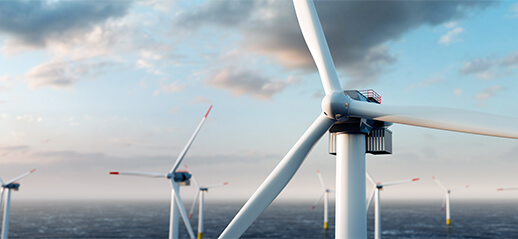
Photo: The 2.6-gigawatt Coastal Virginia Offshore Wind project is finally beginning to deliver electricity to the US grid, having survived the Trump chopper (cropped, courtesy of Dominion Energy).
Sign up for CleanTechnica's Weekly Substack for Zach and Scott's in-depth analyses and high level summaries, sign up for our daily newsletter, and follow us on Google News!
Have a tip for CleanTechnica? Want to advertise? Want to suggest a guest for our CleanTech Talk podcast? Contact us here.
Sign up for our daily newsletter for 15 new cleantech stories a day. Or sign up for our weekly one on top stories of the week if daily is too frequent.

CleanTechnica uses affiliate links. See our policy here.
CleanTechnica's Comment Policy