


Support CleanTechnica's work through a Substack subscription or on Stripe.
It feels like everyone in the EV space already wrote their hot takes on Honda’s massive $15.8 billion EV retreat when the news first broke, and then promptly moved on to the next news cycle. But after sitting with the announcement for the last week and a half, I realized we mostly glossed over something incredibly important in that press release.
In short, the automaker wasn’t afraid to put the blame where it belongs: on the Trump regime. Publicly doing that shows us that major corporations are still afraid to lose money, but aren’t afraid of Trumpian revenge.
Skipping The Corporate Spin (Sort Of)
When a major automaker decides to eat a nearly $16 billion loss and scrap three highly anticipated electric vehicles, you usually expect a heavily spun corporate statement. We’re used to hearing vague excuses about shifting macroeconomic headwinds or realigning synergies. When other companies did this, they usually blamed demand or even car buyers, and weren’t afraid to make it look like an EV program died of natural causes.
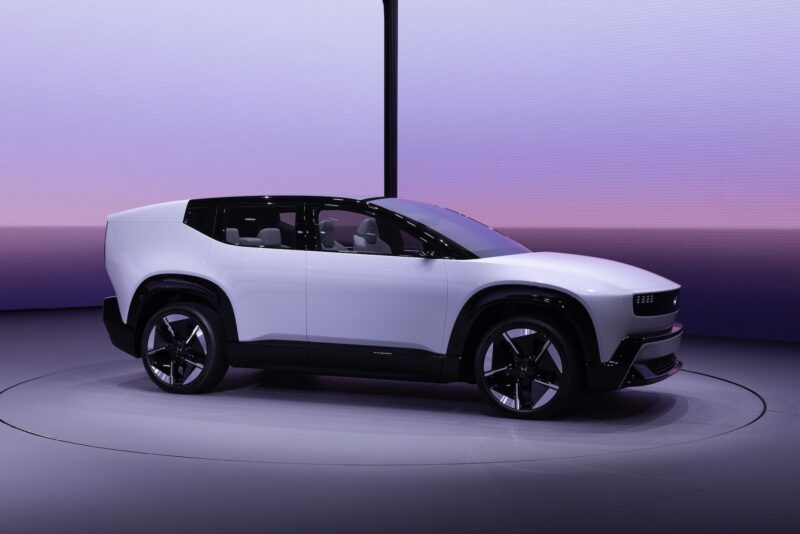
But when Honda announced it was pulling the plug on the 0 Series SUV, the 0 Series Saloon, and the Acura RSX for the US market, the company did something entirely different. It pointed a finger directly at unpredictable US politicians and idiotic policy shifts.
Sure, it’s still buried in later paragraphs, but the company very clearly mentions tariffs hurting the company’s sales as a whole and mentions that EV sales growth slowed because fossil fuel regulations and tax credits were reduced.
That’s as direct as it gets in a sanitized corporate press release. A massive multinational corporation just told the world that the rollback of emissions standards and the gutting of federal tax credits directly killed three major vehicle programs and cost them $15.8 billion. GM, Ford, and Stellantis were afraid to do that, but Honda wasn’t afraid to tell investors and the public the truth.
Taking Actual Accountability
They also didn’t dodge accountability. Instead of hiding behind a vague corporate statement, Honda CEO Toshihiro Mibe stepped up and said his first priority is to stop the bleeding. He added that the responsibility lies with him and called canceling the cars an agonizing decision.
Mibe and his executive vice president are even taking 30 percent pay cuts for the next three months, while other top executives are taking 20 percent cuts. You rarely see that kind of personal ownership when a legacy automaker completely fumbles the bag. Most readers would probably prefer that they admit that delaying EV development was the bigger mistake, but we can’t expect that level of corporate seppuku, can we?
The Bully Pulpit Is Empty & Trump Is To Blame For Losing American Manufacturing Growth
This blunt honesty reveals a few incredibly important things about the current state of the auto industry and American politics.
First, it’s glaringly obvious that nobody is afraid of the MAGA crowd anymore. For years, massive corporations have walked on eggshells to avoid triggering political tantrums. The fact that Honda is willing to flat out blame the loss of federal tax credits and fossil fuel rollbacks shows that the bullies have lost their power over the public debate. Automakers are tired of pretending the sky isn’t falling just to protect fragile political egos.
Maybe last year Trump could command that level of fear, but with crashing approval ratings, the Epstein files, domestic financial chaos, and even retreats on immigration, it’s clear that the political capital is about spent. Honda knows that it doesn’t have to fear Trump or his dwindling base in Washington.
Second, Honda’s retreat perfectly illustrates how unpredictable and chaotic public policy makes it impossible to run a business. Building cars requires looking five or ten years into the future and making massive calculated risks. You can’t do that when the regulatory rug gets pulled out from under you on a political whim.
The 0 Series vehicles were supposed to be built right here in the US at Honda’s retooled EV Hub in Ohio. Now, that American manufacturing momentum is completely stalled. Between the chaotic tariffs and the gutted consumer incentives, the math simply stopped working. Honda realized it was actually cheaper to swallow a $15.8 billion pill today than to try and navigate a fundamentally broken US policy landscape for the next decade.
The Cars Aren’t The Problem
Finally, this entire debacle proves there is nothing inherently wrong with EVs themselves. Keep in mind that Honda was a notorious laggard in the EV space for years. It clung to hybrids and fuel cells for far too long. But even Honda finally saw the writing on the wall and committed billions to the upcoming 0 Series.
Honda didn’t kill these cars because EVs are a passing fad. They killed them because US policymakers are doing everything in their power to make selling them impossible. Manufacturers who got a good start before Trump got back into the White House are better able to hang in there.
Ultimately, it’s not EVs that will lose out on this. The US ultimately loses out on manufacturing and energy independence.
Featured image by Honda.
Sign up for CleanTechnica's Weekly Substack for Zach and Scott's in-depth analyses and high level summaries, sign up for our daily newsletter, and follow us on Google News!
Have a tip for CleanTechnica? Want to advertise? Want to suggest a guest for our CleanTech Talk podcast? Contact us here.
Sign up for our daily newsletter for 15 new cleantech stories a day. Or sign up for our weekly one on top stories of the week if daily is too frequent.

CleanTechnica uses affiliate links. See our policy here.
CleanTechnica's Comment Policy