


Support CleanTechnica's work through a Substack subscription or on Stripe.
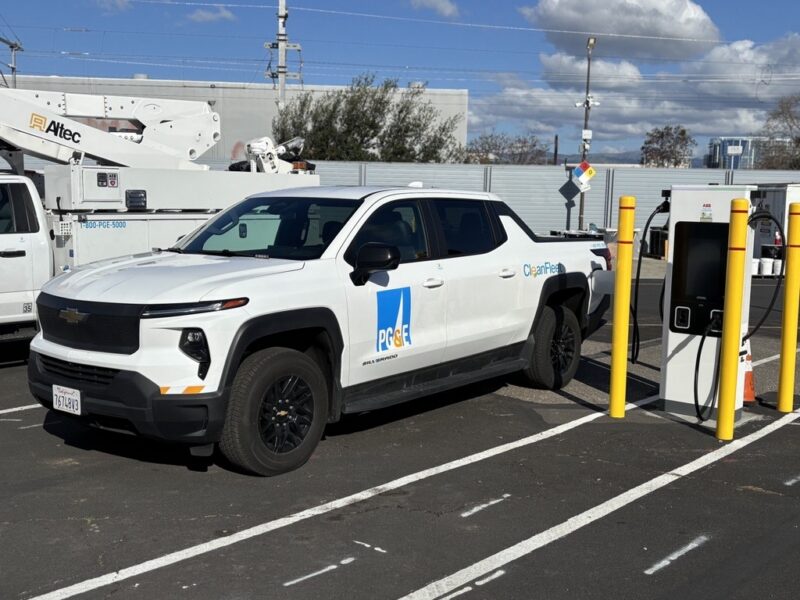
Pacific Gas and Electric (PG&E) is California’s largest utility, providing electricity and natural gas to over 16 million people in central and northern parts of the state. It is the largest utility in California and one of the largest in the US, with about 28,000 employees. PG&E is electrifying its fleet and expanding its fleet EV charging.
Electric vehicles can make excellent fleet vehicles because they are much more energy efficient than gas vehicles. Their greater efficiency results from the fact that electric motors use far less energy and electric vehicles typically have the ability to capture kinetic energy from regenerative braking. Additionally, the large battery packs can be used as a source of backup electricity in virtual power plants. Electric vehicles can also have a lower total cost of ownership because their maintenance and repair costs can be lower.
PG&E answered some questions for CleanTechnica on its EV matters.
How many EV chargers does PG&E have currently? Are there plans to add more?
Today, PG&E has 821 EV chargers across 33 sites installed to support our fleet needs. In total, we plan to install approximately 3,800 EV chargers across 88 sites by 2030 (approximately 1:1 vehicle-to-charger ratio).
How many EVs are in the fleet right now and how many will there be by the end of 2030?
PG&E has committed to electrify our vehicle fleet in compliance with California’s Advanced Clean Fleets regulation. Our goal: Electrify 3,800 vehicles in our fleet by 2030—100% of our light-duty, 50% of our medium-duty and 20% of our heavy-duty vehicles.
Approximately 13% of PG&E’s fleet of roughly 9,700 on-road vehicles are currently powered by alternative fuels including electricity.
Why invest in more EVs and chargers … what are the benefits?
This is an exciting transition and an outstanding opportunity for us to lead by example. New EVs in our fleet help us better serve our planet and should provide significant cost savings for our customers over time.
What types of EVs are in the fleet?
PG&E’s Battery Electric Vehicle (BEV) fleet currently includes 170 Ford Lightning pickup trucks, 175 Chevrolet Silverado EV pickups, 20 medium-duty Freightliner MT50 vans, an all-electric Altec TA60 bucket truck, Freightliner eCascadia Materials tractor and a Tesla Model Y.
Do any of the EVs in the fleet get charged with clean, renewable electricity?
PG&E continues to meet compliance with California’s Renewables Portfolio Standard, and in 2025, our electricity mix included:
- 34% from specified eligible renewable resources including solar (22%), wind (7%), biopower (3%), small hydroelectric power (2%).
- 32% of electricity deliveries from GHG-free nuclear power generated by Diablo Canyon Power Plant
- 5% from large hydroelectric power
How many chargers are fast chargers?
Approximately 250 fast chargers including:
- More than 100 25kW direct current chargers
- 88 chargers rated over 150kW
- 36 400kW chargers.
Will all PG&E fleet vehicles be electric eventually?
PG&E plans to electrify its fleet of 9,700 vehicles by 2042.
Sign up for CleanTechnica's Weekly Substack for Zach and Scott's in-depth analyses and high level summaries, sign up for our daily newsletter, and follow us on Google News!
Have a tip for CleanTechnica? Want to advertise? Want to suggest a guest for our CleanTech Talk podcast? Contact us here.
Sign up for our daily newsletter for 15 new cleantech stories a day. Or sign up for our weekly one on top stories of the week if daily is too frequent.

CleanTechnica uses affiliate links. See our policy here.
CleanTechnica's Comment Policy