


Support CleanTechnica's work through a Substack subscription or on Stripe.
Here at CleanTechnica, we talk a lot about building things, but it’s not very often that we dig into the raw materials they’re made of. The reality is that many of the raw materials used in clean tech are responsible for some of the most significant emissions in the world.
Steel is one of those materials and it is used absolutely everywhere. As a category, steel production accounts for 7 to 8% of global CO2 emissions by itself. It’s one of the single largest materials used in electric vehicles (30-40%), it is foundational in wind turbines (66-79%), and accounts for more than half of what goes into electric motors.
That’s why we’re so excited about the work Volvo is doing in both Volvo Cars and the larger vehicles produced by Volvo Group to source fossil-free steel.
The Process
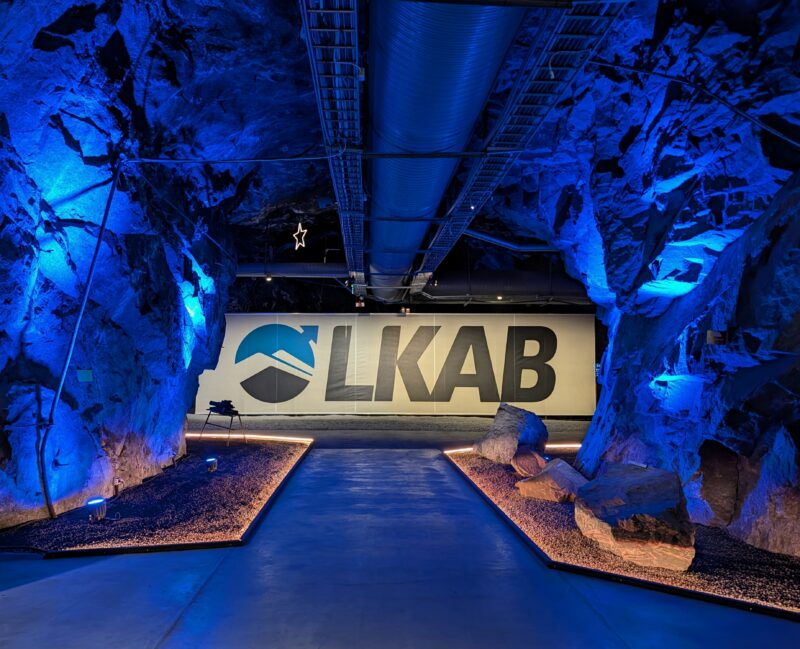
The idea behind fossil-free steel came out of a collaboration between mining company LKAB, steel producer SSAB, and energy company Vattenfall. After some lab-based trials, the three companies put their heads together to see if a path towards fossil-free steeel could be forged.
It would take significant efforts from all three companies to define the new process, to secure the necessary investments, identify customers for the fossil-free steel, and to ramp up to full production for it to be successful.
The concept was to use fossil-free electricity generated from Vattenfall’s network of hydroelectric power plants. The clean energy flowing out of these hydro plants powers LKAB’s operations and is used to produce green hydrogen. That’s a key element in converting the traditional coal-fired and more recently developed natural gas-fired iron smelting process.
Fossil-free steel starts with Swedish mining company LKAB. They’ve designed a new process called HYdrogen BReakthrough Ironmaking Technology or HYBRIT for short. Vattenfall put together a slick YouTube series about HYBRIT that unpacks it for those looking for more detail (link to first video).
The process of iron ore reduction can be done with methane, but recent breakthroughs mean that it can be done with hydrogen gas as well. Instead of producing CO2 emissions, a hydrogen-based iron ore reduction process produces water as its only significant emissions.
Iron ore reduction is the most energy intensive part of the steel production process and converting that to a fossil-free process will be a huge win for the planet. The product coming out the other end is what’s called sponge iron. That’s the key feedstock for smelter SSAB which produces steel from the iron coming out of LKAB’s mines. Volvo Construction Equipment posted an insightful video unpacking LKAB’s process for producing fossil-free steel:

The Demonstration Plant
To overhaul one of the dirtiest, most energy intensive industries on the planet in a few short years is no small task. After defining the process in a lab and vetting the components of the process at its plant near Stockholm in Oxelösund, Sweden, it was time to build an end-to-end demonstration plant.
The objective of the demonstration plant was to test the end-to-end process, iron out any kinks (hah!), and develop a process for full scale fossil free iron processing. Northern Sweden was the obvious choice for the demonstration plant for two big reasons:
First off, LKAB has a large iron ore mine in Kiruna, Sweden. That’s a short train ride for the ore away from the small town of Luleå, where it can be further refined. Processing ore into the sponge iron used as the feedstock in steelmaking made sense to do near the mine to minimize the cost of transportation. LKAB’s iron smelter operations in Luleå, Sweden, produces 2.5 M tonnes of sponge iron per year from the ore it receives.
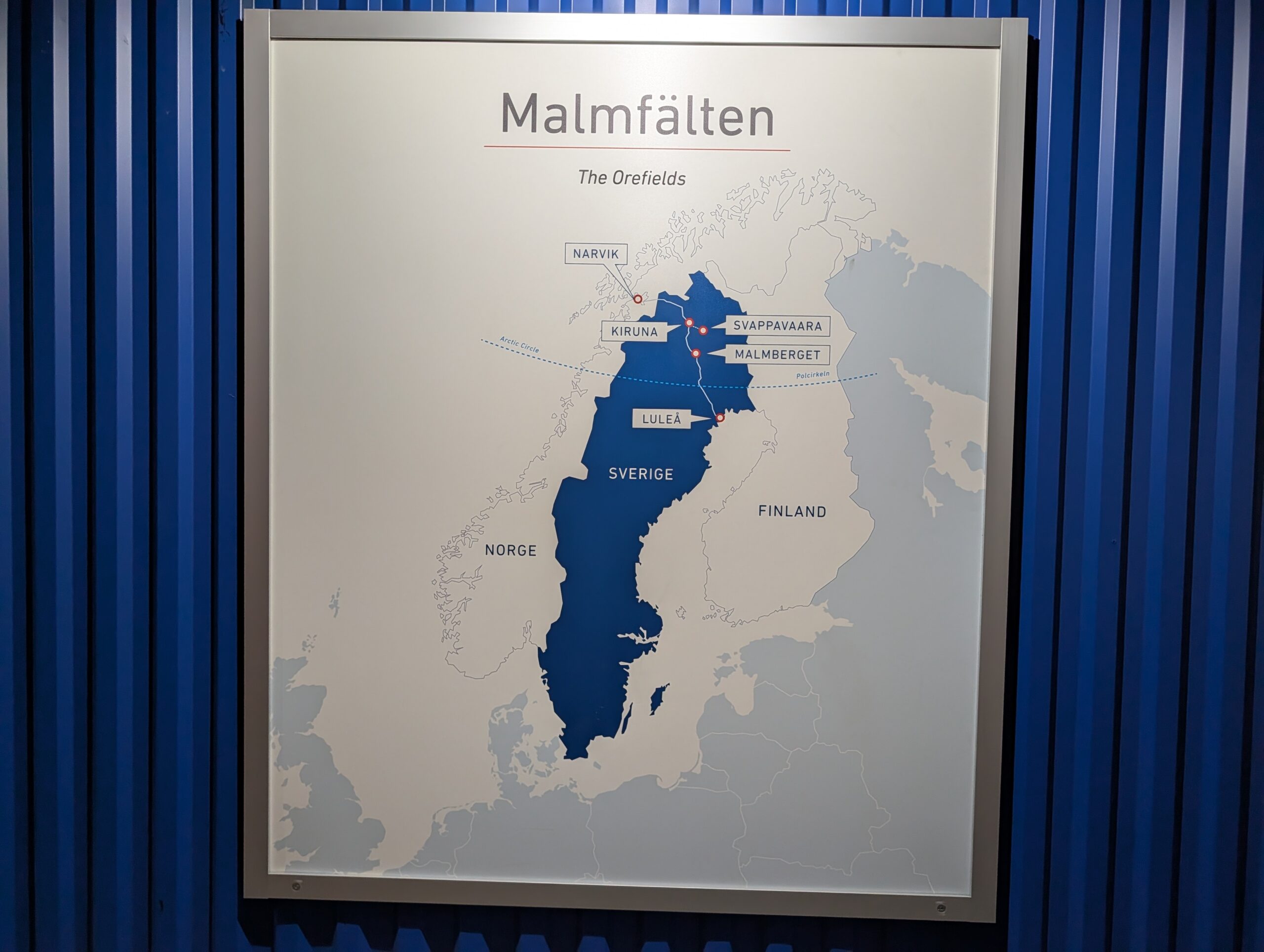
Second, Northern Sweden is also rich in hydropower resources with its many fjords and heavy precipitation. That translates to clean energy which is one of the key components feeding into fossil-free steel.
Vattenfall would supply clean electricity to power operations and to produce hydrogen gas for the process. LKAB would produce iron ore and smelt it into sponge iron using the sustainably produced hydrogen gas, and next up, it was SSAB’s turn to transform the sponge iron into usable, fossil-free steel.

To build the demonstration plant, they built a small 4 MW hydrogen electrolyzer and a massive new underground lined rock cavern (LRC) hydrogen storage facility. Underground LRC solutions were initially developed to store methane and it’s exciting seeing the same technology repurposed for use with hydrogen gas. They blasted out a new rock cave and lined it with steel plates coated in multiple layers of sealant to hold in the hydrogen.
The goal all along was to produce the first batch of fossil-free steel in 2025 and they delivered early. After years of hard and riding through the bumps of the global pandemic, the promise of validating a scalable HYBRIT process and producing steel was achieved. SSAB delivered first batch of renewable steel to Volvo last year.
Full Scale Production
That’s exciting, but it’s not the end of the journey. If anything, it’s just the beginning. The task ahead is now to take the process from the demonstration plant and scale it up to replace LKAB’s 2.5M tonne per year smelter in Luleå as well as at their 1.5M tonne per year smelter in Oxelösund.
It all starts with energy, and that means more of Vattenfall’s clean hydro to power the massive new hydrogen electrolyzer plant. They’re right in the middle of the ramp up now, excavating a full-scale 100,000-120,000 cubic meter underground hydrogen storage facility using the same LRC tech used for the demonstration plant.
They expect to have the full-scale storage and electrolyzers in Luleå online in 2026. That will be a momentous occasion because LKAB will be able to shut down their blast furnace. The new full-scale EAF ARC furnace will then start up, running completely on sustainably produced hydrogen.
When HYBRIT is done transitioning operations in Luleå, it will have reduced Sweden’s overall emissions by about 3%, which they expect to achieve by the end of 2027. All told, the work done by the HYBRIT team to convert Sweden’s steel operations to fossil-free, they expect to reduce Sweden’s overall emissions by 7-8%.
SSAB has roadmap to produce only 100% fossil-free steel by 2045.
Volvo
A key component of a breakthrough initiative like this is securing early customers willing to work around the uncertainty and the growing pains that come along with it. Volvo was all in from the start and committed to buying renewable steel at slightly higher prices to provide the early runway needed for the HYBRIT project.
Volvo Group and Volvo Cars will both use SSAB’s fossil-free steel as some of the first customers.

Volvo Cars is targeting to use 100% renewable steel for all vehicles launched in 2030 or later as a hard target. As a percent of sales, that should be in the neighborhood of 40-50% of the cars made in 2030 using fossil-free steel. In 2031 that should be around 75%, hitting 95% in 2032. Building all Volvo cars introduced after 2030 with fossil-free steel is a global target for and it’s exciting to see such bold actions and timelines to support the commitment.
Volvo Group
While they do share a brand, Volvo Group is a separate company from Volvo Cars and produces Volvo’s buses, trucks, construction equipment, and marine businesses.They are targeting to use 100% renewable steel in all trucks, buses, boats etc for all models launched in 2030 and beyond. Buses and trucks have longer refresh cycles so the transition will take longer.

Decoding the commitment, Volvo Group will build any new vehicles introduced from 2030 and beyond with fossil-free steel. The commitment is a recognition of the hard work and challenges that come with transitioning an entire supply chain to a new technology. It is a significant undertaking for the energy company, the mine operator, the smelter, the steel maker, and the automaker.
Translating the commitment to top line sales, they should be using fossil-free steel for about 10-15% of their total new vehicles produced in 2030. As older models drop off and even more new models are rolled out, they expect to ramp up to 50-60% of trucks and buses sold in 2034. By 2036, that’s around 75% of sales, reaching effectively 100% of all Volvo Group vehicles produced with fossil-free steel by 2040.
One of the cool things about this project is how it comes around full circle. Volvo Construction Equipment builds the Steel Haulers that move iron ore around and they’re now able to build these oversized haulers with fossil-free steel. The video below highlights a steel hauler being used in the US and it will be amazing to see them being used in the very LKAB mines where the iron ore used to produce them is extracted.

Volume Matters
Big vehicles use quite a bit more steel, so let’s dig into those numbers. For 2025, Volvo Cars will use ~1.2-1.3M tonnes of steel. Volvo Group operates on a completely different level, using about 3.5-4.0M tonnes per year for its trucks, buses, boats, excavators, etc. Think about the massive chassis underpinning class 8 trucks, the oversized counterbalances keeping awkward loads stable in a dump truck, and the myriad of attachments bolted onto construction equipment.
Pricing Premium
The early conversion to fossil-free steel doesn’t come without a price tag. It is 15-25% more expensive than traditional steel for Volvo. The variance in pricing is determined by the type of steel that’s being transitioned from and what it’s moving to. Volvo Cars is already using premium steel in their vehicles, so the premium they will pay will be slightly less than it might otherwise be.
Grok estimates that Volvo Cars is paying in the neighborhood of $900-1,000 per ton for the Advanced High Strength Steel (AHSS) used today. It’s around $1150-1400 per ton for the renewable version. That’s because Volvo builds their passenger cars from quality steel to ensure passenger safety.
Volvo Group uses a lower percentage of AHSS at around 15-25% of the steel of the steel they consume. That’s because they’re building much more robust vehicles like trucks and boats where mild and high strength steel is more than sufficient for the chassis and frames for their massive vehicles.
That translates to a lower price today at €750-950 per ton, and €950-1200 per ton for the mix of steel in the future.
Overall
It’s exciting to see a country that is so motivated to transform its heavy industries into low- and zero-emission powerhouses. Owning many of its heavy industries including its iron mines, as well as much of the natural land in the north, makes it easier for Sweden to do this compared to many developed nations.
They are able to use the profits from steel production and roll them directly back into modern processes to refine it without having to check with shareholders first. That’s a huge win for the socialized ownership model. It has brought significant wealth to the region and to Sweden as a whole over the last 75 years.
Looking to the future, Sweden is positioning itself and its heavy industries, including Volvo, for the future with a robust supply of fossil-free steel. That’s exciting for Europe and sets a high bar for other steel producing countries around the world.
The timeline is aggressive and we’ll be watching to see how the project develops, all the way from the mine to the Volvo vehicles it will be used to produce in the coming years. For more information about the process, check out the videos and video series linked above.
Sign up for CleanTechnica's Weekly Substack for Zach and Scott's in-depth analyses and high level summaries, sign up for our daily newsletter, and follow us on Google News!
Have a tip for CleanTechnica? Want to advertise? Want to suggest a guest for our CleanTech Talk podcast? Contact us here.
Sign up for our daily newsletter for 15 new cleantech stories a day. Or sign up for our weekly one on top stories of the week if daily is too frequent.

CleanTechnica uses affiliate links. See our policy here.
CleanTechnica's Comment Policy