




The Philippines may hold one of the world’s largest nickel reserves — a critical ingredient in electric vehicle batteries — but EVs still account for only about 1 percent of vehicles on its roads.
That contradiction now sits at the center of the country’s transportation debate as lawmakers push for more aggressive policies to accelerate electrification in one of Southeast Asia’s most oil-dependent economies.
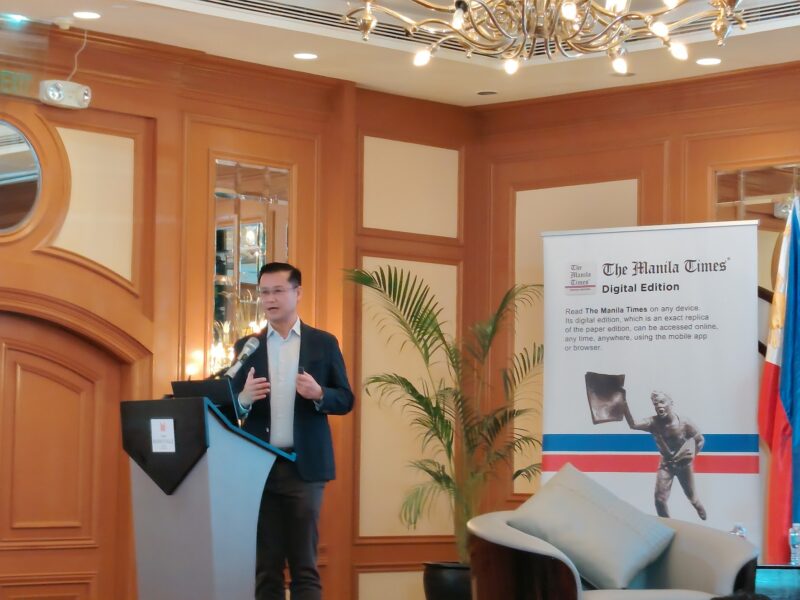
Speaking during The Manila Times Automotive Forum in Manila, Senator Sherwin Gatchalian called for stronger implementation of the Philippines’ Electric Vehicle Industry Development Act (EVIDA), arguing that the country needs to move beyond tax incentives and begin building a more comprehensive ecosystem for EV adoption.
For the Philippines, the EV transition is not simply an environmental issue. It is increasingly becoming an energy security and economic survival issue.
The country imports nearly all of its petroleum requirements, leaving it highly exposed to global oil price shocks and geopolitical instability. Transportation alone accounts for more than half of national oil consumption, making it one of the largest pressure points in the Philippine economy whenever fuel prices surge.
Recent tensions in the Middle East, including disruptions tied to Iran, have again highlighted how vulnerable import-dependent economies remain to global energy volatility.
“If we manage to electrify the transportation sector, that’s already half the battle won,” Gatchalian said during the forum.
While the United States and Europe often frame EV adoption around emissions reduction, countries like the Philippines face a different reality. In many emerging markets, electrification is also about insulating economies from oil dependence while lowering long-term transportation costs. But the Philippines remains far behind its regional neighbors.
Thailand has emerged as Southeast Asia’s leading EV manufacturing hub, attracting major Chinese automakers including BYD and several battery suppliers through aggressive industrial incentives. Indonesia has leveraged its massive nickel reserves to position itself as a future battery production powerhouse, while Vietnam’s VinFast has rapidly expanded both domestically and internationally.
The Philippines, despite possessing some of the world’s largest nickel deposits, has struggled to build comparable momentum. Much of the country’s nickel output is exported overseas for processing, particularly to China, which dominates much of the global battery manufacturing supply chain. The result is a familiar pattern seen across many resource-rich developing economies: exporting raw materials while importing higher-value finished technologies.
“We’re shipping nickel to China to make batteries. Why not make the batteries here?” Gatchalian asked.
The senator said lawmakers are now studying amendments to EVIDA aimed at accelerating both adoption and infrastructure deployment.
Among the proposals under consideration are requirements for commercial establishments to allocate at least 20 percent of parking spaces for EVs and dedicate a similar percentage for charging infrastructure. Additional non-fiscal incentives being explored include discounted parking, toll exemptions, free driving lessons for EV owners, and streamlined registration programs.
The government is also considering a gradual phaseout of internal combustion engine vehicle purchases for public fleets beginning in 2028. That could become significant in a country where government agencies have so far been slow to adopt EVs themselves. Currently, only a small portion of public-sector vehicles are electrified despite existing policies encouraging adoption.
Although the Philippines has already removed excise taxes and tariffs on fully electric vehicles, EVs remain significantly more expensive than conventional gasoline-powered vehicles for most consumers. Gatchalian said government financial institutions such as the Land Bank of the Philippines and the Development Bank of the Philippines could help close that gap through zero-interest or low-interest financing programs.
Battery prices, however, continue to decline globally, gradually narrowing the affordability gap between EVs and internal combustion vehicles. Batteries still account for roughly 30 to 40 percent of total EV cost, making falling cell prices critical to broader adoption in developing markets.

Infrastructure remains another major challenge. Outside major urban centers like Metro Manila, public charging stations remain limited, contributing to range anxiety and slowing consumer confidence. Gatchalian criticized the pace of charging infrastructure deployment, saying commercial establishments and property developers should be moving far more aggressively.
The Department of Energy has already been tasked with developing a national charging roadmap, but implementation has lagged behind the pace needed for widespread adoption.
The Philippines also faces a transportation reality very different from the United States.
Unlike America’s largely private car-centric mobility system, much of Philippine transportation revolves around public utility vehicles, buses, motorcycles, ride-hailing fleets, and jeepneys — the iconic public transport vehicles that serve millions of commuters daily. That means electrification in the Philippines may depend less on private consumer EVs and more on commercial fleet conversion.
Gatchalian said lawmakers are studying proposals that could subsidize as much as 50 percent of the cost of electric public utility vehicles to help transport cooperatives absorb the high upfront expense of electrification.
If implemented at scale, such programs could have an outsized impact on urban emissions, fuel consumption, and operating costs for public transportation.
The transition would also require a significant workforce shift. Mechanics and technicians trained for internal combustion engines will need reskilling to support battery systems, electric drivetrains, and charging infrastructure maintenance.
