


Support CleanTechnica's work through a Substack subscription or on Stripe.
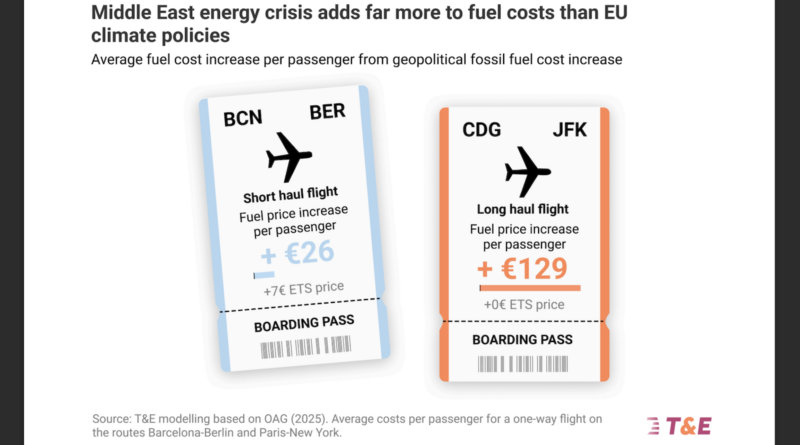
Airline ticket prices are soaring as a consequence of the recent crisis in the Middle East. This new analysis shows that European aviation’s dependence on fossil fuels is at the core of this spike in prices.

The recent Middle East crisis underscores that European aviation’s greatest vulnerability is its fossil fuel dependency, not the climate regulations. While some industry players are using geopolitical instability to lobby against the ETS and ReFuelEU, T&E highlights that these laws are essential blueprints for achieving energy independence. Weakening this legislation now would only deepen the sector’s exposure to global oil shocks. This briefing explores why and how Europe should not backtrack on climate legislation, but rather reinforce it.
The escalating crisis in the Middle East has sent profound shockwaves through the energy sector, but is particularly acute for aviation. To the surprise of many is the extent to which the aviation industry is easily shaken by political conflicts around the world because of its over-reliance on oil and jet kerosene produced and/or transited via the Middle East.
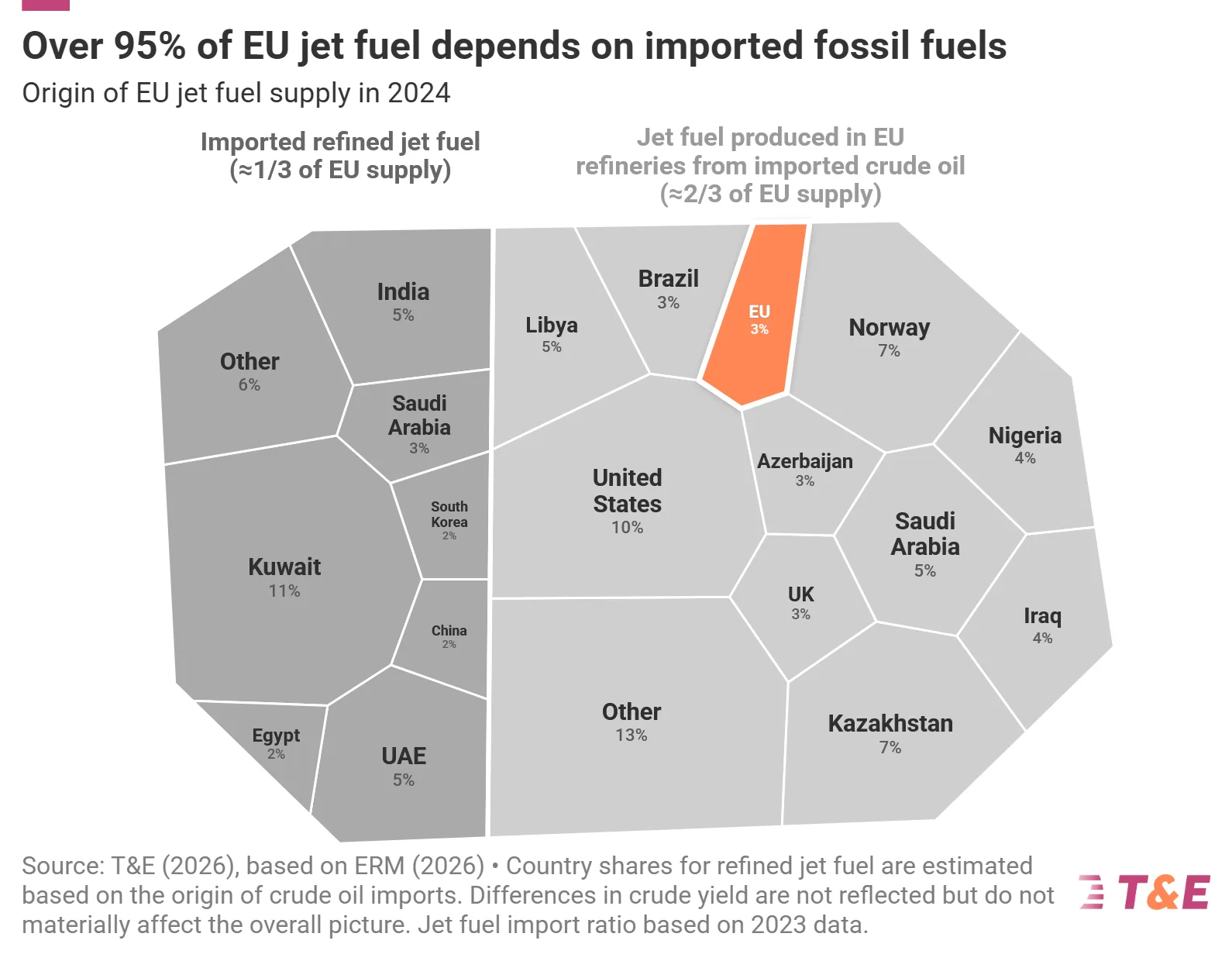
The EU currently imports around 95% of its crude oil and therefore almost all of the crude oil used for jet fuel refining within the European Union. Additionally, roughly one third of European jet fuel demand is met by directly importing refined jet fuel, with the Middle East as the main supplier. Taken together, this means that around 30% of EU jet fuel supply, including both crude oil refined within the EU and imported refi ned jet fuel, relies on imports via the Strait of Hormuz.
The impacts of the crisis are multifaceted and are still evolving; notably, airlines have been forced to undergo rerouting to avoid volatile airspace, while many regional Middle Eastern carriers remain grounded. Beyond operations, the crisis has triggered jet fuel shortages that have led to significant flight cancellations and an increase in fuel costs. SAF prices are also surging despite relatively stable costs for feedstocks like Used Cooking Oil (UCO).
In recent weeks, these disruptions have been leveraged as a catalyst for a renewed attack against green legislation, with aviation industry players calling on the EU to tackle fuel supply issues while simultaneously attempting to dismantle the very climate frameworks — such as the ETS and RefuelEU — designed to ensure long-term energy security. While the following analysis explores some of these key developments, they represent only a portion of the broader, ongoing disruptions facing the sector.
This briefing will demonstrate that the compliance costs of the ETS and ReFuelEU are negligible compared to volatile fossil fuel price spikes, arguing that dismantling these laws would compromise the very resilience needed to end Europe’s reliance on foreign imports. This document further explores how reducing flight volumes can significantly curb the aviation sector’s massive contribution to global oil demand, in the short-term. Finally, we look at why SAF is the strategic choice for long-term energy security. Recommendations at the end of the briefing are targeted specifically at the AccelerateEU package expected by the European Commission to tackle the consequences of the current energy crisis.
Key recommendations
While Europe must work hand-in-hand with the aviation sector to manage immediate jet fuel shortages — challenges that this briefing does not seek to address — it is vital that these short-term pressures do not derail our climate goals. Instead of retreating, the EU should use this crisis to strengthen its strategic autonomy through the following policy actions:
- Protect the ETS and reinvest revenues: Rather than offering price relief that keeps the aviation sector hooked on fossil fuels, the EU should double down on reinvesting part of ETS revenues directly back into the sector. This includes scaling up SAF and leveraging the Innovation Fund to support startups and technologies that will reduce our dependency on fossil fuels.
- Implement short-term demand measures: To immediately reduce our reliance on volatile oil imports, Europe should consider demand-side measures that curb unnecessary flight growth, providing a quick win for energy security. Member States must also consider anchoring these demand-side measures in their long-term policy frameworks to prevent a return to business-as-usual and ensure the sector no longer grows in isolation from climate and geopolitical realities.
- Reinforce long-term SAF mandates: The only way to decouple aviation from geopolitical instability is to stay the course on SAF mandates, including the UK SAFmandate and ReFuelEU. Strengthening these requirements now will build the domestic production capacity needed to ensure Europe’s long-term energy independence. The EU and Member States should consider short-term measures in the Accelerate EU package to boost funding for SAF.
Download the full briefing. Article from T&E.
Sign up for CleanTechnica's Weekly Substack for Zach and Scott's in-depth analyses and high level summaries, sign up for our daily newsletter, and follow us on Google News!
Have a tip for CleanTechnica? Want to advertise? Want to suggest a guest for our CleanTech Talk podcast? Contact us here.
Sign up for our daily newsletter for 15 new cleantech stories a day. Or sign up for our weekly one on top stories of the week if daily is too frequent.

CleanTechnica uses affiliate links. See our policy here.
CleanTechnica's Comment Policy