
Is The Plant-Based Food Sector Really Too Woke?
Support CleanTechnica's work through a Substack subscription or on Stripe.
Was the plant-based meat substitute industry wrong to recommend its products as a climate solution? That’s what Impossible Foods CEO Peter McGuinness insists, saying that the approach severely restricted the company’s potential customer base early on. The approach may have contributed to an inevitable pattern of steadily falling US faux meat sales over the last several years. “It became woke and partisan and political and divisive,” McGuinness argues.
McGuinness told an audience at the World Economy Summit that the plant-based food industry was “mismarketed and mislaunched” and couldn’t compete with public relations strategies coming out of the hugely funded animal agriculture sector.
“If you want to use less water, and have less GHG emissions, and use less land, you don’t target vegans, obviously. You have to target meat eaters and get them to try your product, but you don’t get them to try your product by insulting them.”
He added that plant-based food is “not in vogue right now” and admitted this is “not our cultural moment.”
Like Impossible Foods, many US companies have done a U-turn on green goals since President Donald J. Trump took office for a second term and shuttered DEI, LGBTQ+ and environmental programs. Greenhushing has become the norm in many companies that continue to pursue sustainable business practices, albeit on the q-t.
What seems to be lost here, though, is that new companies — plant-based and others — could have taken the approach to inspire their consumer audiences about worsening climate trends and how they’re impacting humanity’s ability to produce adequate supplies of nutritious food. Sustainable and resilient agrifood systems are essential for achieving the Paris Agreement targets on climate change while ensuring food security and nutrition for present and future generations. Startups could have been visionaries, offering epiphanies to consumers like those in Gen Z who are seeking to create a healthy environment for future generations.
Jessica Fanzo, professor of climate and food and director of the Food for Humanity Initiative at Columbia University’s Climate School, explains that substantive efforts in the food sector have shifted since over the last 50 years from a sole focus on alleviating hunger to improving nutrition and addressing human and planetary health.
Yes, educating and mobilizing audiences to take action to confront the climate crisis is no easy task. We live in an Orwellian world in which false information is widespread. We now see climate dismissal: diminishing, ridiculing, or rejecting the idea that climate change is worth any effort to study or try to slow. Yet important climate conversations can point consumers toward a healthier tomorrow — whether the advice is from a company like Impossible Foods or from spontaneous conversations when we go out to dinner with friends.
Fanzo says a key part of the effort is to try to understand the impacts of climate on nutrition outcomes.
“How does heat impact stunting and obesity? What about cold waves? What are the mechanisms for why, with droughts, you see more wasting?”
The agriculture, forestry, and other land use sector contributes approximately 21% of carbon dioxide equivalent per year of anthropogenic greenhouse gas (GHG) emissions globally, and land use change is responsible for about half of this total. Expansion of agricultural commodities into non-agricultural lands is a primary driver of land use change. For many consumer goods companies, these emissions dominate their scope 3 GHG inventories.
Couldn’t Impossible Foods have talked about this positive aspect of their business model — that they are a company that is concerned about their scope 3 emissions?
The agrifood sector sits at the heart of both the climate crisis and the pathway to a livable future. Agriculture is a massive global emitter, but it is also one of the first sectors to experience the effects directly. In order to preserve global agrifood systems, the sector will need to transition to more sustainable and resilient practices.
How The Food Sector Is Handling Climate Change
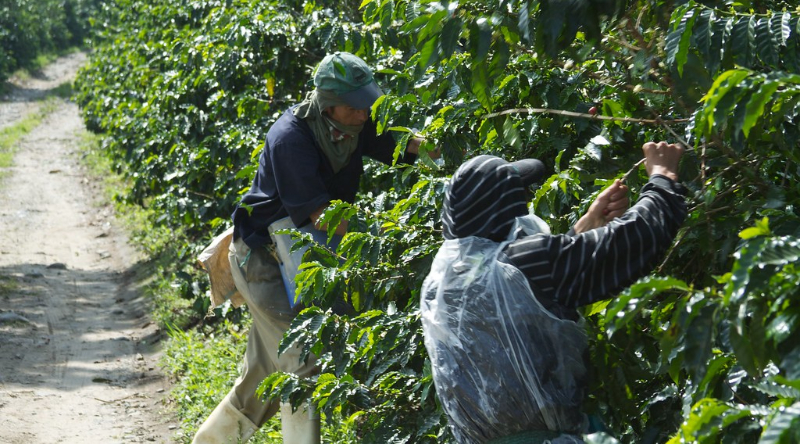
Climate change is affecting the foods we love. Take coffee, for example.
Coffee-producing regions in Brazil have been undergoing an intense drought, with major coffee-producing regions recording about 70% of the average rainfall this autumn. Annual water stress or prolonged periods of drought impair grain filling and fruit growth and result in fruit bruising. Air temperature outside the appropriate ranges is connected to severe productivity reductions. The susceptibility to climate change concerns the coffee market worldwide due to possible severe productivity losses, so rising temperatures mean higher coffee prices.
Because of climate change, only about 50% of today’s coffee-growing regions will be suitable for coffee production by 2050.
There are other tradeoffs to new approaches within the food sector. The Lancet Planetary Health was concerned about how new approaches to eating worldwide would affect the number of people working full-time to grow, raise, and harvest food in 179 countries. They determined that, if we eat more plants, we’ll have lower agricultural labor costs — to the tune of nearly $1 trillion annually. The lower demand for livestock production would shrink labor needs by 5% from flexitarian and pescatarian diets and 28% from vegetarian and vegan diets by 2030. The study called on governments to support livestock farmers with the transition of what could be anywhere from 18-106 million full-time animal agriculture jobs.
But the other side of the coin suggests that demand for horticulture workers to produce fruits, vegetables, legumes, and plant-based foods would increase by 8% – 25% and would require 83-56 million laborers. “Concerted efforts to recruit additional agricultural laborers might be necessary in higher-income countries in which agriculture represents only a small fraction of the economy and is seen as comparatively less desirable,” the Lancet researchers wrote.
Green bonds could be one mechanism to help the shift to a new agricultural labor market, as they offer a way to fund large scale sustainability initiatives from regenerative farming to low-emission production. For food and agriculture businesses, the commitment of banks means greater access to capital for sustainability projects and support in navigating the complexities of green financing.
Climate Bonds has launched the Agrifood Transition Framework, which is designed to guide financial institutions, investors, and stakeholders through the complexities of financing a credible, just, and science-aligned transition in the agrifood system. The goal is to ensure that capital flows into companies that are not only addressing climate mitigation but also driving climate adaptation, protecting nature, and supporting social equity.
References
- “A new pathway for agrifood: Climate Bonds launches Agrifood Transition Framework.” Climate Bonds Initiative. April 2025.
- “Climate risks and vulnerabilities of the Arabica coffee in Brazil under current and future climates considering new CMIP6 models.” Cássia Gabriele Dias, Fabrina Bolzan Martins, and Minella Alves Martins. Science of The Total Environment. January 2014.
- “Global shift towards plant-based diets could reshape farming jobs and reduce labor costs worldwide, Oxford study finds.” University of Oxford. November 2025.
- “Impossible Foods CEO says the plant-based sector became too ‘woke and partisan.'” Plant Based News. October 2025.
- “Statistical land use change emissions from deforestation and land occupation for crops.” World Resources Institute. December 2025.
- “Understanding the links between climate, food systems, and global diets.” Harvard School of Public Health. November 2025.
Sign up for CleanTechnica's Weekly Substack for Zach and Scott's in-depth analyses and high level summaries, sign up for our daily newsletter, and follow us on Google News!
Have a tip for CleanTechnica? Want to advertise? Want to suggest a guest for our CleanTech Talk podcast? Contact us here.
Sign up for our daily newsletter for 15 new cleantech stories a day. Or sign up for our weekly one on top stories of the week if daily is too frequent.
CleanTechnica uses affiliate links. See our policy here.
CleanTechnica's Comment Policy

